





A personal loan for self-employed borrowers in India is available at 9.99% per year in 2026. But you need to apply to the right lender. Many banks use outdated income models. They look only at your ITR profit. However, several NBFCs look at your bank statements instead. That makes a big difference. This guide tells you exactly which lenders say yes to self-employed applicants and why.
Why Self-Employed Borrowers Get Rejected More Often
India’s loan system was built for salaried income. Pay slips are easy to verify. Self-employed income is different. It can vary month to month. It may also look lower on paper than it really is. Many business owners reduce their taxable profit through legal deductions. So a bank using only the ITR figure may severely undercount actual income. That leads to rejection — even for solid borrowers.
What Lenders Really Look At for a Personal Loan Self-Employed Application
Main Assessment Points
- 12 months of bank statements: Average monthly credits, how stable they are, and how money flows in and out
- ITR for 2 years: Net profit declared; some lenders also look at gross receipts
- GST registration and filings: Proves the business is real and shows turnover over time
- Business age: Most banks need 2 years; some NBFCs accept 1 year for professionals
- Business type: Doctors, CAs, and lawyers are seen as lower risk than traders or contractors
- CIBIL score: 700 or above for banks; 650 or above for NBFCs
Which Lenders Approve Personal Loans for Self-Employed Borrowers in 2026
Not all lenders in India have the right tools for self-employed income. However, these lenders do — and they actively approve self-employed applicants:
- Poonawalla Fincorp: Uses bank statement analysis; accepts self-employed income; loans from Rs. 1L to Rs. 30L
- Bajaj Finserv: Needs 3 or more years of business; loans up to Rs. 55 lakh; good for business owners
- IDFC FIRST Bank: Approves doctors, CAs, and architects with 750+ CIBIL; loans up to Rs. 1 crore
- Muthoot Finance: Flexible income checks; strong in Tier 2 and Tier 3 cities
- Shriram Finance: Good for traders and shop owners; handles semi-formal income well
- HDFC Bank: Selective; needs 2 years of ITR and 750+ CIBIL; best for high-income professionals
Documents You Need — Full Self-Employed Personal Loan Checklist
- Aadhaar card for identity and address proof
- PAN card — personal, not the business entity
- ITR for the last 2 financial years with the income computation sheet
- GST registration, shop licence, or certificate of practice for professionals
- Last 12 months of bank statements from your main business account
- Balance sheet and profit and loss for 2 years — needed by banks for loans above Rs. 10 lakh
- Proof of business age — at least 2 years confirmed by registration or GST filing history
Interest Rates for a Personal Loan Self-Employed in India 2026
Self-employed rates are usually 1 to 4% higher than salaried rates. Income varies, so the risk is higher for the lender. Here are the realistic ranges in 2026:
- Doctors, CAs, and lawyers with 750+ CIBIL: 11% to 14% per year
- Business owners with strong 12-month banking history and 720+ CIBIL: 13% to 18% per year
- Traders and shop owners with 700+ CIBIL: 15% to 22% per year
- NBFCs for borderline profiles with 650 to 700 CIBIL: 18% to 28% per year
How to Improve Your Approval Chances
Steps to Take Before You Apply
- Keep regular credits in your bank account for 12 months before you apply. Avoid cash transactions that do not show up as income.
- File your ITR on time every year. Late filings signal poor financial discipline to lenders.
- Apply to NBFCs if your declared profit is low. They use bank statement income, not just ITR figures.
- Pay off credit card balances before applying. This improves your credit use ratio.
- Borrow only what your bank statement income can support at a 50% EMI-to-income ratio.
How TapTap Navigates the Self-Employed Personal Loan Market
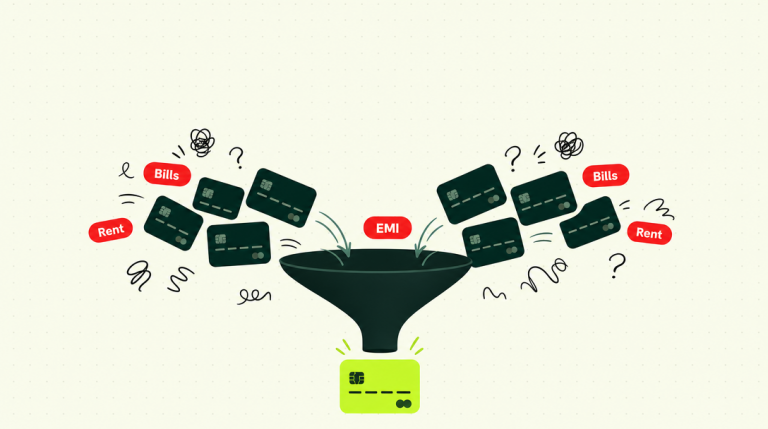
The problem for self-employed borrowers is simple. Wrong lender means rejection. Each rejection adds a hard check to your CIBIL report. TapTap fixes this. It checks your profile first through a soft check with zero CIBIL impact. Then it picks the lender in its 20+ network that uses the right income model for your case. One application. One lender. Your score stays safe.
Key Takeaways
- A personal loan for self-employed borrowers starts at 9.99% p.a. — but only from lenders that read banking income, not just ITR profit.
- Poonawalla Fincorp, IDFC FIRST, and Bajaj Finserv are the most self-employed-friendly lenders in 2026
- Core documents: 12 months’ bank statements, 2 years’ ITR, GST registration
- Professionals get rates 2 to 4% lower than traders or contractors
- Never apply to multiple lenders at once — each application adds a hard inquiry to your CIBIL report
- TapTap finds the right lender before any application is submitted.
Frequently Asked Questions
Yes. You need consistent bank credits over 12 months, a CIBIL score above 700, and some form of business registration or GST proof. NBFCs are more flexible than banks for freelance income.
Some NBFCs offer what is called a banking surrogate program. They assess income from bank statements only. This works mainly for smaller loans below Rs. 5 lakh and usually comes with a higher rate.
Most banks need 3 years. Many NBFCs accept 2 years. For doctors and CAs with active certifications, some lenders accept 1 to 2 years of practice.
Apply to lenders that use banking surrogate models. Poonawalla Fincorp and Muthoot Finance are among those in the TapTap network that assess actual bank credits rather than declared profit.
TapTap identifies which lender in its 20+ network uses the right income model for your profile. One targeted application is submitted. No multiple hard checks. No rejection cycles.
Conclusion
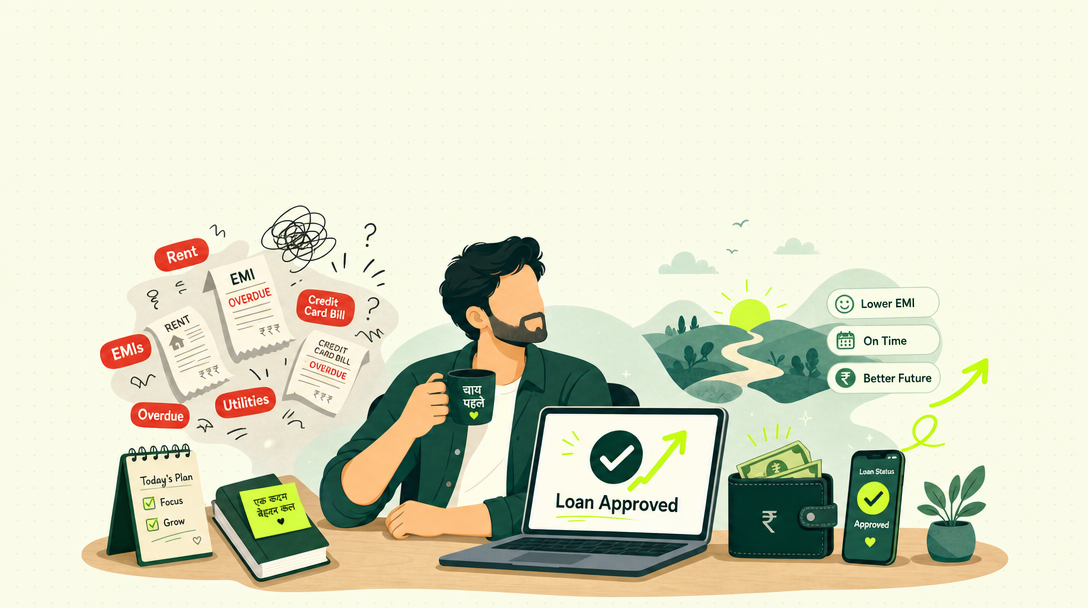
A personal loan for self-employed borrowers in India is more accessible than many think. But the lender choice is everything. A bank that reads only your ITR will often reject a viable borrower. An NBFC that reads your bank statements will often approve the same person. TapTap Loans finds that lender for you — before your CIBIL score takes any hit.