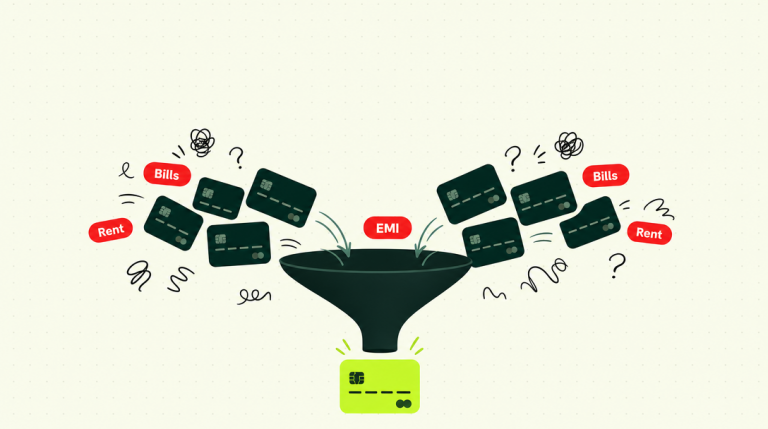






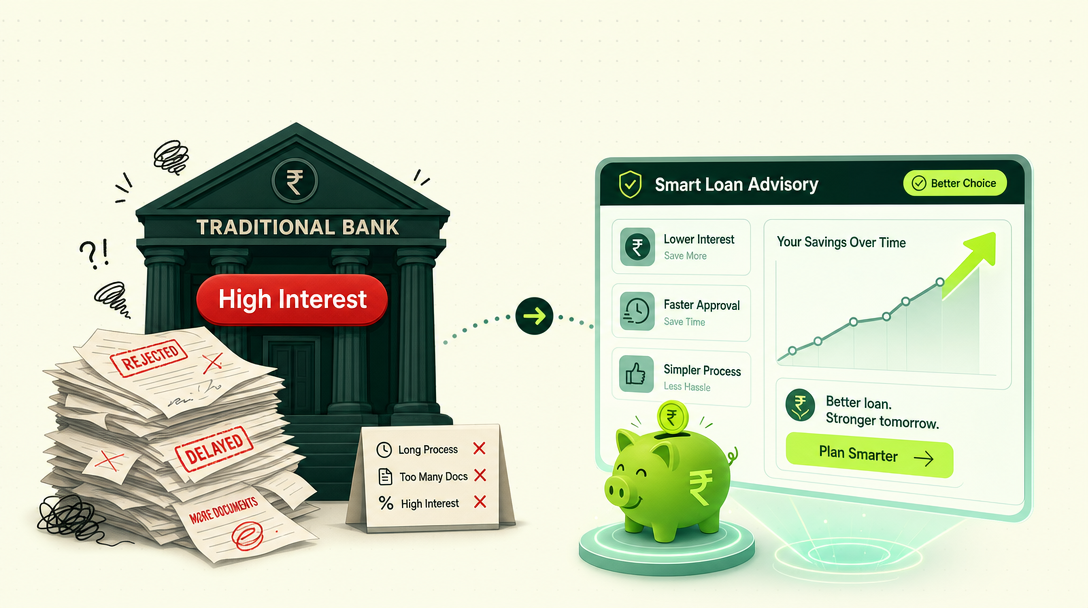
More than 40% of personal loan applications in India are rejected on the first attempt. Most of those rejections happen because borrowers approach lenders without understanding their own eligibility. Each rejection then adds a hard inquiry to the CIBIL report. Four rejections in 90 days can cost the score 20 to 40 points — at the worst possible moment. A loan advisory platform in India solves this problem before it starts. This guide explains how the advisory model works, compares it directly against the direct bank model across five key dimensions, and tells you when each approach makes more sense for your profile.
What Is a Loan Advisory Platform in India?
The Core Definition
A loan advisory platform connects borrowers to multiple lenders, but it does the eligibility matching before any application is submitted. It assesses your income, employer category, CIBIL score, and loan requirement against the approval criteria of every lender in its network. Only then does it submit one targeted application to the best-matched lender.
How It Differs From a DSA
This model differs from a DSA (Direct Selling Agent), which represents specific lenders and earns higher commissions by routing borrowers to those lenders — regardless of whether the match serves the borrower’s interests. A loan advisory platform’s incentive is structurally different: it earns from the lender only after a successful disbursal, which means the borrower’s outcome directly determines the platform’s outcome.
It is also different from a comparison portal like BankBazaar or PaisaBazaar, which shows a list of options and lets the borrower choose. An advisory platform picks the best match, handles the application, and follows up through to disbursal.
The RBI’s Account Aggregator Framework
The Account Aggregator framework, established under RBI regulation, now allows platforms to access borrower financial data — salary credits, account statements, existing EMIs — with explicit user consent and no manual document submission. Consequently, this is the infrastructure that makes soft-check assessment at scale possible in India in 2026.
How the Direct Bank Model Works — and Where It Falls Short
One Lender, One Chance
When a borrower approaches a bank directly, they encounter one lender’s product range, one set of approval criteria, and one rate card. If the profile does not match that lender’s risk appetite, the application is rejected. The bank does not indicate which lender might approve the borrower. As a result, the borrower moves to the next option — and triggers another hard enquiry.
The CIBIL Damage That Accumulates
Each direct application is a hard inquiry on the CIBIL report. CIBIL flags multiple hard enquiries within a 90-day window as a sign of credit stress — even if all applications were rejected for non-score reasons, like employer category or income level. The consequence is significant: a borrower with a 730 score and a genuine credit need can find their score at 695 after four failed attempts. They have, in effect, made their situation worse while trying to fix it.
Five-Point Comparison: Loan Advisory Platform vs Direct Bank
Rate, Approval, CIBIL, Speed, and Cost
| Dimension | Direct Bank | Loan Advisory Platform |
|---|---|---|
| Interest Rate | One lender’s rate card. No comparison possible. | Matched to the lender most likely to offer the best rate for your profile. |
| Approval Probability | One lender’s criteria. One chance per application. | Pre-checked against 20+ lender criteria before any submission. |
| CIBIL Score Impact | Hard enquiry per application. Multiple rejections damage your score. | Soft check during assessment. One hard enquiry on confirmed lender match. |
| Time to Disbursal | 2–7 days, depending on branch speed and doc follow-up. | 24–48 hours for salaried borrowers with complete documents. |
| Cost to Borrower | No fee. Standard rate for your profile from that lender. | No fee to borrower. The platform earns from the lender only after disbursal. |
When Going to a Bank Directly Makes Sense
Three Situations Where Direct Application Is the Right Call
The direct bank model works well under specific conditions. If your bank app shows a confirmed pre-approved offer, that is the fastest and cheapest route — use it. Pre-approved offers are based on account history and do not require a fresh hard enquiry. Similarly, if your CIBIL score is 780 or above and your employer is on a major bank’s approved list, rejection risk is low enough that a direct application is reasonable.
There are also product-specific situations. SBI Xpress Credit is purpose-built for central government employees and offers rates and tenures that are difficult for NBFCs to match. If you qualify and that product is the right fit, applying directly is the logical choice.
When a Loan Advisory Platform Is the Better Choice
Profiles That Benefit Most From the Advisory Model
- Your CIBIL score is between 650 and 750, and you are not certain which lenders will accept your profile.
- You are self-employed and unsure whether a lender uses bank statement underwriting or requires ITR-based assessment — these differ significantly across lenders.
- You have existing EMIs and want to find lenders with flexible FOIR limits, which vary considerably across India’s lending ecosystem.
- You cannot afford a rejection cycle. A loan advisory platform’s soft pre-check protects your remaining CIBIL capacity before any application goes in.
- You have already been rejected by one bank and do not know where to apply next without triggering further hard enquiries.
How TapTap Loans Operates as a Loan Advisory Platform
The Assessment Process
TapTap Loans runs a soft credit assessment — with zero CIBIL score impact — before any application is submitted. It matches employer type, income band, existing obligations, and credit score to the approval criteria of 20+ banks and NBFCs, including Bajaj Finserv, IDFC FIRST, Poonawalla Fincorp, and Muthoot Finance.
What Happens After the Match
The borrower receives the exact document list for the matched lender, not a generic checklist. TapTap then submits the application and follows up directly with the lender’s processing team. For salaried borrowers with a clean profile and complete documentation, disbursal typically occurs within 24 to 48 hours. There is no charge to the borrower at any stage.
Key Takeaways
- A loan advisory platform assesses your eligibility across 20+ lenders before submitting any application — protecting your CIBIL score throughout the process.
- A DSA represents lenders; a loan advisory platform represents the borrower. The incentive structure is different, and so are the outcomes.
- The direct bank model makes sense only if you have a confirmed pre-approved offer or a very high credit score with low rejection risk.
- For borrowers with moderate scores, complex employment, or previous rejections, the advisory model consistently produces better rates and higher first-application approval rates.
- TapTap Loans is free to use, submits one application to one matched lender, and targets 24 to 48-hour disbursal for salaried borrowers.
Frequently Asked Questions
No. A DSA is appointed by specific lenders and earns higher commissions for routing borrowers to those lenders. A genuine loan advisory platform assesses the borrower’s profile first and selects the best lender match — with the borrower’s outcome, not the lender’s sales target, as the primary objective.
Nothing. TapTap earns a fee from the lending partner only after your loan is successfully disbursed. There are no advisory fees, application charges, or hidden costs to the borrower at any stage.
One. TapTap runs a soft enquiry during assessment — which has no CIBIL impact — and triggers a single hard enquiry only when the matched lender formally processes your application.
Comparison portals show options and let you apply directly. TapTap, on the other hand, selects the best-matched lender, submits the application on your behalf, and manages the follow-up through to disbursal. The level of advisory involvement and CIBIL protection is substantially different.
Yes. A rejection from one bank does not reflect the criteria of all lenders. TapTap identifies lenders in its network with different eligibility thresholds and submits one targeted application — protecting whatever CIBIL capacity remains after the initial rejection.
Conclusion
The information gap between what lenders know about a borrower and what borrowers know about lender criteria is precisely where most personal loan mistakes happen. A loan advisory platform closes that gap before any application goes in. For borrowers with clear pre-approved offers and strong credit profiles, the direct bank route is fast and sensible. For everyone else — and that is the majority of India’s borrowing population — the advisory model produces better rates, higher first-application approval rates, and no CIBIL score damage in the process.