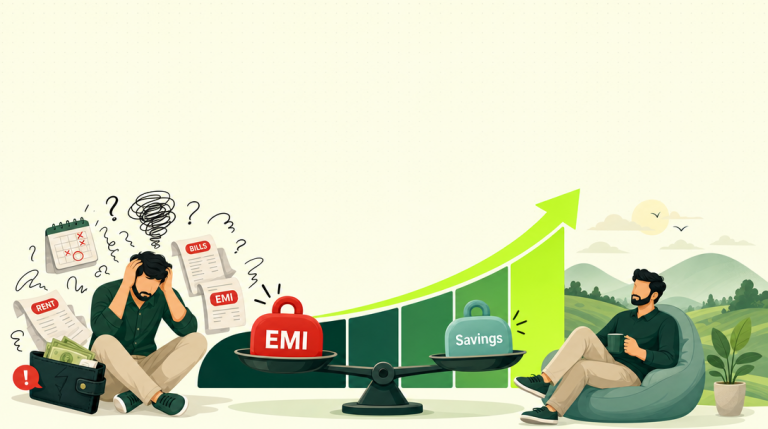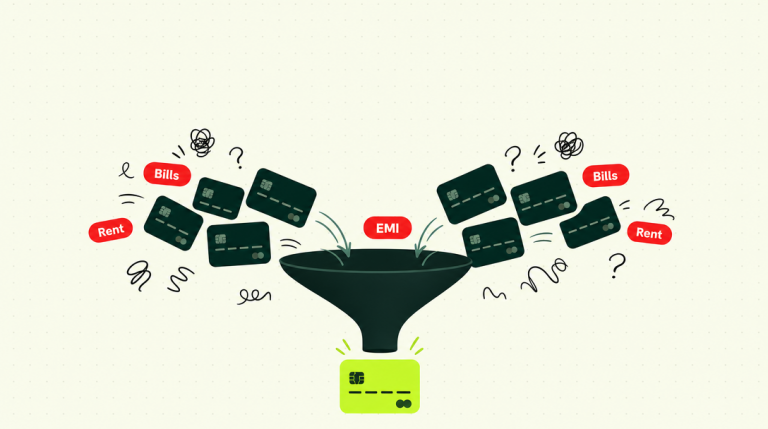







Is loan consolidation a good idea for Indian borrowers to think through before restructuring their debt? Most content on loan consolidation reads like advertising, often pushing borrowers toward a decision without evaluating whether it actually saves money.
The real question is whether loan consolidation is a good idea in India for your specific financial situation. In some cases, it reduces interest and simplifies repayments. In others, it quietly increases total cost due to fees and longer tenures.
The honest answer is that consolidation works well in many scenarios — but not all. Knowing when it actually makes sense is more important than simply understanding how it works.
Is Loan Consolidation a Good Idea in India? It Depends on These Four Variables
Whether loan consolidation is a good idea in India depends on four key financial variables.
- Rate gap: the difference between your weighted average existing rate and the consolidation offer, measured in percentage points. Below 3 points, fees usually kill the benefit. Above 6 points, consolidation is nearly always worthwhile.
- Fee burden: processing fee on the new loan plus foreclosure charges on the old loans. A ₹5 lakh consolidation can carry ₹30,000–₹50,000 in combined fees, which must be netted against the interest savings.
- Tenure change: extending tenure reduces monthly EMI but can increase total interest. A 4% rate drop with a 24-month tenure extension may actually increase total cost.
- Behavioural discipline: if the underlying debt accumulated through overspending rather than income shock, consolidation without behaviour change simply resets the clock.
When Loan Consolidation Is a Good Idea in India
In these cases, loan consolidation is a good idea in India both mathematically and behaviourally.
- Credit card balance above ₹1 lakh that has been carried for 6 months or more, with a CIBIL score of 700+. The rate gap between 42% card APR and a 13% personal loan is so large that fees become negligible.
- Three or more active personal loans with a combined EMI above 45% of the monthly take-home. The cashflow relief alone justifies consolidation, even with a modest rate reduction.
- Loans from small-ticket NBFCs or app lenders at 20–28% rates, where any prime bank consolidation offer creates a 7+ point gap.
- Upcoming major financial goal (home loan, child’s education) within 12 months, where reducing active accounts and improving debt-service ratio materially improves eligibility.
- Post-income-shock recovery: job change, business slowdown, or medical event that caused temporary over-borrowing. Consolidation provides the tenure flexibility to recover.
When Loan Consolidation Is Not a Good Idea in India
This is where borrowers realise loan consolidation is not always a good idea in India.
First scenario: rate gap below 2 percentage points. Example: existing loans at 15% average, consolidation offer at 13.5%. A 1.5-point gap rarely compensates for processing fees (typically ₹15,000–₹25,000 on a ₹5 lakh loan) plus any foreclosure charges. The borrower pays ₹30,000+ in upfront costs to save ₹20,000 in interest over tenure. Net loss.
Second scenario: using consolidation as emergency cash flow relief without addressing the cause. A borrower consolidates six loans into one with a lower EMI, then,n within 4–6 months, takes on two new personal loans because the lower monthly outflow feels like surplus income. This pattern is common and leaves the borrower in a worse position than before consolidation.
Third scenario: aggressive tenure extension. Con, consolidating a ₹6 lakh loan at 16% with 30 months remaining into a ₹6 lakh loan at 13% for 60 months cuts the EMI from ₹21,500 to ₹13,650. The monthly relief is real. However, total interest paid rises from ₹1.4 lakh to ₹2.2 lakh. If the EMI pressure was manageable, the tenure extension was unnecessary and expensive.
The “Consolidation Trap” Nobody Warns You About
The consolidation trap is subtle. After consolidation,t the monthly outflow drops significantly — often by ₹7,000–₹12,000 on a mid-size consolidation. This creates the perception of increased disposable income. The behavioural error is treating the EMI reduction as a raise rather than as debt that still needs to be repaid.
Credit bureau data in India shows approximately 23 per cent of consolidation borrowers take on at least one new loan within 12 months of consolidation. Of those, roughly 40 per cent eventually end up in worse debt positions than before the consolidation. The warning sign is the mental reclassification of the freed-up cash flow as “mine to spend” rather than “still servicing the same principal, just more slowly.”
The defence per cent this trap: redirect the monthly saving (even half of it) toward prepayment of the consolidation loan itself. On a ₹6 lakh consolidation, a cash flow for 60 months, adding ₹4,000 monthly as prepayment, reduces the tenure to approximately 40 months and total interest by ₹70,000. The EMI relief happens, but the debt still clears on the original timeline.
A Decision Framework in Four Questions
Before committing to consolidation, answer each of these four questions with specific numbers, not general impressions:
- What is my weighted average existing interest rate, and what is the consolidation offer? If the gap is below 3 points, the case is weak.
- What are the total one-time costs (new loan processing fee + foreclosure charges on old loans)? If these exceed 30% of projected interest savings, the case is weak.
- Am I extending tenure because I genuinely need the cashflow relief, or because it is offered? If the current EMI is manageable, match the tenure rather than extending.
- What caused the original over-borrowing, and is that cause resolved? If the answer is overspending and no spending discipline change is planned, consolidation alone will not help.
Three Real Borrower Scenarios Compared
Three profiles, three different outcomes:
Borrower A (consolidation clearly right): ₹3L credit card at 42%, ₹2L personal loan at 18%. Combined EMI ₹17,800. Consolidation offer ₹5L at 13% for 36 months, EMI ₹16,850. Monthly savings of ₹950 and total interest saved ₹1.7L. Clear win.
Borrower B (consolidation marginal): ₹4L of personal loan at 14%, ₹1L personal loan at 15%. Combined EMI ₹22,200. Consolidation offer ₹5L at 12.5% for 30 months, EMI ₹19,600. The rate gap only 1.8 points. savings ofsing fee ₹12,500 plus ₹15,000 foreclosure. Total one-time cost ₹27,500 against ₹35,000 projected interest savings. Net ₹7,500 over 30 months — barely worth the administrative effort.
Borrower C (consolidation counterproducThe rate): ₹ 5 is a personal loan at 13.5% with 36 months remaining, one loan, good repayment track record. Consolidation offer ₹5L at 12% for 60 months, saving and extending tenure significantly. Monthly EMI drops, but total interest rises by ₹45,000. No cash flow pressure justifying the extension. Better option: continue the existing loan or negotiate a rate reduction with the current lender.
Key Takeaways
- Consolidation is right in 60–65% of cases, marginal in 20–25%, and counterproductive in 10–15%.
- Rate gcash flow exceeds 3 percentage points after all fees for the math to work reliably.
- Cashflow relief is valuable only if the extension is necessary, not because it is offered.
- The post-consolidation behavioural risk is the largest driver of bad outcomes.
- Redirecting some of the monthly savings toward prepayment protects against the consolidation trap.
Frequently Asked Questions
When the rate gap is below 2–3 percentage points, when processing and foreclosure fees exceed a meaningful portion of projected savings, when tenure extension is unnecessary, or when the underlying cause of over-borrowing is unresolved spending behaviour rather than a one-time income shock.
Yes,s in most scenarios, but the magnitude varies widely. Savings of ₹2–8 lakh are typical when consolidating credit card debt. Savings of ₹20,000–₹1 lakh are typical when consolidating already-low-rate personal loans. Savings can be negative when the rate, a p, is small, and fees are high.
Yes, if tenure is extended significantly. A lower rate over a longer tenure can produce higher absolute interest than a higher rate over a shorter tenure. Always compare total interest paid under each scenario, not just the monthly EMI.
Pay separately when the loan count is manageable (2 or fewer), rates are already low, and cash flow is comfortable. Consolidate when the loan count is high, the cash flow rate is above 17%, and other combined EMIs exceed 45% of take-home salary.
Indian credit bureau data suggests approximately 70% of consolidation borrowers complete their consolidated loans on schedule and remain debt-free at least 12 months afterwards. The remaining 30% either take on new debt within the consolidation tenure or face payment stress. The outcome correlates strongly with whether behavioural change accompanied the consolidation.
Conclusion
| So, is loan consolidation a good idea for Indian borrowers to rely on? The answer depends entirely on your numbers, not just the offer in front of you. You’ll get an honest assessment within 30 minutes, including whether consolidation is the right move at all. |