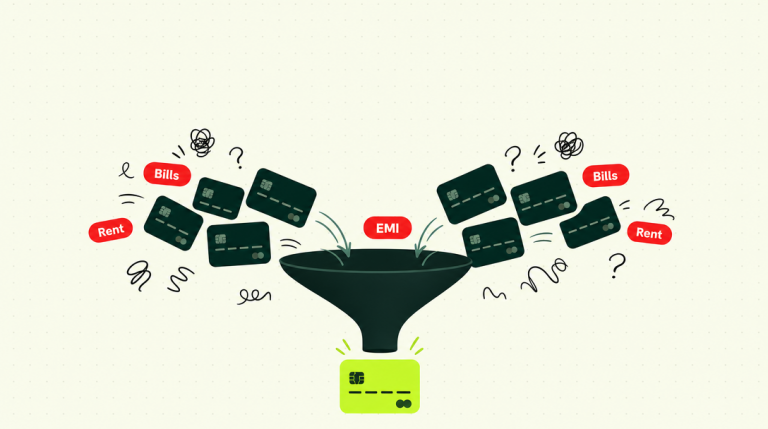







A loan advisory platform helps borrowers find the right lender before any loan application is submitted. Instead of applying randomly to multiple banks, borrowers get matched to lenders based on CIBIL score, income, employer profile, and repayment capacity, improving approval chances and reducing unnecessary hard enquiries.
A loan advisory platform changes this by matching your specific profile to the lender most likely to offer the best terms before any application is submitted. This guide explains exactly how this process works, what separates a genuine advisory model from an aggregator, and the specific advantages it delivers versus direct bank applications.
What a Loan Advisory Platform Is
A loan advisory platform is an intermediary that works on behalf of the borrower, not the lender. Its function is to assess the borrower’s creditworthiness, understand the loan requirement, and identify which lender within its network is most likely to approve the application at the most competitive rate.
This is different from a loan aggregator, which displays multiple loan offers from different lenders on a comparison interface and encourages the borrower to apply to multiple options simultaneously. The advisory model is more selective: one profile assessment, one lender recommendation, one application.
How a Loan Advisory Platform Works in India
The advisory process at TapTap Loans follows a structured sequence:
- Profile intake: The borrower shares basic information: employment type, monthly income, existing EMI obligations, required loan amount, and purpose. This takes 10–15 minutes.
- Soft credit pull: A soft enquiry is performed against the credit bureau. This gives the advisor an accurate picture of the borrower’s CIBIL score, existing loan accounts, and credit history without triggering any impact on the CIBIL score.
- Lender matching: Based on the profile and soft enquiry data, the advisor identifies the lender within the 20+ bank and NBFC network most likely to approve the application at the lowest viable rate. This matching considers CIBIL, FOIR, employer category, existing relationships, and lender-specific criteria.
- Recommendation: The borrower receives a clear recommendation on which lender, what rate to expect, what the EMI will be, and what documents are needed.
- Application submission: A single, targeted application is submitted to the matched lender. The advisor follows up with the lender through the approval process.
- Disbursal support: After approval, the advisor guides the borrower through the e-agreement, mandate setup, and disbursal process.
Soft Enquiry vs Hard Enquiry Explained
Every application submitted to a bank or NBFC triggers a hard enquiry on your credit report. This enquiry:
- Reduces your CIBIL score by 5–10 points per enquiry
- Remains visible on your credit report for 2 years
- Is read by subsequent lenders as a signal of credit-seeking behaviour
Multiple hard enquiries within a short period, as happens when borrowers apply to 5–6 lenders simultaneously using an aggregator, create an enquiry cluster that suppresses scores by 25–50 points and signals financial distress to underwriting models.
TapTap’s soft enquiry has zero impact on CIBIL. The hard enquiry is triggered only after the borrower confirms they wish to proceed with the matched lender. One application, one hard enquiry, the right lender versus the aggregator model of multiple simultaneous applications and multiple simultaneous hard enquiries.
Why Lender Matching Improves Loan Rates
The same borrower profile 730 CIBIL, Rs. 65,000 net monthly income, salaried at a mid-size private company might receive the following rate offers from different lenders in 2026:
- Bank A: 15.5% p.a. (this lender requires a Tier 1 employer for sub-14% rates)
- Bank B: 13.2% p.a. (this lender’s underwriting is more favourable to mid-corporate salaried profiles)
- NBFC C: 12.8% p.a. (this NBFC values bank statement strength over employer tier)
- Bank D: Declined (this bank has a strict 750+ minimum CIBIL threshold)
The borrower who applies directly to Bank A receives 15.5% and accepts it. The borrower who uses TapTap’s advisory process is matched to NBFC C at 12.8% — saving 2.7% per annum. On a Rs. 8 lakh loan over 4 years, that is approximately Rs. 55,000 in interest savings.
This rate differential exists because each lender’s underwriting model assigns different weights to different variables. A lender optimised for government employees prices private sector employees poorly. A lender that values bank statement consistency prices thin-file but stable-income borrowers well. The advisory process knows these model characteristics and matches accordingly.
Loan Advisory Platform vs Loan Aggregator
Loan aggregators are platforms that display multiple loan offers and facilitate applications to many lenders simultaneously serve a different purpose. They are useful for borrowers who want to see the universe of available offers and have the credit score to absorb multiple hard enquiries without a significant impact.
For borrowers with CIBIL scores below 750, already-high FOIR, or recent credit stress, aggregator applications can cause material harm: the cluster of enquiries suppresses the score further and reduces the probability of approval at the next lender. In these cases, the advisory model which selects one target lender based on profile fit is significantly more appropriate.
The TapTap Loans Advisory Model Explained
TapTap Loans operates as a loan advisory platform, not a lender, with access to a network of 20+ banks and NBFCs across India. The platform earns a distribution fee from the lending partner upon successful disbursal. There is no cost to the borrower at any stage of the advisory process.
The advisory model is differentiated in three specific ways:
- Profile-first matching: Unlike aggregators that display all available products, TapTap’s matching algorithm narrows to the 2–3 lenders whose model characteristics best match the borrower’s specific profile. The recommendation is based on approval probability and rate, not on the highest distribution fee.
- Soft enquiry as standard: The profile assessment uses a soft credit pull that has zero CIBIL impact. Hard enquiries only occur at the application stage.
- Active follow-up: TapTap advisors follow up with the matched lender throughout the approval and disbursal process, ensuring that the application does not stall in the lender’s processing queue.
Is There a Cost to the Borrower?
No. TapTap Loans’ advisory service is free to borrowers. The platform earns a distribution fee from the lending partner upon successful disbursal. This is the same fee structure used by all regulated loan distribution service providers (DSAs) in India and is disclosed transparently to the lending partner.
There is no scenario in which a borrower is charged by TapTap for advice, application submission, or disbursal assistance. If any platform representing itself as a loan advisory service charges upfront fees to borrowers, that is a red flag inconsistent with the legitimate loan distribution model.
Key Takeaways
- A loan advisory platform matches your profile to the right lender before any application,n protecting your CIBIL score and maximising the probability of the best rate.
- The rate differential across lenders for the same borrower profile can be 2–4% p. a., worth tens of thousands of rupees over a typical loan tenure.
- TapTap uses a soft enquiry for profile assessment, with zero CIBIL impact until the application is submitted.
- The service is free to the borrower. TapTap earns a distribution fee from the lending partner.
- For borrowers with an IBIL below 750 or a high FOIR, the advisory model is significantly safer than aggregator applications that trigger multiple simultaneous hard enquiries.
Frequently Asked Questions
BankBazaar and Paisabazaar are loan aggregators that display multiple offers and may facilitate applications to several lenders simultaneously. TapTap operates as an advisor that selects one matched lender for your profile rather than presenting all available options. For borrowers with non-prime profiles, the targeted approach reduces CIBIL score damage and improves approval probability.
TapTap has a network of 20+ banks and NBFCs, including Bajaj Finserv, Muthoot Finance, Poonawalla Fincorp, IDFC FIRST Bank, and others. The network is designed to cover a range of borrower profiles — from Tier 1 salaried applicants seeking bank rates to self-employed borrowers and applicants with moderate CIBIL scores.
The initial profile assessment and lender matching typically take 30–60 minutes. For straightforward salaried profiles, the entire process from profile submission to application submission can be completed in under 2 hours. The subsequent approval timeline depends on the matched lender.
Loan aggregators show multiple lender offers simultaneously, while advisory platforms recommend a single lender best suited to the borrower’s profile.
A loan advisory platform helps borrowers identify the lender most likely to offer the best approval chances and interest rates based on their credit profile.
Conclusion
The Indian personal loan market’s opacity, where rate differentials of 2–5% exist across lenders for identical borrower profiles, is the specific market failure that loan advisory platforms address. For borrowers who understand how this differential arises and how to exploit it in their favour, the advisory approach consistently produces better outcomes than direct bank applications.
TapTap Loans is built on exactly this premise: that the borrower deserves an informed, profile-matched approach to credit access, not a random walk through the marketing pages of multiple banks. The result is a better rate, a better approval probability, and a preserved CIBIL score.