





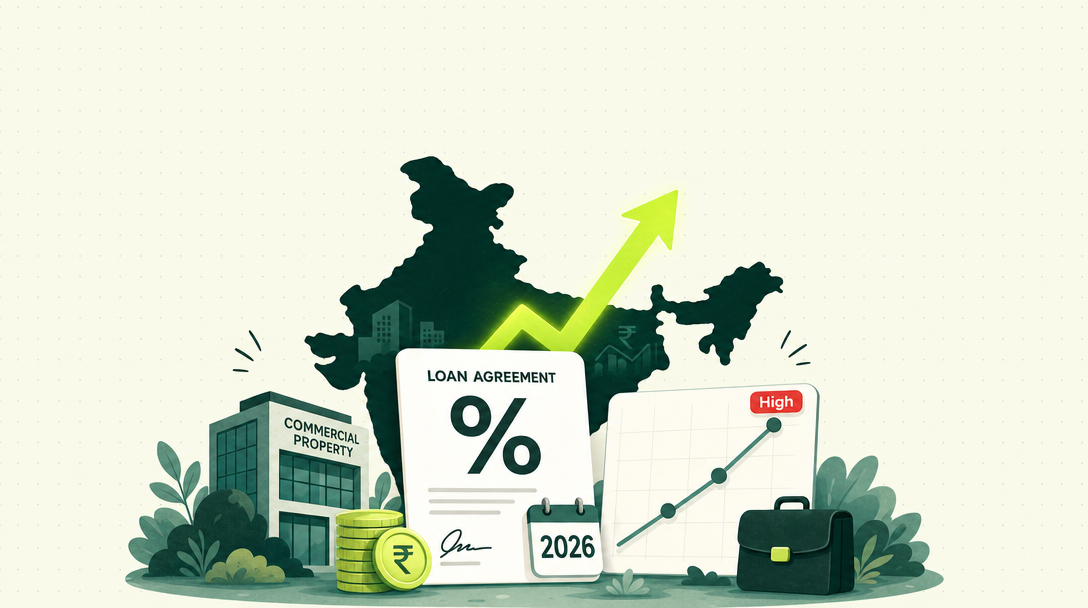
Commercial loan interest rates in India currently range from 10.5% to 20% per annum, depending on the loan type, whether it’s secured, and your business profile. This guide breaks down what drives your actual rate.
Rate by Loan Type
| Loan Type | Typical Rate Range |
|---|---|
| Secured term loan | 10.5%-15% |
| Working capital loan | 12%-18% |
| Commercial property loan | 9.5%-14% |
| Unsecured business loan | 14%-20% |
| Commercial vehicle loan | 9%-13% |
Secured loans, backed by property or equipment, consistently carry lower rates than unsecured working capital or business loans.
Bank vs NBFC Comparison
Banks generally offer the lowest rates for strong, established businesses with 3+ years of consistent financials. NBFCs are typically 2-4 percentage points higher, but offer faster approval and more flexibility for newer or smaller businesses.
Factors That Change Your Rate
Business vintage. Longer, more established businesses generally access better rates than newer ones.
Collateral. Secured loans, backed by property or equipment, cost meaningfully less than unsecured facilities.
Credit score. Both the business’s credit history and the promoter’s personal score matter, sometimes equally.
Revenue consistency. Steady, predictable revenue is priced more favorably than volatile or seasonal income.
Loan amount and tenure. Larger, longer-tenure secured loans sometimes access marginally better rates than smaller, shorter unsecured ones.
How to Negotiate a Better Rate
Check multiple lenders before committing, since rates for similar profiles can vary meaningfully. Offer collateral if you have it available, even for a loan type that doesn’t strictly require it, since this can unlock a better rate. And maintain clean, consistent financial documentation across multiple years, since inconsistency itself often triggers a rate premium.
A Worked Example
Borrow ₹20,00,000 as an unsecured working capital loan at 16%, over 2 years, and your EMI runs roughly ₹98,500. The same amount as a secured term loan at 11%, over the same tenure, drops to about ₹93,300.
The gap seems modest month to month, but compounds meaningfully over the full loan term, which is why exploring secured options, if you have collateral available, is worth the extra paperwork.
Do Rates Change Based on Industry?
Yes, to some degree. Lenders often have more comfort with industries they understand well and have lent to successfully before, such as manufacturing, established retail, and professional services, for example. Newer or higher-risk sectors may see a modest rate premium, or more conservative loan amounts, even with strong individual financials.
When Rates Might Rise or Fall
Commercial loan rates move with broader monetary policy, similar to other lending categories. A rate you’re quoted today may not hold in a few months if the broader rate environment shifts. Locking in a rate through formal sanction, rather than an informal quote, protects you from this uncertainty during your application process.
Frequently Asked Questions
Rates range from roughly 10.5% to 20% annually, depending on whether the loan is secured, the lender, and your business profile.
Generally yes, often 2-4 percentage points more, in exchange for faster approval and more flexible eligibility criteria.
Yes. Longer-established businesses with consistent financials typically access better rates than newer businesses.
Yes. Secured loans, backed by property or equipment, consistently carry lower rates than unsecured facilities of similar size.
Looking for the best commercial loan rate for your business? Compare offers with TapTap across 20+ lenders.