





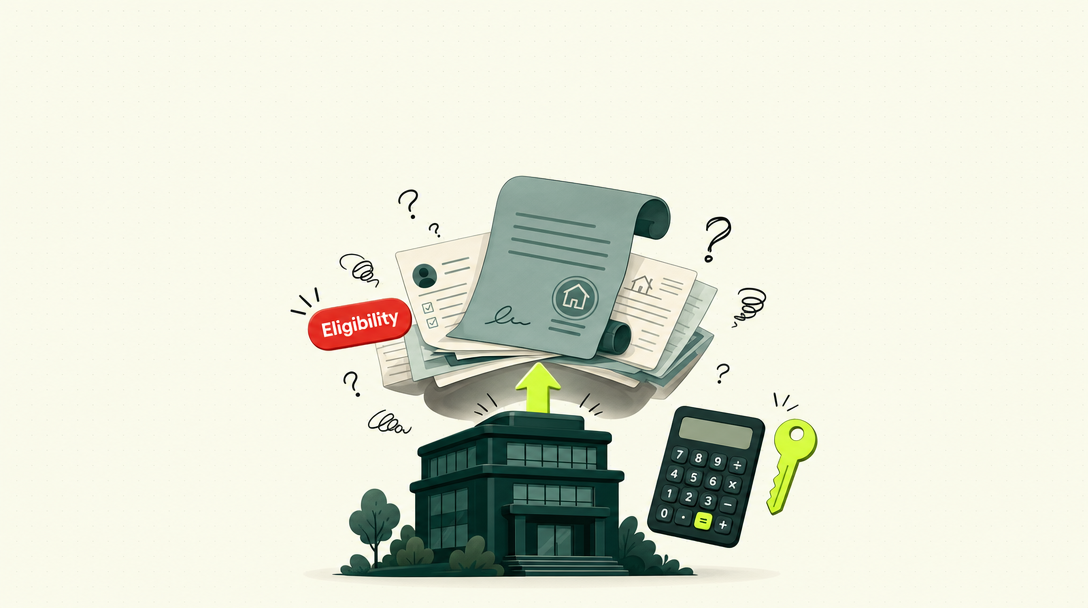
A commercial property loan finances the purchase, construction, or expansion of business real estate, office space, retail units, or warehouses. This guide covers eligibility, current rates, and exactly what documents you’ll need.
What Is a Commercial Property Loan?
Unlike a home loan, a commercial property loan finances property meant for business use, not residential living. The property itself typically secures the loan, similar to a home loan structure, but with different risk pricing.
Eligibility Criteria
- Business or professional income, self-employed individuals and businesses both qualify
- Minimum business vintage, usually 2-3 years
- Credit score, both business and personal, generally 700+ preferred
- Adequate income to support the EMI, within the lender’s FOIR limits
Current Interest Rate Range
Commercial property loan rates in India typically run 9.5% to 14% per annum, higher than residential home loan rates. This reflects the different risk profile lenders assign to commercial versus residential real estate.
Loan-to-Value for Commercial Property
Lenders generally finance a smaller share of a commercial property’s value compared to residential. Expect 50 to 75% LTV for commercial property, compared to up to 90% for smaller residential home loans. This means a larger down payment is required.
Documents Required
- KYC: PAN, Aadhaar for all owners or partners
- Business proof: Registration certificate, GST registration
- Financial documents: 2-3 years’ ITR, GST returns, audited financials for larger amounts
- Property documents: Sale agreement, title deed, approved building plan
- Bank statements: 6-12 months, business and personal
Commercial vs Residential Property Loan: Key Differences
| Factor | Commercial Property Loan | Residential Home Loan |
|---|---|---|
| Interest rate | 9.5%-14% | 8.25%-11% |
| LTV | 50-75% | Up to 90% for smaller amounts |
| Tenure | Usually up to 15 years | Up to 30 years |
| Tax benefits | Limited, business-related only | Full 80C and 24(b) benefits |
| Purpose | Business use only | Residential use |
Why Rates Are Higher for Commercial Property
Commercial real estate values can be more volatile than residential, and resale can take longer in a downturn. Lenders price this additional risk into the rate. Business income used to service the loan is also generally considered less predictable than salaried income, adding another layer of risk pricing.
How to Improve Your Approval Odds
Maintain consistent, well-documented business income across multiple years of ITR. Keep your personal and business credit profiles strong, since both get assessed. And consider a larger down payment, which reduces the lender’s risk and can unlock a better rate.
A Worked Example
Say you’re buying office space worth ₹1,00,00,000. At 65% LTV, you’d need a down payment of ₹35,00,000, borrowing ₹65,00,000. At 11% over 15 years, your EMI would run approximately ₹73,900.
Compare this to a similarly priced residential property, where a smaller down payment and lower rate would produce a noticeably different monthly commitment.
Commercial Property Loan vs Leasing
Before committing to a purchase, it’s worth comparing the total cost of owning versus leasing similar commercial space. Ownership builds equity over time and offers more control, but requires a substantial upfront commitment and ongoing maintenance responsibility that leasing avoids.
Frequently Asked Questions
Typically 50-75% of the property’s assessed value, lower than the LTV available for residential home loans.
Usually up to 15 years, shorter than the 20-30 year tenures common for residential home loans.
Yes, typically 1-3 percentage points higher, reflecting the different risk profile of commercial real estate.
Yes, this is a common use case. Self-employed applicants need 2-3 years of business continuity and consistent financial documentation.
Considering a commercial property purchase? Check your eligibility with TapTap across 20+ banks and NBFCs.