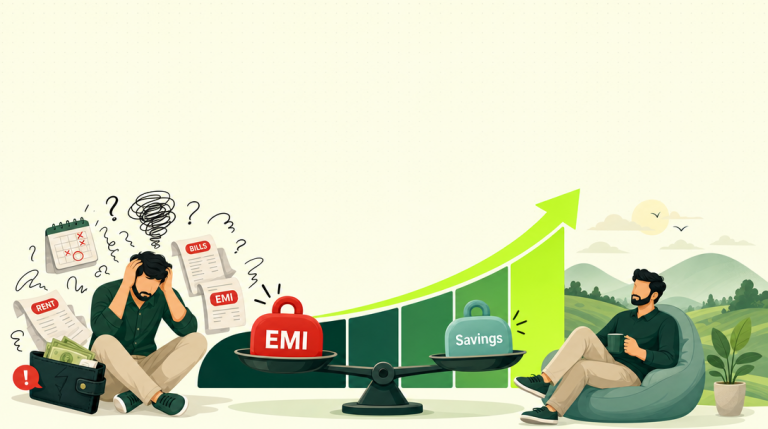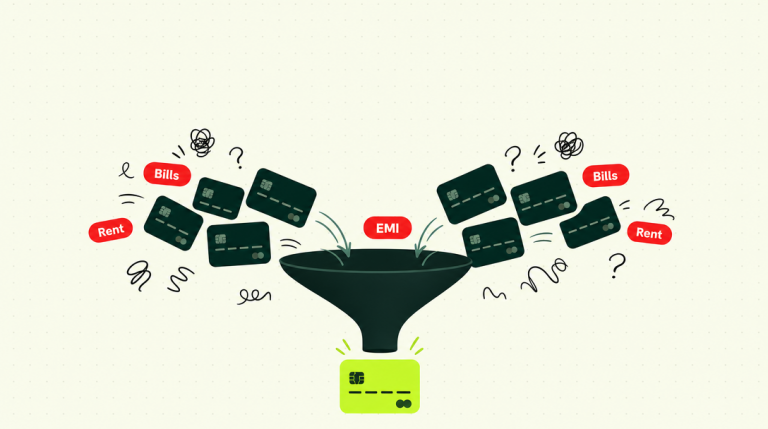






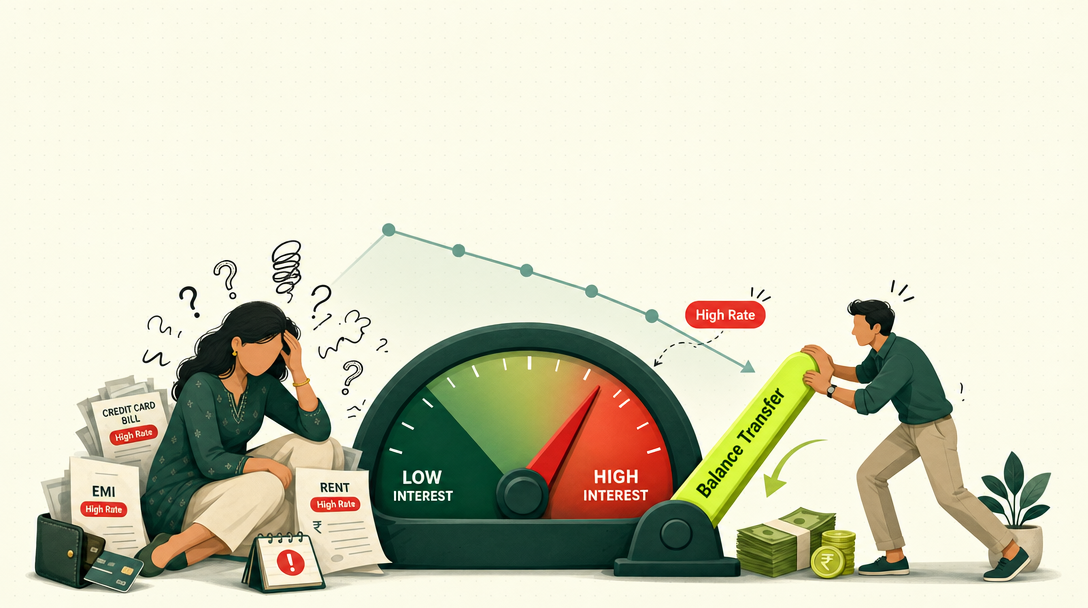
A personal loan balance transfer is one of the most effective ways to reduce the interest cost on an existing personal loan.
You took a personal loan two years ago at 19%. Your CIBIL score has since improved, you got a promotion, and the same bank now offers new customers 13.5%. You’re still paying 19%. This is the silent cost most Indian borrowers never discover, and the balance transfer is the solution they never use.
A personal loan balance transfer moves your existing loan from one lender to another, offering a lower interest rate. You repay the old lender in full using the new loan, and continue making EMIs to the new lender at the reduced rate. The savings can be substantial, tens of thousands to lakhs of rupees, depending on loan size, rate differential, and remaining tenure.
When Does a Balance Transfer Make Sense?
- Your CIBIL score has improved by 50+ points since you took the original loan. The nThe TheThe
- RBI repo rate has fallen significantly since your loan was originated
- You’ve received a salary increase or job upgrade, improving your borrower profile
- You have 18+ months remaining on the loan (earlier transfer saves more)
- The rate difference is 2%+ after accounting for processing fees and prepayment charges
The RBI has been gradually reducing repo rates. Every time rates fall, borrowers with old high-rate loans should re-evaluate their balance transfer option.
→ Personal Loan Balance Transfer 2026: Full Cost-Benefit Analysis
The Break-Even Calculation
Before initiating a balance transfer, always calculate the break-even point:
- Total interest you would pay from today if you stay: Outstanding × Remaining tenure × Old rate
- Total interest under new loan: Outstanding × New tenure × New rate
- Transfer costs: Processing fee on new loan (1–3%) + Prepayment penalty on old loan (0–5%)
- Break-even month = Transfer costs ÷ Monthly savings from rate difference
If the break-even month is less than your remaining tenure, the transfer saves money. If it’s greater, stay put.
Example: ₹8 lakh outstanding, 36 months remaining, switching from 19% to 13.5%. Monthly EMI saving: ₹3,100. Transfer costs: ₹26,000. Break-even: 8.4 months. Net saving over tenure: ₹85,600.
→ Personal Loan Balance Transfer India 2026: Break-Even Rules and Real Savings
Which Banks Offer the Best Balance Transfer Rates?
| Lender | Balance Transfer Rate | Processing Fee | Min CIBIL |
|---|---|---|---|
| HDFC Bank | 10.75%–18% | 0.5%–2% | 700+ |
| SBI | 11.45%–14.6% | 1% | 700+ |
| ICICI Bank | 10.85%–17% | 1%–2.5% | 700+ |
| IDFC FIRST Bank | 10.49%–20% | 1%–3.5% | 700+ |
| Bajaj Finserv | 11%–26% | Up to 3.93% | 685+ |
| Poonawalla Fincorp | 9.99%–24% | Up to 3% | 700+ |
Always compare the effective rate (including processing fee impact), not just the headline rate. A 12% loan with a 3% processing fee has a higher effective rate than a 13% loan with a 0.5% fee on short remaining tenures.
Impact on CIBIL Score
A balance transfer creates a new loan account on your CIBIL report, which may cause a minor, temporary dip (5–10 points) due to the new credit inquiry. However, the closed status of the old loan and the reduced interest burden typically improve your financial profile meaningfully within 6 months.
→ What Happens to Your CIBIL Score During a Loan Balance Transfer?
Step-by-Step Balance Transfer Process
- Request a ‘foreclosure letter‘ from your current lender (confirms outstanding amount and foreclosure charges)
- Approach 2–3 alternative lenders with this letter and your current loan details
- Compare indicative offers and calculate the net savings for each
- Submit a formal application to the best-offer lender with complete documents
- New lender disburses directly to the old lender, paying off the outstanding balance
- Continue EMI with the new lender at the lower rate
Key Takeaways
- A balance transfer makes sense when the rate difference is 2%+ and at least 18 months remain on the loan.
- Always calculate the break-even point before proceeding transfer costs must be recovered within your remaining tenure.
- HDFC, ICICI, IDFC FIRST, and Poonawalla Fincorp consistently offer competitive balance transfer rates for qualified borrowers.
- Improving your CIBIL score before initiating a balance transfer can unlock even lower rates, sometimes worth a 2–3 month wait.
Frequently Asked Questions
There is no regulatory limit on the number of balance transfers. However, each transfer involves processing fees and a hard inquiry. Multiple transfers within 12 months may raise flags with lenders. Transfer when the savings are substantial — not as a frequent tactic.
There is no regulatory limit on the number of balance transfers. However, each transfer involves processing fees and a hard inquiry. Multiple transfers within 12 months may raise flags with lenders. Transfer when the savings are substantial — not as a frequent tactic.
No. Most lenders require a clean repayment track record (typically 12 months with zero missed payments) before approving a balance transfer. Missed EMIs also reduce your CIBIL score, potentially moving you out of the rate tier that makes the transfer worthwhile.
Yes. The new lender treats this as a fresh personal loan application and runs a full credit assessment, including a CIBIL check. You need 700+ CIBIL to get competitive balance transfer rates.
Many lenders offer a top-up facility alongside a balance transfer — you can borrow an additional amount on top of the transferred balance if your income and CIBIL support it. Evaluate this carefully: the top-up amount may carry a different (sometimes higher) rate than the transfer portion.
Conclusion
A personal loan balance transfer can reduce your interest burden when you qualify for a significantly lower rate and have enough tenure remaining to recover the transfer costs. Before switching, compare the new EMI, processing fees, foreclosure charges, and total interest, then calculate the break-even point. If the savings are meaningful, transferring the loan can help reduce your overall repayment cost and make your loan more manageable.