





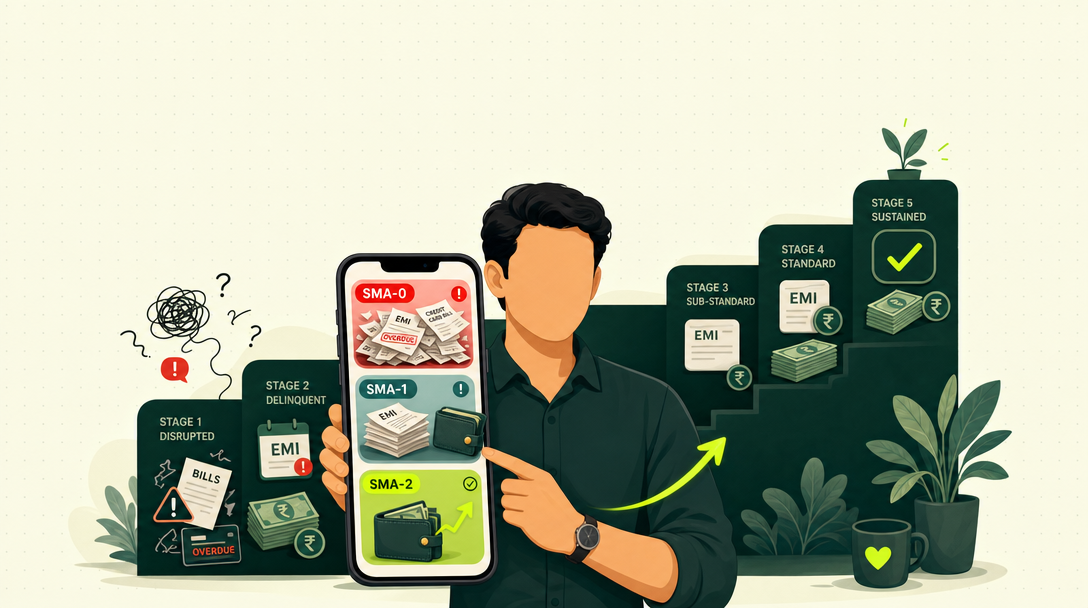
SMA stands for Special Mention Account. It’s how banks internally track a loan before it becomes a formal default. SMA-0, SMA-1, and SMA-2 mark increasing stages of overdue status. Here’s exactly what each one means.
Why Banks Use This Classification
Before a loan is officially classified as a default, or NPA, banks track it through earlier warning stages internally. This helps them monitor risk and decide when to escalate their response.
SMA-0: The Earliest Stage
This covers 1 to 30 days overdue. It’s the mildest stage, often triggering just reminder calls or messages. Your account isn’t in serious trouble yet, but it’s on the bank’s radar.
SMA-1: The Middle Stage
This covers 31 to 60 days overdue. Communication typically becomes more formal here, with written notices rather than just calls. This is a meaningful signal that the situation needs attention.
SMA-2: The Final Warning Stage
This covers 61 to 90 days overdue. This is the last internal stage before a loan risks being classified as an NPA, a formal default, at the 90-day mark.
A Quick Reference Table
| Stage | Days Overdue | Typical Bank Response |
|---|---|---|
| SMA-0 | 1-30 days | Reminder calls, messages |
| SMA-1 | 31-60 days | Formal written notices |
| SMA-2 | 61-90 days | Warning about further action |
| NPA | 90+ days | Formal default, recovery proceedings |
Why Knowing Your Stage Matters
Each stage represents a real opportunity to act before the next, more serious one begins. Addressing an SMA-0 account is far simpler and has far less lasting impact than waiting until SMA-2.
Can You Check Your Own SMA Status?
Your loan account statement or your lender’s app often shows your current overdue status. You can also request this directly from your lender if it’s not visible.
Does Reaching SMA-2 Mean You’ve Already Defaulted?
No. SMA-2 is still before formal default. It’s a serious warning stage, but resolving the overdue amount at this point, even now, can still prevent NPA classification.
How This Connects to Your Credit Score
Each stage typically corresponds to increasing credit score impact, since these are usually reported to bureaus. The earlier you resolve an overdue account, the less lasting damage it tends to cause.
A Realistic Scenario
Someone’s account reaches SMA-1, 45 days overdue, after a temporary cash flow gap. Rather than waiting for it to progress further, they contact their lender immediately, clear the overdue amount, and avoid ever reaching SMA-2 or NPA status.
Why This Terminology Is Worth Understanding
Many borrowers only learn these terms once they’re already deep in an overdue situation. Understanding them earlier, as soon as you see any overdue notice, helps you act at the stage where your options are still the widest.
Frequently Asked Questions
SMA status itself is primarily an early-warning classification used by lenders. However, the overdue payments leading to SMA status may affect your credit report if reported to credit bureaus.
Special Mention Account. It’s an internal bank classification tracking a loan’s overdue status before formal default.
No. SMA-2 covers 61-90 days overdue, the stage right before formal NPA classification at 90 days.
Yes. Clearing the overdue amount at any SMA stage can prevent progression to NPA status and limit the lasting credit impact.
Your lender’s app, account statement, or direct contact with your lender can confirm your current classification.
Conclusion
SMA status is an important warning stage that allows borrowers to act before a loan becomes an NPA. SMA-1 and SMA-2 indicate increasing repayment delays, but they are not the same as formal default or NPA classification. If your account has entered an SMA stage, review the overdue amount and contact your lender promptly.
Clearing the overdue amount, where possible, can help prevent further deterioration. If repayment is difficult, discuss options such as restructuring or a revised repayment plan before the account progresses further. Early action can reduce financial stress and help protect your future credit profile.
Concerned about an overdue account before it escalates further? See how consolidating your debts into one manageable EMI could help.