





When debt becomes unmanageable, two terms tend to come up in conversations with financial advisors: loan consolidation and debt settlement. They sound similar. They’re not. Using the wrong one for your situation can damage your credit score for years, cost you more in fees, or leave you legally exposed.
This guide draws a clear line between the two — what each involves, who each is designed for, and what the real consequences are.
Defining the Two Options
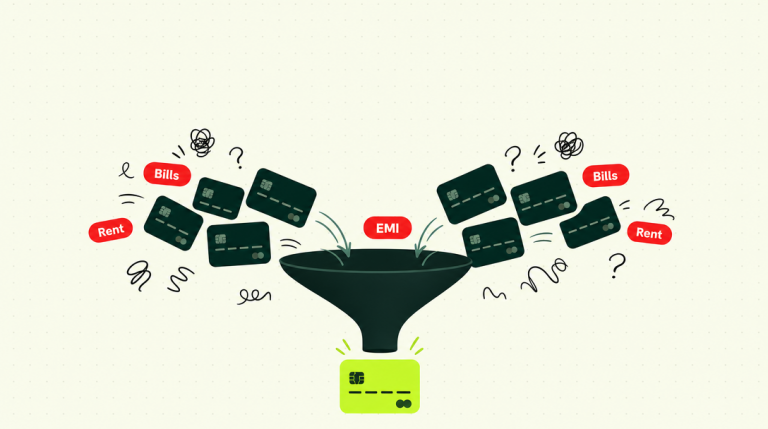
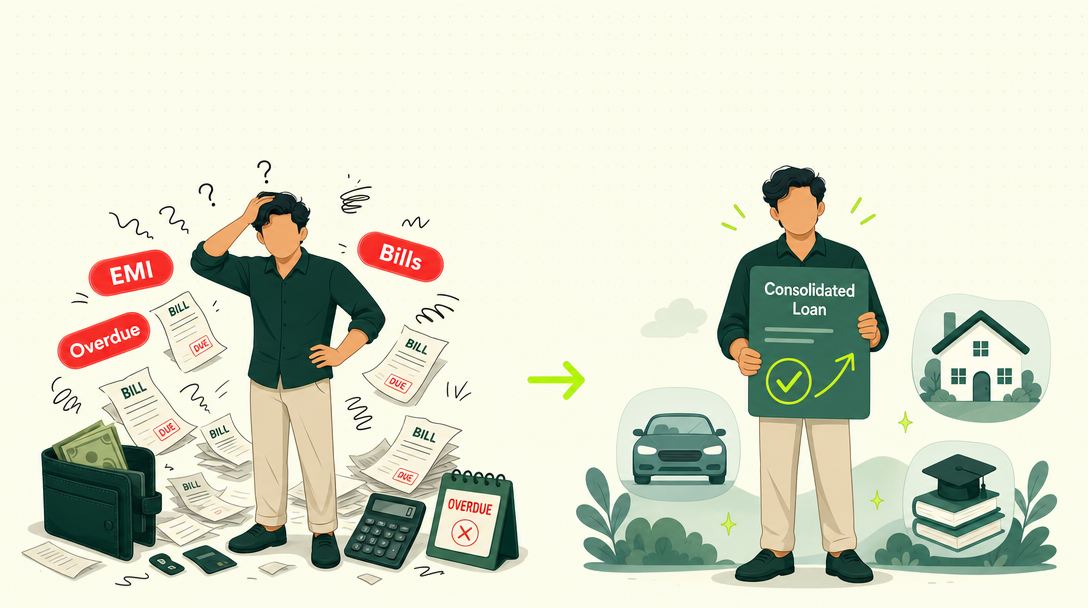
Loan consolidation means taking a new loan to pay off all your existing debts in full. You still owe the same total amount, but to a single lender, at a potentially lower interest rate, with one monthly EMI. Your credit record shows all existing loans as “closed” (positive status) and one new active loan.
Debt settlement means negotiating with your existing lenders to accept less than what you owe — typically 40–70% of the outstanding balance — in exchange for marking the account “settled.” You pay less, but the consequences for your credit profile are severe and long-lasting.
How Loan Consolidation Works
In a loan consolidation scenario, you apply for a new personal loan equal to your total outstanding debt across all lenders. Once approved and disbursed, you use that amount to foreclose all existing loans and credit card dues. You now have one loan, one EMI, one lender.
The appeal is straightforward: if you were paying 36% on a credit card balance, 16% on a personal loan, and 18% on a consumer durable EMI, a consolidation loan at 13% saves you real money across the repayment period. The math is clean and traceable.
How Debt Settlement Works in India
Debt settlement is not a structured banking product. It’s a negotiation — either directly with your lender or through a third-party settlement agency. When a borrower defaults or signals significant financial distress, some lenders (particularly for unsecured debt like credit cards and personal loans) will agree to accept a partial payment as full settlement rather than pursue legal recovery.
This process typically:
- Requires you to have already missed several EMI payments (which means your CIBIL score has already dropped)
- Results in the account being marked “settled” rather than “closed” on your CIBIL report
- Stays on your credit history for 7 years as a negative marker
- Often involves third-party settlement companies that charge 15–25% of the settled amount as fees
CIBIL Score Impact: The Crucial Difference
This is where the two options diverge sharply:
A “settled” status on your CIBIL report is a serious red flag for any future lender. It signals that you negotiated your way out of a debt obligation rather than fulfilling it. Banks will either decline your future applications outright or offer significantly higher rates to compensate for the perceived risk.
Cost Comparison
When to Choose Loan Consolidation
Choose loan consolidation when:
- You are current on all EMI payments (not yet defaulted)
- Your CIBIL score is 650 or above
- Your income is stable and sufficient to service a consolidated EMI
- You want to preserve your credit profile for future financial goals (home loan, car loan, business loan)
When Debt Settlement Becomes Unavoidable
Debt settlement is a last resort — not a strategy. It becomes relevant only when:
- You have already defaulted on 3+ consecutive EMIs and lenders are pursuing legal recovery
- Your income has dropped to zero or near zero (job loss, medical incapacitation) with no near-term recovery
- The total outstanding debt exceeds what you could realistically repay even over an extended period
Even in these cases, explore options like loan restructuring under RBI’s guidelines, which allows lenders to reschedule repayment without marking accounts as “settled.”
- Loan consolidation pays off debt in full through a new loan; debt settlement pays off part of the debt through negotiation.
- Settlement marks your account as “settled” on CIBIL — a negative status that stays for 7 years. Consolidation closes accounts cleanly.
- If you’re still making payments and have a CIBIL score above 650, loan consolidation is almost always the better option.
- Third-party debt settlement agencies often charge 15–25% of the settled amount — factor this into any comparison.
- The waived portion of a settled debt may be taxable as income under the Indian Income Tax Act.
FAQs
Technically yes, but practically difficult. A “settled” status on your CIBIL makes most banks unwilling to extend new credit for 2–3 years post-settlement. NBFCs may consider you at higher rates. The path back requires rebuilding credit through secured credit cards and consistent repayment over 24+ months.
Debt settlement through negotiation is legal. However, third-party settlement agencies are unregulated — there’s no statutory framework governing their fees or practices. Always approach lenders directly before engaging any settlement agency.
Debt restructuring (available under RBI guidelines) rescheduled repayment terms — longer tenure, lower EMI — without marking the account negatively. It’s different from settlement, where you pay less than owed. Loan consolidation is also distinct from both: it replaces old debts with a new single loan.
Conclusion
For most Indian borrowers who are still current on their payments, loan consolidation is the more responsible and financially beneficial path. It costs more in the short term (you pay the full debt) but preserves your credit profile, reduces your ongoing interest burden, and leaves you in a better position for future borrowing. Debt settlement should be reserved for situations of genuine financial crisis — not as a shortcut to a lower total payment.