





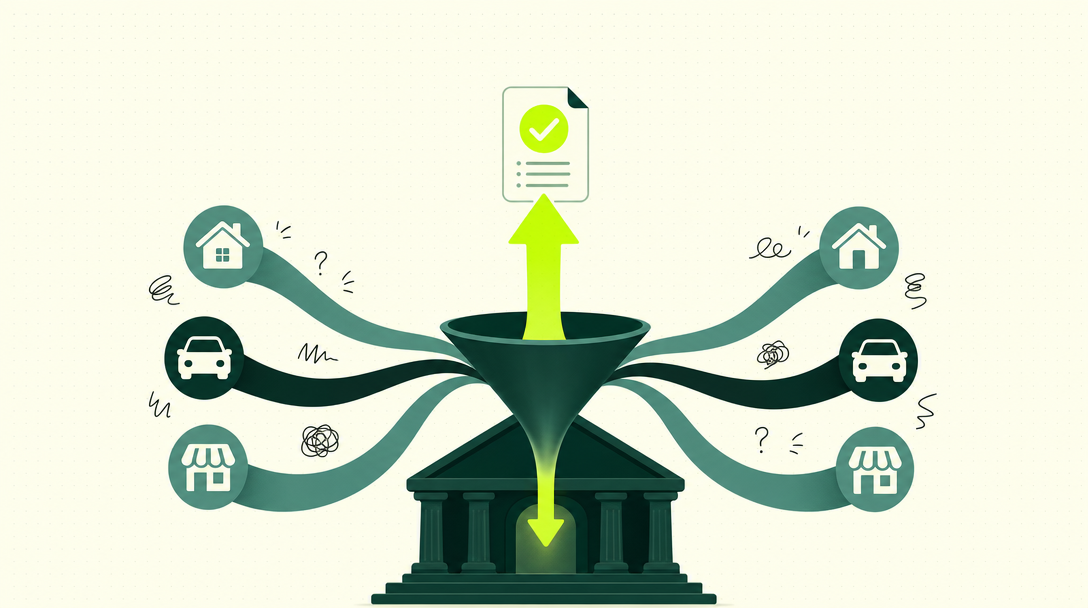
The best banks for loan consolidation depend on your specific profile. Public sector banks offer the lowest rates for strong salaried applicants. NBFCs offer speed and flexibility for self-employed borrowers. This guide compares both categories directly.
How We’re Comparing These Lenders
Rather than naming one “best” lender for everyone, this guide compares lender categories by what actually matters for consolidation. Rate, approval speed, and flexibility for different borrower profiles. Your ideal choice depends on your own credit score, income type, and urgency.
Bank vs NBFC: Key Differences for Consolidation
| Factor | Banks | NBFCs |
|---|---|---|
| Typical rate | 9.75%-14% | 13%-18% |
| Approval speed | 1-2 weeks | 1-3 days |
| Best for | Strong salaried profiles, 750+ score | Self-employed, thinner credit history |
| Documentation | More extensive | Often more streamlined |
| Flexibility | Lower | Higher |
Comparison Table: Rates, Fees, and Tenure
| Lender Type | Rate Range | Processing Fee | Max Tenure |
|---|---|---|---|
| Public sector banks | 9.75%-13% | 0.5%-1% | Up to 5 years |
| Private banks | 11%-15% | 1%-2% | Up to 5 years |
| NBFCs | 13%-18% | 1%-3% | Up to 5 years |
Always confirm current, profile-specific figures directly with the lender, since these change periodically.
Best for Salaried Borrowers
Salaried applicants with a high, stable income and a 750+ credit score typically get the best deals from public sector and private banks. The lower rate, over a consolidation loan’s typical tenure, produces meaningful savings compared to NBFC rates.
Best for Self-Employed Borrowers
Self-employed applicants, particularly those without a long, spotless documentation history, often find NBFCs more accommodating. Faster processing and more flexible income assessment frequently outweigh the somewhat higher rate for this borrower segment.
Best for Fast Disbursal
Need funds urgently, to stop mounting card interest as quickly as possible? NBFCs generally win here, often disbursing within 1-3 days, compared to 1-2 weeks at many banks.
How to Actually Choose
Start by being honest about your own profile. High salaried income, high credit score, and no urgency? Prioritize banks for the lower rate. Self-employed, or need funds fast? NBFCs are likely the more practical starting point.
Why Checking Multiple Lenders Beats Picking One Category
Even within “banks” or “NBFCs” as categories, individual lender offers vary meaningfully for the same borrower profile. The most reliable approach isn’t picking a category and committing; it’s checking your actual eligibility and rate across several specific lenders before deciding.
How TapTap Picks the Right Lender for You
Rather than asking you to guess whether a bank or NBFC suits your profile better, TapTap checks your eligibility against both categories simultaneously, across 20+ specific lenders. We surface the actual offers you’re likely to qualify for, not just a general category recommendation.
A Word on Lender Reputation
Beyond rate and speed, consider a lender’s track record on customer service and transparency, particularly around fees and any prepayment terms. A slightly higher rate from a lender with clear, fair practices can sometimes be a better choice than the absolute lowest rate from one with a history of hidden charges or poor communication.
Frequently Asked Questions
Depends on your profile. Banks generally offer lower rates for strong salaried applicants. NBFCs offer faster approval and more flexibility, especially for self-employed borrowers.
This varies by borrower profile and changes over time. Public sector banks often lead on headline rates for the strongest profiles, but always compare current, specific offers.
Not every bank explicitly markets a “consolidation” product, but most offer personal loans that can be used for this purpose, sized to cover your existing debts.
Not sure which lender fits your profile? Check your options with TapTap across 20+ banks and NBFCs, with zero impact on your credit score.