





EMI bounce charges in India typically range from ₹250 to ₹750 per instance, plus 18% GST, depending on the lender. This guide breaks down what different lender categories charge, and how the fee is calculated.
What Counts as an EMI Bounce Charge
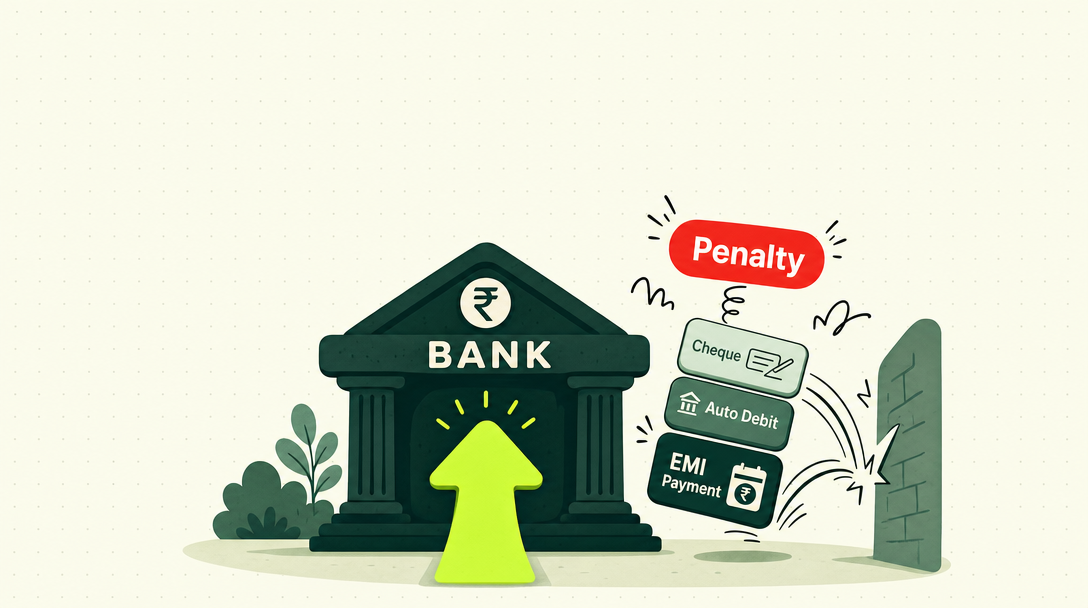
This is the fee a lender applies when your scheduled auto-debit fails, whether through NACH, ECS, or a post-dated cheque. It’s separate from any additional overdue interest that may also apply on the missed amount.
ECS/NACH vs Cheque Bounce: Any Difference?
Most EMIs today are collected through NACH, which has largely replaced the older ECS system. Cheque-based EMIs carry an additional legal dimension under Section 138 of the Negotiable Instruments Act, which doesn’t automatically apply to a failed NACH debit. In practice, the bounce charge itself tends to be similar regardless of the payment method.
Typical Charge Range by Lender Type
| Lender Type | Typical Bounce Charge |
|---|---|
| Public sector banks | ₹250-₹500 per instance |
| Private banks | ₹400-₹750 per instance |
| NBFCs | ₹300-₹600 per instance |
These figures exclude GST, which adds 18% on top of the base charge. Always confirm the exact figure in your specific loan agreement, since it varies by lender and sometimes by loan product.
GST on Bounce Charges
Bounce charges are treated as a service fee and attract 18% GST. A ₹500 base charge effectively becomes ₹590 once GST is added, a detail some borrowers overlook when budgeting for a missed payment.
Can Bounce Charges Be Waived?
Sometimes, particularly for a first-time occurrence with an otherwise clean payment history. It’s worth asking your lender directly, especially if the bounce resulted from a genuine, explainable circumstance, rather than assuming the charge is fixed and non-negotiable.
Does the Charge Differ for Different Loan Types?
Generally, bounce charges are similar across personal loans, home loans, and vehicle loans from the same lender, though the exact figure is set by each lender’s own policy rather than a universal standard. Credit card payment bounces are typically handled under a separate, sometimes different, fee structure specific to card terms.
How Bounce Charges Compare to the Cost of Consolidation
If you’re bouncing EMIs repeatedly because you’re managing too many separate due dates, the cumulative bounce charges across several loans can add up meaningfully over a year. Comparing this ongoing cost against the one-time effort of consolidating into a single, more manageable EMI is often a worthwhile exercise.
A Worked Example
Bounce two EMIs in a year, at an average ₹500 charge plus GST, and you’ve paid roughly ₹1,180 in bounce fees alone, separate from any additional overdue interest. Multiply this across multiple loans and multiple years, and the case for simplifying your EMI structure becomes clearer.
How to Avoid Bounce Charges Going Forward
Align your EMI dates with your salary credit date, where possible. Keep a small buffer balance specifically for EMI dates. And if you’re managing several EMIs across different lenders, consider whether consolidating them into one date, one payment, reduces your overall risk of an accidental bounce.
Frequently Asked Questions
Yes, 18% GST applies on top of the base bounce charge, which most lenders levy as a service fee.
Sometimes, particularly for a first-time occurrence with a clean payment history otherwise. It’s always worth asking directly.
The charge amount is often similar, though a cheque bounce carries additional legal implications under the Negotiable Instruments Act that a failed NACH debit doesn’t automatically trigger.
The charge is typically set by the lender’s overall policy rather than varying significantly by loan type, though always confirm the specific figure for your loan.
Tired of tracking multiple EMI dates and risking bounce charges? See how consolidating into one payment could help.