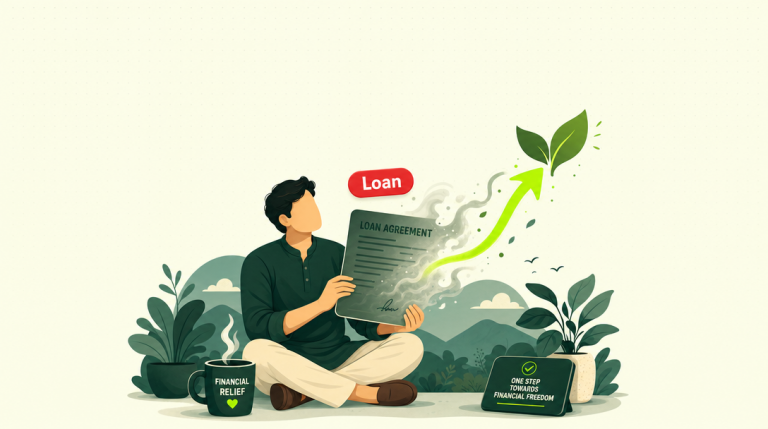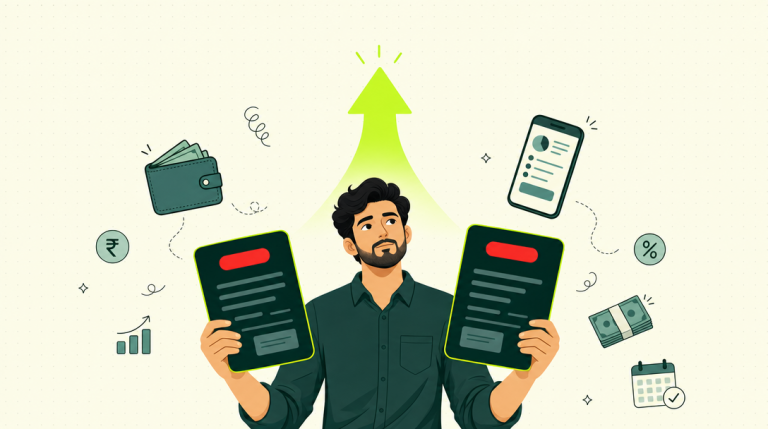






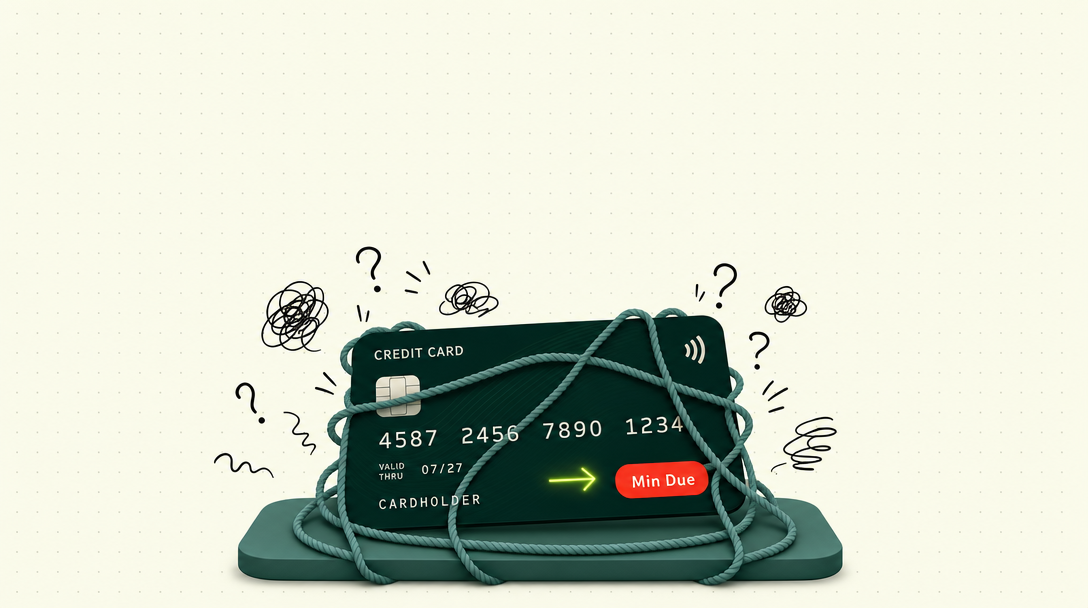
The minimum due trap happens when you keep paying only the smallest amount your card allows, and your balance barely shrinks. Interest keeps piling on the rest. Months pass. Your debt stays almost the same. Here’s exactly how this trap works, and how to escape it.
What “Minimum Due” Actually Means
Your card issuer sets a small required payment each month. Often just 5% of your balance. Pay this, and you’re technically “current.” But the remaining 95% keeps accruing interest, often 30% or more a year.
Why This Feels Manageable, But Isn’t
Paying ₹2,500 on a ₹50,000 balance feels responsible. It clears your minimum. But interest keeps adding to the rest. Your balance barely moves, month after month.
A Worked Example
Owe ₹50,000 at 36% a year. Pay only the minimum, 5%, each month. After a full year of this, your balance may have dropped by only a small amount. Most of what you paid went to interest. Not principal.
Why the Math Works This Way
Interest gets calculated on your full balance. Your payment barely beats the new interest charged. So your principal barely shrinks. This repeats every month. Quietly. Until the balance feels stuck for good.
A Quick Comparison Table
| Payment Strategy | What Happens to Your Balance |
|---|---|
| Minimum due only | Shrinks very slowly, interest dominates |
| Full statement balance | Clears completely, no interest at all |
| A fixed amount above minimum | Shrinks steadily, faster than minimum alone |
How to Tell If You’re Already Trapped
Check your balance from six months ago. Compare it to today. Paid consistently, but barely moved? That’s the clearest sign. The trap isn’t about missing payments. It’s about payments that don’t actually work.
How to Break the Cycle
Pay more than the minimum, every time you can. Even a small amount extra makes a real difference over time. Stop new spending on the card until the balance drops meaningfully. And track your balance monthly, not just whether you paid on time.
When the Trap Gets Serious Enough to Need Bigger Action
Carrying balances across multiple cards, all on minimum payments? The combined interest cost adds up fast. At this point, converting that revolving debt into one fixed, lower-rate loan often breaks the cycle faster than continuing to chip away at minimums alone.
A Realistic Recovery Example
Someone carrying ₹1,20,000 across two cards, on minimum payments, consolidates into a personal loan at 13%. Their new EMI is fixed. Every payment now reduces the actual balance. Within a set number of months, the debt is genuinely, visibly shrinking, not just staying technically current.
Why Awareness Alone Often Isn’t Enough
Knowing about the trap doesn’t automatically fix it. Many people understand this math and still fall into it, simply because minimum payments feel affordable month to month. Real change usually needs a specific plan. Either a firm commitment to pay more, or a structural fix like consolidation.
Frequently Asked Questions
Because your payment is close to the interest charged. Very little goes toward your actual principal.
No. It counts as on-time and won’t directly hurt your score, though it costs you heavily in interest over time.
Pay more than the minimum whenever possible, or consolidate the balance into a fixed-rate loan with a clear payoff date.
Indirectly, yes. High balances relative to your limit hurt your credit utilization, a real factor in your score.
If possible, avoid new spending while clearing a revolving balance. New purchases can make it harder to reduce the principal and keep you trapped in minimum payments.
Conclusion
The minimum due can keep your credit card account current, but it does not necessarily make meaningful progress toward clearing your debt. When interest is high, paying only the minimum can leave a large balance outstanding for a long time. The most effective approach is to pay more than the minimum and avoid adding new purchases while repaying the existing balance.
If you are carrying significant balances across multiple cards, compare the cost of continuing with minimum payments against alternatives such as consolidation. Whatever approach you choose, focus on reducing the principal and creating a clear path to becoming debt-free.
Stuck paying minimums on multiple cards? See how consolidating them into one fixed EMI could help.