





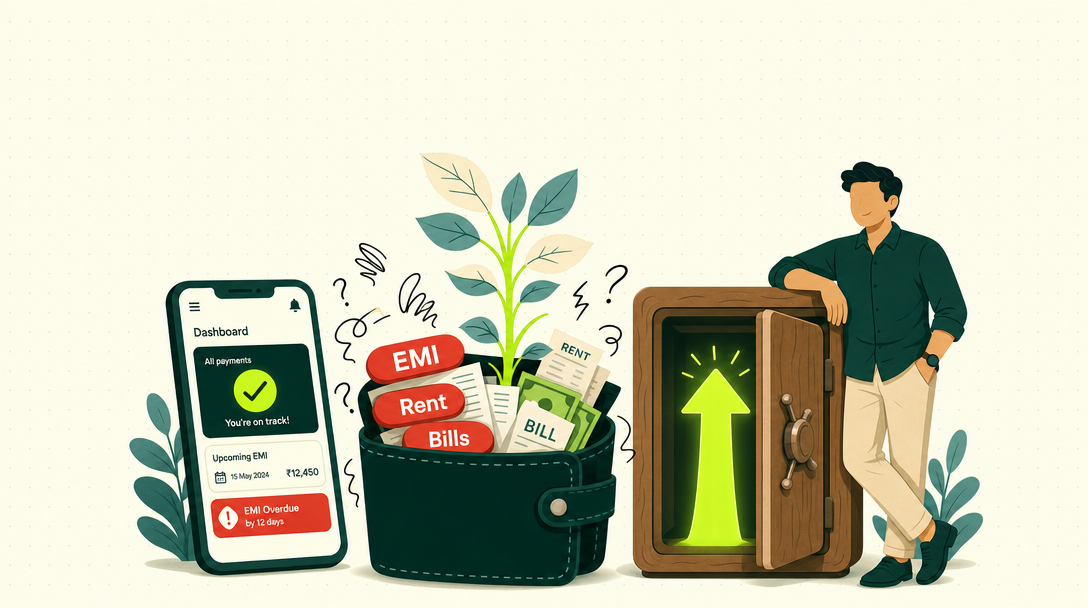
Building an emergency fund while repaying EMIs is possible with a small, consistent monthly contribution, even ₹1,000-2,000, rather than waiting until your loans are fully paid off. This guide covers a realistic, practical approach.
Why You Shouldn’t Wait Until Your EMIs Are Fully Paid
Many people believe they should focus entirely on debt repayment first, and start saving only afterward. This feels logical, but it leaves you completely exposed to any unexpected expense in the meantime: a medical emergency, a job loss, an urgent repair forcing you to borrow again, often at a worse rate than your existing debt.
Having even a small emergency fund alongside your EMIs breaks this vulnerability, without meaningfully slowing your debt repayment.
How Much Should Your Emergency Fund Actually Hold?
A commonly recommended target is 3-6 months of essential expenses, not your full income, just what you’d genuinely need to survive if your income stopped temporarily. For someone with ₹30,000 in essential monthly expenses, that’s a target of ₹90,000-₹1,80,000.
This can feel like an enormous, discouraging number if you’re starting from zero while also managing EMIs. The key is not trying to reach it overnight.
Start With a Smaller, Achievable First Target
Rather than aiming directly for 6 months of expenses, start with a smaller milestone, one month of essential expenses, or even a flat ₹25,000-50,000 buffer. This smaller target is genuinely achievable within a few months, and provides real protection against smaller emergencies, before you build toward the larger, fuller fund.
How to Find Money for Both EMIs and Savings
Review your monthly spending honestly, looking specifically at your “wants” category, dining out, subscriptions, and discretionary shopping. Redirecting even a modest portion of this, ₹1,500-3,000 a month for many households, toward an emergency fund, without touching your EMI payments at all, adds up meaningfully over a year.
Automate this contribution the same way you’d automate an EMI, a fixed transfer to a separate savings account right when your salary arrives, before you have a chance to spend it elsewhere.
Where to Keep Your Emergency Fund
Keep it separate from your everyday spending account, so it’s not accidentally used for regular expenses. A simple savings account, or a liquid mutual fund offering easy access, works well. Avoid locking this money into anything illiquid, fixed deposits with long lock-ins, or investments that could lose value right when you need to access them urgently.
What If You’re Already Struggling to Pay Your EMIs?
If your current EMIs already feel unmanageable, building a new savings habit on top may feel unrealistic, and that’s an important signal in itself. In this situation, addressing your EMI structure directly, through consolidation or restructuring, to free up genuine monthly breathing room, often needs to come before adding a new savings commitment.
A Practical Monthly Split
Consider a modified budget approach specifically for this phase. Continue your existing EMI payments as scheduled. Redirect a small, fixed amount, even 3-5% of your take-home income, into your emergency fund automatically. Adjust your discretionary spending to accommodate this redirected amount, rather than cutting into your EMI payments or your fund contribution.
Why Small, Consistent Contributions Beat Sporadic Large Ones
A consistent ₹2,000 a month builds ₹24,000 in a year, reliably, without requiring any single month of financial strain. Waiting for a “good month” to make a larger, one-time contribution often means the contribution never actually happens, since unexpected expenses tend to absorb any surplus before it gets saved. Consistency, even in small amounts, outperforms sporadic good intentions.
Using Windfalls Wisely
When you do receive an unexpected windfall- a bonus, a tax refund, a gift- consider splitting it deliberately rather than spending it entirely or saving it entirely. A reasonable split might put half toward accelerating your emergency fund, and half toward either a loan prepayment or a planned expense, balancing multiple financial goals rather than favoring just one.
How an Emergency Fund Protects Your Credit Score Indirectly
An often-overlooked benefit: having even a modest emergency fund reduces the chance you’ll need to miss an EMI payment during a temporary income disruption. Since payment history is the single biggest factor in your credit score, this small buffer indirectly protects your credit profile, not just your immediate cash flow.
Revisiting Your Target as Your Situation Changes
Your emergency fund target isn’t fixed forever. As your income grows, your expenses change, or your EMI obligations reduce, revisit both your target amount and your monthly contribution. A fund that felt ambitious at one income level may need to grow as your life circumstances and financial responsibilities expand.
Frequently Asked Questions
A common target is 3-6 months of essential expenses, though starting with a smaller milestone, one month, or a flat amount, is a more realistic first step for most people.
No. Continue your EMI payments as scheduled, and build your emergency fund alongside them with a smaller, separate monthly contribution, rather than disrupting your existing debt repayment.
Somewhere separate from your everyday spending, and easily accessible, a simple savings account or a liquid mutual fund, rather than something illiquid like a long-term fixed deposit.
If your current EMIs already feel unmanageable, addressing that structure directly, through consolidation or restructuring, is often the more urgent first step before adding a new savings goal.
Not usually. Your emergency fund should remain available for genuine financial emergencies. Use surplus income or bonuses for loan prepayments instead, and keep your emergency savings intact unless an unexpected situation truly requires it.
Conclusion
Building an emergency fund while repaying EMIs doesn’t require a large income or perfect financial conditions. The key is to start small and stay consistent. Even saving ₹1,000-2,000 every month can create a financial cushion that helps you handle unexpected expenses without relying on more debt. Over time, this habit strengthens both your financial security and your ability to stay on track with your loan repayments.
Even a small monthly contribution can protect your finances tomorrow: Start your emergency fund today