





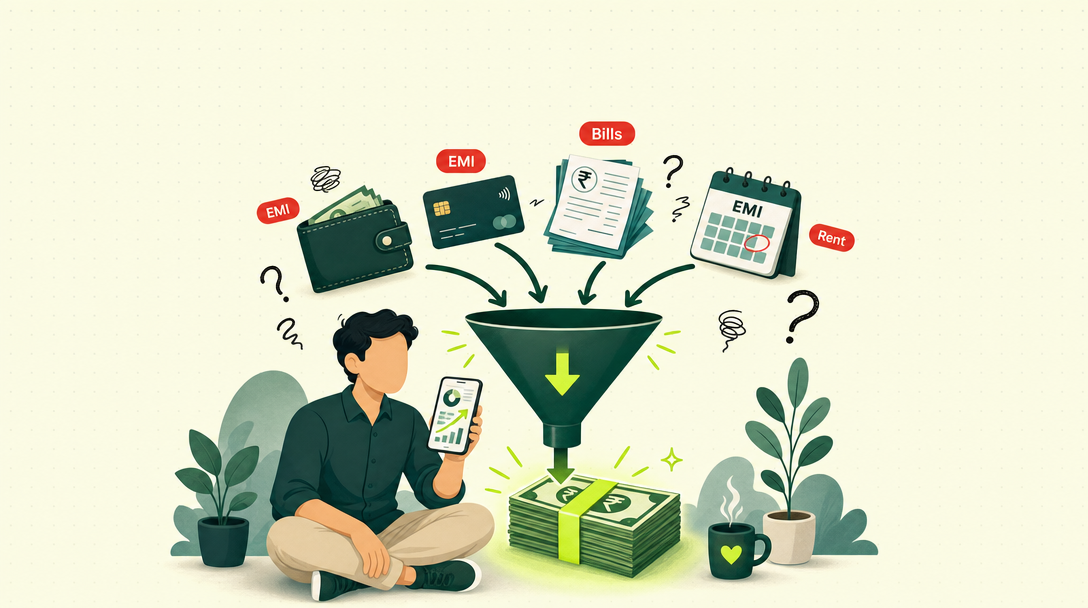
There’s no fixed cap on how many loans can be consolidated into one. Most lenders comfortably combine 3 to 5 debts into a single new loan. The real limit isn’t the number of accounts. It’s your income and FOIR eligibility for the total amount involved.
This guide explains what determines your practical limit, with real examples.
Why There’s No Fixed Number
Lenders don’t count how many separate debts you’re consolidating, as a rule in itself. What they actually assess is the total amount you need to borrow to clear everything, and whether your income supports the resulting EMI within acceptable FOIR limits.
In practice, this means consolidating two large debts might hit your limit faster than consolidating five smaller ones.
What Actually Sets Your Limit
Your total combined debt amount. This becomes the size of your new consolidation loan. A larger combined amount needs a larger sanctioned loan, which depends on your income.
Your FOIR capacity. Most lenders cap total EMI obligations, including the new consolidated EMI, at 50-60% of net income. This, more than the number of debts, sets your ceiling.
Your credit score. A stronger score can unlock a larger sanctioned amount, at a better rate, indirectly raising your practical consolidation limit.
A Worked Example
Say your net monthly income is ₹90,000, with no other obligations. At a 55% FOIR cap, you could support a new EMI of roughly ₹49,500.
At a 12% rate, over 5 years, that EMI capacity supports a loan of approximately ₹22 to 23 lakh. Whether that covers two debts or six debts, the number itself doesn’t matter to the lender. What matters is whether the total falls within this capacity.
Can You Consolidate Debts From Multiple Different Lenders?
Yes. A consolidation loan isn’t restricted to debts from a single bank. Combine a personal loan from one bank, credit card debt from two different issuers, and a phone EMI from a third source, all into one new loan, as long as the total fits your eligibility.
Should You Consolidate Everything, or Just Some of It?
Not necessarily everything. One existing debt already carries a low interest rate, a gold loan, for example? Better left untouched, rather than folded into a new loan at a potentially higher blended rate. The right approach usually consolidates the expensive, high-rate debt, credit cards especially, while leaving genuinely cheap debt alone.
What Happens If Your Total Debt Exceeds Your Eligibility?
Combined debt larger than what your income supports under FOIR limits? A few options exist. Prioritize consolidating the highest-rate debts first, since these offer the biggest savings. Add a co-applicant, if available, to boost your combined income and eligible amount. Or consider a longer tenure, which lowers the required EMI, though it increases total interest paid.
Does the Type of Debt Affect the Practical Limit?
Not directly. But it does affect how much benefit you get from including it. Consolidating high-rate credit card debt produces the biggest interest savings. Consolidating an already low-rate loan produces little to no savings, and may not be worth including even if your eligibility technically allows it.
A Quick Self-Check Before You Apply
List every debt you’re considering, with its balance and rate. Add up the total balance. Compare that against a rough eligibility estimate, using your income and a 50 to 55% FOIR assumption. This gives you a realistic sense of whether everything can be consolidated in one go, or whether you’ll need to prioritize.
A Practical Tip: Start With What Matters Most
If you’re unsure whether your full debt list will fit within your eligibility, don’t wait to find out through a rejection. Start by listing your two or three highest-rate debts. Check if consolidating just those fits comfortably. You can always ask about adding more once you see your real numbers.
Frequently Asked Questions About Consolidating Multiple Loans
No fixed number. Most lenders comfortably handle 3-5 debts in one consolidation loan. The real constraint is the total amount, relative to your income and FOIR eligibility.
Yes. A consolidation loan can cover debts from multiple lenders, combined into a single new loan.
Not necessarily all of them. Debts already at a low interest rate may be better left alone. Focus on consolidating expensive, high-rate debt for the biggest benefit.
Consider adding a co-applicant, prioritizing the highest-rate debts first, or opting for a longer tenure to reduce the required EMI.
Not directly. The rate depends primarily on your credit score, income, and the lender, not the number of debts being combined.
Not sure what you can realistically consolidate? Check your eligibility with TapTap across 20+ lenders, with zero impact on your credit score.