





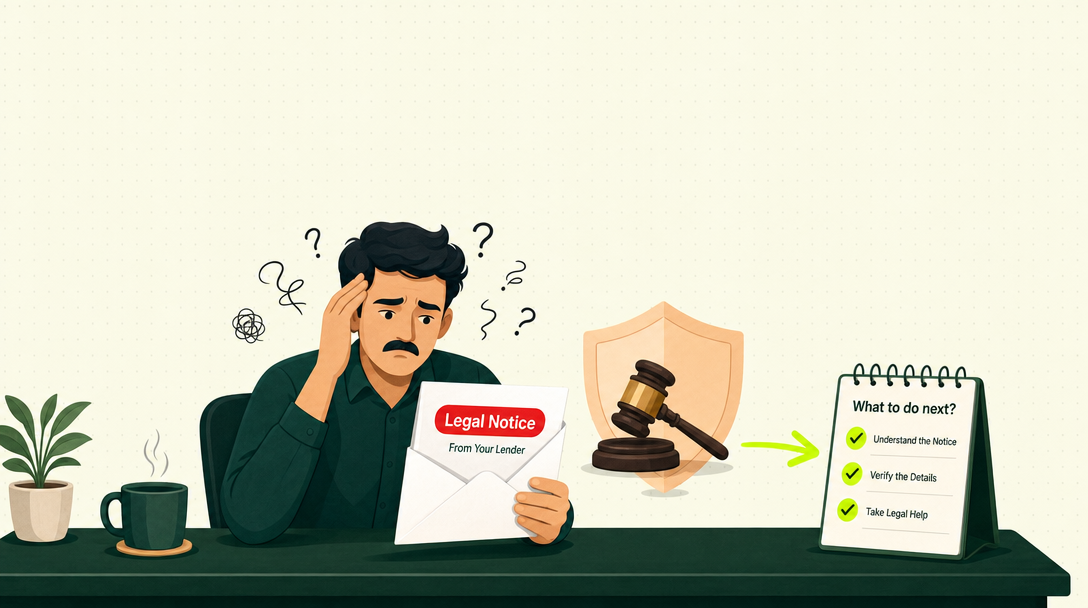
Receiving a legal notice from a lender over an overdue loan can be serious, but it does not automatically mean you are going to court. The first step is to read the notice carefully, understand the amount claimed and the response deadline, and contact your lender promptly.
Ignoring the notice can increase the risk of further escalation. Depending on your situation and the lender’s policies, you may still be able to discuss repayment, restructuring, or another resolution. If the amount is disputed or the notice raises legal questions, consider getting professional legal advice.
What a Legal Notice Actually Signals
This usually means your account has been seriously overdue for a while. Your lender is formally warning you. Before they consider further legal steps. It’s a real escalation from earlier reminders.
Why Panic Doesn’t Help
A legal notice feels alarming. That’s understandable. But panic, or avoidance, tends to make things worse. Not better. A calm, direct response serves you far better than either extreme.
Step 1: Read the Notice Carefully
Understand exactly what’s being asked. The amount claimed. The deadline given. Any specific next steps mentioned. Get this clear before you respond.
Step 2: Contact Your Lender Directly
Call or visit as soon as you can. Explain your situation honestly. Ask what options are still open. Even at this late stage.
Step 3: Explore Real Options
A repayment plan or restructuring, if your lender agrees. A partial payment to show real good faith. Situation too complex to handle alone? Consider professional guidance.
A Quick Reference Table
| Response | Likely Outcome |
|---|---|
| Ignore the notice | Increases risk of further legal escalation |
| Panic without acting | Wastes valuable time |
| Contact lender directly | Often opens up remaining options |
Does a Legal Notice Mean You’ll Definitely Face Court?
Not necessarily. Many situations resolve through direct negotiation even at this stage, before reaching formal court proceedings. The notice is a warning and a pressure point, not an automatic guarantee of legal action.
What Happens If You Continue to Ignore It?
Your lender’s legal options typically strengthen the longer you stay unresponsive. This can eventually include formal court proceedings, though the specific process depends on your loan type and amount.
Should You Get Legal Advice?
For a straightforward, resolvable situation, direct communication with your lender is often sufficient. For a complex situation, multiple debts, disputed amounts, or genuine confusion about your rights, professional legal or financial guidance is worth considering.
A Realistic Scenario
Someone receives a legal notice after months of an unresolved overdue loan. Rather than continuing to avoid it, they contact the lender immediately, acknowledge the situation honestly, and negotiate a structured repayment plan, resolving the matter without further escalation.
Why This Is Still a Resolvable Stage
Even at this point, most lenders prefer a resolved account over a prolonged legal process, which costs them time and resources too. This shared incentive often creates real room for negotiation, if you engage directly.
Frequently Asked Questions
Not necessarily. It’s often a formal warning, with direct negotiation still possible before any court process begins.
Read it carefully to understand what’s being asked, then contact your lender directly as soon as possible.
Often yes. Many lenders remain open to a resolution, since it’s typically preferable to a prolonged legal process for them too.
No. Even if you can’t pay immediately, contacting your lender to explain your situation is far better than silence.
Yes, especially if the notice sets a response deadline or contains disputed information. Keep a copy of your response and any supporting documents for your records.
Conclusion
Receiving a legal notice for an overdue loan is serious, but it does not automatically mean you will go to court. The right response is to stay calm, read the notice carefully, and understand the amount claimed, deadline, and action requested. Contact your lender promptly and discuss whether a repayment plan, restructuring, or another resolution is available.
If you cannot pay immediately, explain your situation rather than remaining silent. Where the amount is disputed, the notice is unclear, or multiple debts are involved, professional legal advice can help you understand your position and respond appropriately. Acting early is generally better than allowing the matter to escalate.
Facing a serious overdue situation with multiple debts? See how consolidating them into one manageable plan could help.