





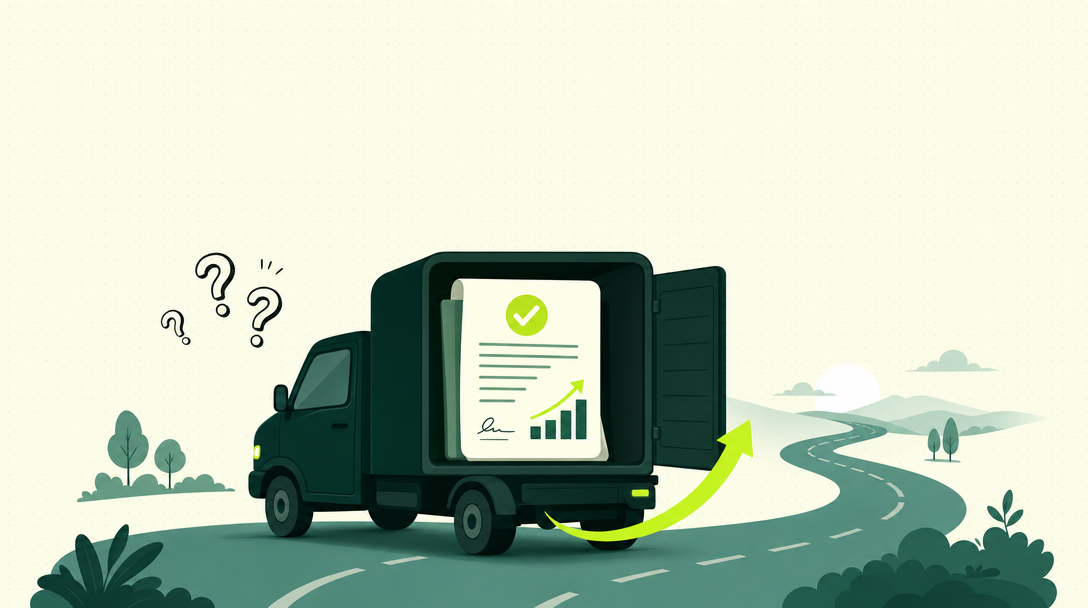
A commercial vehicle loan finances trucks, buses, and other business-use vehicles, with the vehicle itself serving as collateral. This guide covers eligibility, rates, and what separates new-vehicle from used-vehicle financing.
What Is a Commercial Vehicle Loan?
This is a specific category of secured commercial financing, used to purchase vehicles for business or commercial transport purposes. Because the vehicle itself backs the loan, rates are generally more competitive than unsecured business financing.
Eligibility for New vs Used Vehicles
New commercial vehicles typically see the most favorable financing terms, higher LTV, and lower rates, since the asset’s value and condition are well established.
Used commercial vehicles are financed too, but usually at a lower LTV and a modestly higher rate, reflecting the vehicle’s depreciated value and less predictable remaining useful life.
Down Payment and LTV
Expect to finance 75-90% of a new commercial vehicle’s on-road price, meaning a down payment of 10-25%. For used vehicles, LTV typically drops to 60-75%, requiring a larger down payment.
Interest Rate Range 2026
Commercial vehicle loan rates currently run 9% to 13% per annum for new vehicles, and somewhat higher, often 12-16%, for used vehicles, reflecting the different risk profiles involved.
Documents Required
- KYC for the applicant or business owner
- Business proof, registration certificate, GST registration
- 2-3 years’ ITR and bank statements
- Driving license and permit details, where applicable
- Vehicle quotation or invoice from the dealer
New vs Used Commercial Vehicle Loan: Key Differences
| Factor | New Vehicle | Used Vehicle |
|---|---|---|
| LTV | 75-90% | 60-75% |
| Interest rate | 9%-13% | 12%-16% |
| Tenure | Up to 5-7 years | Usually shorter, 3-5 years |
| Documentation | Simpler, dealer invoice | Requires vehicle valuation |
Maximum Tenure for a Commercial Vehicle Loan
New vehicle loans typically extend up to 5-7 years. Used vehicle loans usually carry shorter maximum tenures, often capped around 3-5 years, reflecting the vehicle’s remaining useful life.
What Lenders Assess Beyond Standard Eligibility
For fleet operators or transport businesses, lenders often look at the specific route or business model the vehicle will support, since revenue predictability from that use case affects risk assessment. First-time commercial vehicle buyers, without an existing fleet, may face somewhat more conservative terms until they’ve built a track record.
How to Choose Between Financing a New or Used Vehicle
A new vehicle costs more upfront but comes with better financing terms and a full useful life ahead of it. A used vehicle costs less initially but carries a higher rate and shorter loan tenure. Run the total cost of ownership for both options, not just the purchase price, before deciding which fits your business better.
A Worked Example
Financing a new commercial vehicle worth ₹15,00,000, at 85% LTV, means borrowing ₹12,75,000, with a down payment of ₹2,25,000. At 10.5% over 5 years, the EMI runs approximately ₹27,400.
The same vehicle, purchased used at a similar remaining value but at 70% LTV and 14% interest over 4 years, would carry meaningfully different monthly economics, worth calculating precisely before committing either way.
Frequently Asked Questions
Typically 10-25% for new vehicles, and 25-40% for used vehicles, depending on the lender and vehicle type.
Yes, though at a lower LTV and modestly higher rate than new vehicle financing, reflecting the depreciated asset value.
Up to 5-7 years for new vehicles, typically shorter, 3-5 years, for used vehicles.
No, first-time buyers can qualify, though terms may be somewhat more conservative until a track record is established.
Planning to buy a commercial vehicle? Check your financing options with TapTap across 20+ lenders