





App loan balance transfer, moving instant loan app debt directly to a new lender, isn’t a standard product most banks offer. But you can achieve the same result differently, by consolidating your app loan debt into a new bank or NBFC loan. This guide explains exactly how.
Why Direct App Loan Balance Transfer Isn’t Common
Traditional balance transfer products are built around standard personal loans and credit cards, with predictable documentation and reporting to credit bureaus. Many instant loan apps operate differently, and not every app loan is reported the same way, or structured to be easily “transferred” in the formal sense banks use for personal loans.
The Practical Alternative: Consolidation
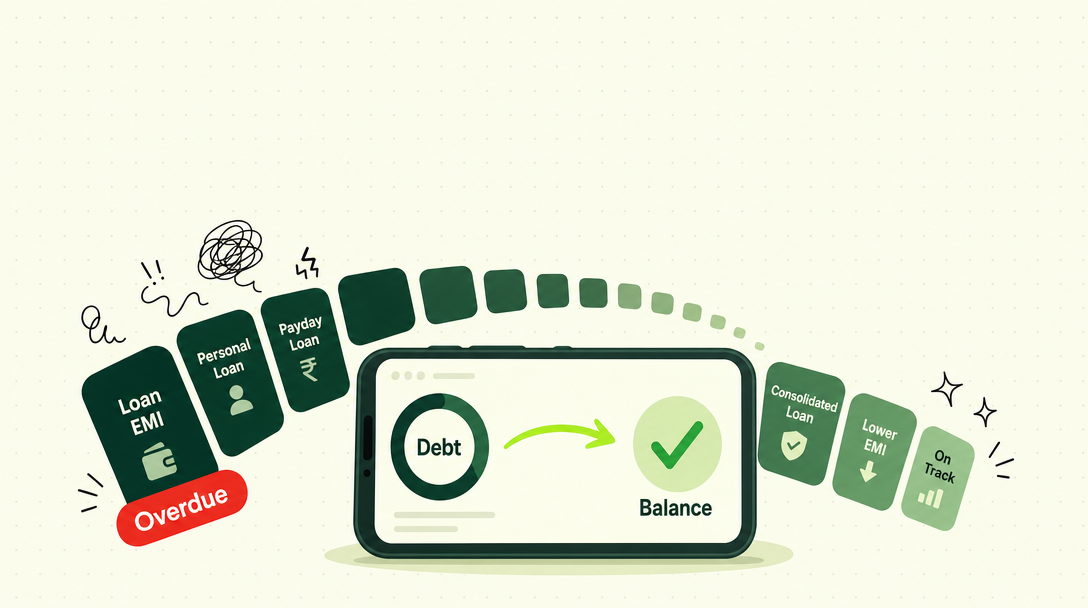
Instead of a direct transfer, you can take a new personal loan, or consolidation loan, from a bank or NBFC, sized to cover your outstanding app loan debt. You then use those funds to close the app loan directly. The practical effect is the same as a balance transfer, moving your debt to a better rate, even though the mechanism differs.
Why Banks Are Cautious About App Loan Debt
Some app-based lenders operate outside full RBI compliance, which makes traditional lenders cautious about directly refinancing that specific debt. This is one more reason to check any lending app’s RBI compliance status before borrowing in the first place.
Step-by-Step: Consolidating App Loan Debt
- Gather your app loan details. Outstanding balance, current rate, and any lender documentation available.
- Check your eligibility for a personal or consolidation loan through a bank or NBFC.
- Get approved for an amount sufficient to cover your app loan balance.
- Use the disbursed funds to close the app loan directly. Get written confirmation of closure.
- Continue repaying your new loan, at the new, typically lower rate.
Red Flags: Signs Your Loan App May Not Be Regulated
Before you even reach the point of needing to consolidate app loan debt, watch for these warning signs. No clearly named RBI-regulated lending partner behind the app. Excessive phone permissions requested: contacts, photos, SMS access beyond what’s needed. Fees or rates that aren’t disclosed clearly upfront. And aggressive or threatening recovery behavior, which itself may signal an unregulated operator.
Why Consolidating App Loan Debt Often Makes Sense
Instant loan app rates frequently run well above 30% annually, sometimes significantly higher for shorter-tenure products. A consolidation loan from a bank or NBFC, even at a rate that looks unremarkable on its own, 13-18%, typically represents a substantial saving compared to continuing with app loan debt.
What If You Have Multiple App Loans?
If you’ve taken multiple instant loan app loans, a common and risky pattern, list every one out, with balances and rates. A single consolidation loan can often be sized to cover all of them at once, replacing several high-rate, poorly tracked debts with one manageable EMI.
A Realistic Scenario
Consider a borrower with three separate app loans, totaling ₹1,20,000, at a blended rate above 34%. Consolidating this into a single personal loan at 14%, over 2 years, produces an EMI meaningfully lower than juggling three separate app repayment schedules, while cutting the effective interest cost dramatically.
What to Do If You’re Already Struggling With App Loan Debt
Don’t take another app loan to cover the last one; this pattern compounds quickly. Instead, check your consolidation eligibility with a regulated lender as soon as possible, since every month of delay adds more high-rate interest to your outstanding balance.
Frequently Asked Questions
Not through a direct “transfer” product in most cases, but you can take a new bank or NBFC loan and use it to close your app loan, achieving the same practical outcome.
No. Some operate without proper regulatory backing. Always check whether an app clearly names its RBI-regulated lending partner before borrowing.
Consequences vary, but can include aggressive recovery attempts, credit score damage if reported to bureaus, and, in serious cases, legal action, similar to any unpaid debt.
The practical route, consolidating through a regulated bank or NBFC, is safe and often financially beneficial, provided you choose a properly RBI-compliant new lender.
Struggling with high-interest app loan debt? Check if consolidating it into one lower-rate loan could help.