





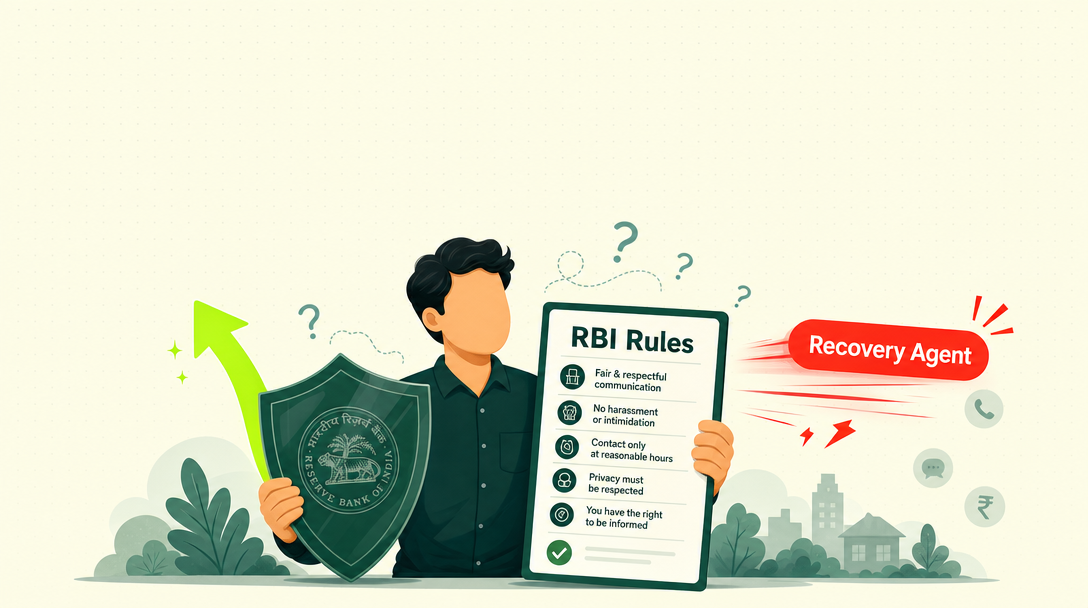
Under RBI rules on loan recovery agents, banks and NBFCs must follow a fair practices code. Recovery agents can only contact you at reasonable hours. They must identify themselves clearly. They cannot use threats or public shaming. They must respect your privacy.
Struggling with overdue EMIs? Knowing these rules protects you from behavior that crosses the line, while you still take your repayment obligation seriously.
Why RBI Regulates Recovery Behavior
Loan recovery is a legitimate part of lending. But aggressive, harassing, or abusive collection tactics have been a documented problem in India’s lending industry. This prompted the RBI to set clear boundaries on how recovery can legally happen.
These rules apply to agents working on behalf of RBI-regulated banks and NBFCs. Unregulated or unlicensed lenders may not follow, or even be bound by, these same rules. One more reason borrowing only from RBI-regulated entities matters.
What Recovery Agents Are Allowed to Do
- Contact you during reasonable hours, generally between 8 AM and 7 PM.
- Clearly identify themselves and the lender they represent.
- Discuss your overdue amount and repayment options.
- Send written communication, including formal notices, about your overdue status.
- Visit your registered address, if necessary, during reasonable hours.
What Recovery Agents Are Not Allowed to Do
- Contact you outside reasonable hours, including late at night or very early morning.
- Use threatening or abusive language, or intimidate you or your family.
- Contact your employer, friends, or family to pressure or shame you, except in specific limited circumstances involving a guarantor.
- Publicly shame you, including posting about your debt on social media, or contacting your contacts list without authorization.
- Misrepresent themselves as police, government officials, or legal authorities.
- Visit your workplace in a way designed to embarrass or pressure you in front of colleagues.
What to Do If a Recovery Agent Crosses the Line
- Document everything. Note the date, time, what was said, and the agent’s name if given.
- Contact the lender directly, not just the recovery agent. Report the behavior formally.
- File a written complaint with the bank or NBFC’s grievance officer.
- Escalate to the RBI’s Banking Ombudsman if the lender doesn’t resolve your complaint.
- Consider a formal police complaint for genuine harassment, threats, or privacy violations.
Your Overdue Debt Is Still Real
None of these rights change the fact that you owe the money. Fair treatment during recovery doesn’t erase the obligation. It just means the process has to stay within legal bounds. Genuinely struggling to pay? Proactive communication with your lender is the better move, not avoidance.
How to Prevent Reaching This Stage
The best protection against aggressive recovery is never reaching a seriously overdue status. At risk of missing a payment? Contact your lender before the due date. Ask about restructuring. Or consider consolidating multiple debts into one manageable EMI, so a temporary shortfall doesn’t spiral into a prolonged default.
A Quick Reference: Reasonable vs Unacceptable Recovery Behavior
| Behavior | Status |
|---|---|
| A call at 6 PM reminding you of an overdue EMI | Reasonable |
| A call at 11 PM threatening consequences | Unacceptable |
| A formal written notice about overdue status | Reasonable |
| Contacting your employer to shame you publicly | Unacceptable |
| A polite visit to your registered address during the day | Reasonable |
| Posting about your debt on social media | Unacceptable |
What If You Borrowed From an Unregulated App?
Wasn’t the lender RBI-regulated to begin with? Some of these protections may not apply in the same formal way. Harassment, threats, and privacy violations remain illegal regardless of the lender’s regulatory status. One more reason to check a platform: How to check if a lending platform is RBI compliance before borrowing, not after a problem arises.
Why Recovery Behavior Escalates in the First Place
Recovery tends to escalate when a borrower goes silent after missing payments. Lenders interpret non-response as avoidance, which triggers more frequent, more insistent contact over time. The single most effective way to keep recovery interactions calm and professional is staying in communication from the very first missed payment, not after several have piled up.
Frequently Asked Questions
No. RBI’s fair practices code restricts contact to reasonable hours, generally between 8 AM and 7 PM.
Generally no, except in limited circumstances involving a formal guarantor. Contacting others to pressure or shame you isn’t permitted under RBI guidelines.
Document the incident, report it formally to the lender’s grievance officer, and escalate to the RBI’s Banking Ombudsman if unresolved. Consider a police complaint for serious harassment.
They apply to RBI-regulated banks and NBFCs, and agents acting on their behalf. Unregulated lending apps may not be bound by the same formal framework.
No. These rules govern how recovery can happen, not whether the debt is owed. Struggling to repay? Proactive communication and restructuring options are the better path than avoidance.
Worried about staying on top of multiple EMIs before it becomes a recovery issue? See how consolidating them into one payment could help.