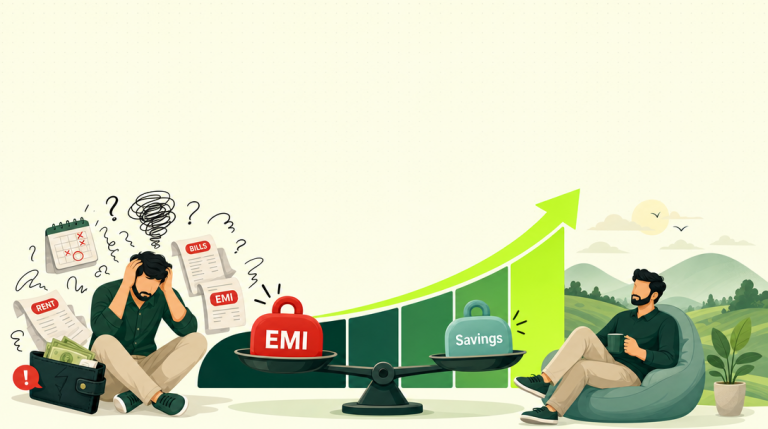






You open your banking app on the 5th of every month and watch your salary disappear in real time. ₹14,000 for the car loan. ₹9,500 for the personal loan you took last year. ₹6,000 minimum due on the credit card. ₹4,200 for the consumer durable loan. By the 6th, nearly 60% of your income is already gone, and you haven’t paid rent yet.
This is not a rare situation. Millions of salaried Indians are running four, five, or even six simultaneous EMIs without realising that the structure of their debt, not their income, is the real problem.
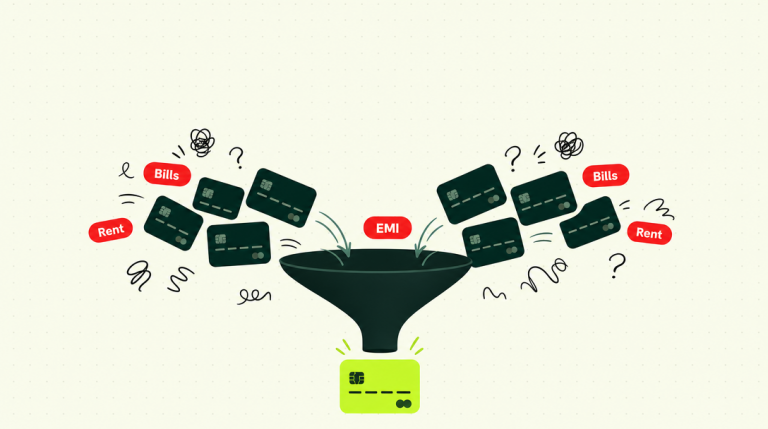
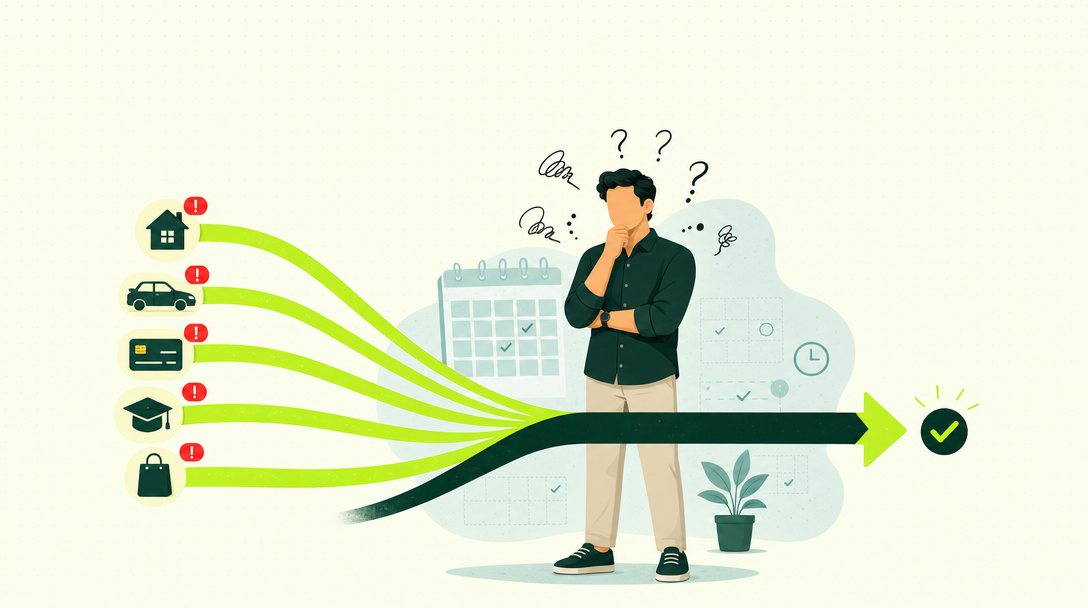
A debt consolidation loan in India solves exactly this. Instead of managing multiple repayments at different interest rates, different due dates, and different lenders, you take a single loan that pays off all your existing dues. The result: one EMI, typically at a lower interest rate, and significantly more breathing room every month.
This guide covers everything: how it works, who qualifies, what it actually saves you, and the smartest way to approach it.
What Is a Debt Consolidation Loan?
A debt consolidation loan is a fresh personal loan taken specifically to pay off multiple existing debts simultaneously. The new loan has one interest rate, one repayment tenure, and one monthly E,, replacing all the individual payments you were managing before.
For Indian borrowers, the most common consolidation scenarios are:
- 2–3 personal loans from different banks or NBFCs
- A combination of personal loans and outstanding credit card balances
- Consumer durable loans, buy-now-pay-later dues, and personal loans together
- A car loan or two-wheeler loan combined with personal loan obligations
Debt consolidation is not about taking on more debt. It is about restructuring existing debt intelligently,ntly reducing your interest rate, extending your tenure sensibly, and freeing up monthly cash flow.
Why Multiple EMIs Are More Expensive Than One
The mathematics of multiple loans working against you is often invisible. Here is what most borrowers don’t calculate:
| Scenario | Personal Loan 1 | Personal Loan 2 | Credit Card | Total Monthly |
|---|---|---|---|---|
| Before Consolidation | ₹9,500 @ 18% | ₹6,200 @ 22% | ₹4,800 @ 36% | ₹20,500 |
| After Consolidation | — | — | — | ₹12,800 @ 13.5% |
| Monthly Savings | — | — | — | ₹7,700 saved |
The difference isn’t just monthly savings. Over a 48-month tenure, ₹7,700 saved per month equals ₹3.7 lakh in retained cash that stays in your hands rather than going to three different lenders.
Credit card debt is the single most damaging element in a multi-debt portfolio. At 36–42% APR, even a ₹1 lakh outstanding balance costs ₹36,000–₹42,000 per year in interest alone. Absorbing it into a 13–15% personal loan cuts that annual cost by over 60%.
How a Debt Consolidation Loan Works in India — Step by Step
- List all your current debts with outstanding principal, interest rate, and remaining tenure.
- Calculate your current total monthly EMI outgo and total interest payable if you continue as-is.
- Identify your CIBIL score and current FOIR (Fixed Obligation to Income Ratio).
- Approach a lender — bank or NBFC — for a personal loan equal to the sum of all outstanding principal.
- The consolidation loan amount is used to pay off each individual lender in full.
- You repay only the new single EMI to one lender going forward.
Step 3 is where most borrowers stumble. If your FOIR is already above 50%, some lenders will hesitate. This is where a loan advisory platform like TapTap Loans adds real value by matching you to lenders who work with your specific profile.
Who Qualifies for Debt Consolidation in India?
Most banks and NBFCs evaluate consolidation loan applications using the same criteria as any personal loan, with a few additional considerations:
| Eligibility Factor | What Lenders Look For |
|---|---|
| CIBIL Score | 700+ preferred; some NBFCs work with 650+ |
| Monthly Income (Salaried) | ₹25,000+ net take-home |
| Employment Stability | Minimum 1 year with current employer |
| FOIR After Consolidation | Should be under 50% post-consolidation |
| Age | 21–58 years (loan must close before 60) |
| Existing Repayment History | No active defaults or NPA status |
A key factor that many borrowers overlook: the lender will calculate your post-consolidation FOIR, not your current one. If consolidating reduces your monthly obligation from ₹20,500 to ₹12,800, your FOIR improves significantly, which actually increases your chances of approval.
Debt Consolidation vs Balance Transfer: What’s the Difference?
These two terms are often used interchangeably but serve slightly different purposes:
- Debt Consolidation: Combines multiple different loan types (personal loans + credit cards + other EMIs) into one new personal loan.
- Balance Transfer: Moves one existing loan from one lender to another lender offering a lower interest rate. Typically used for a single loan.
For borrowers with multiple debts, consolidation is the broader solution. For borrowers with one large loan at a high rate, a balance transfer may be simpler. Many borrowers do both — consolidate first, then balance-transfer the result when an even better rate becomes available later.
For a detailed breakdown of the balance transfer option, read:
→ Personal Loan Balance Transfer India 2026: Break-Even Rules and Real Savings
How Much Can You Actually Save? A Real Example
Anjali, 32, salaried software engineer in Pune, monthly take-home ₹72,000:
- Personal Loan A: ₹3.8 lakh outstanding, 14 months remaining, EMI ₹11,200 @ 19%
- Personal Loan B: ₹2.1 lakh outstanding, 22 months remaining, EMI ₹7,400 @ 24%
- Credit Card: ₹1.3 lakh outstanding, minimum payment ₹5,800 @ 36%
- Total monthly outgo: ₹24,400 — 34% of her income
After Debt Consolidation:
- Consolidation loan: ₹7.2 lakh at 13.5% for 60 months
- New single EMI: ₹16,500
- Monthly savings: ₹7,900
- Total interest saving over tenure: ₹2.84 lakh
Anjali’s FOIR dropped from 34% to 3%; her credit profile improved because the credit card was fully paid off, and she regained ₹7,900 per month in discretionary income.
Want to model your own scenario? Use the free calculator here:
→ Loan Consolidation Calculator India: Calculate Your Exact Savings
Mistakes to Avoid When Consolidating Debt
- Taking a longer tenure just to minimise EMI: A 7-year consolidation loan at 14% may have a lower monthly payment than a 3-year loan at 14%, but the total interest paid nearly doubles. Balance monthly relief with long-term cost.
- Not closing the credit cards after paying them off: Leaving credit cards open with a zero balance is actually good for your CIBIL score — but continuing to spend on them while repaying the consolidation loan defeats the entire purpose.
- Ignoring processing fees and prepayment charges: Consolidation loans carry processing fees of 1–3% of the loan amount. Factor this into your break-even calculation.
- Applying to multiple lenders simultaneously: Each application triggers a hard inquiry. Multiple inquiries within 30 days can reduce your CIBIL score by 20–30 points.
- Not comparing lenders: A 1% difference in interest rate on a ₹7 lakh loan over 5 years equals approximately ₹21,000 in additional interest. Always compare before committing.
For a comprehensive analysis of whether consolidation is right for your specific situation, read:
→ Is Loan Consolidation a Good Idea? An Unbiased Analysis for Indian Borrowers
How TapTap Loans Helps You Consolidate Smarter
TapTap Loans is a loan advisory platform, not a lender. The difference matters enormously for debt consolidation.
When you come to TapTap Loans with multiple existing EMIs, the advisors don’t just match you to a lender. They first assess your full debt picture, calculate your post-consolidation FOIR, identify which combination of debts makes most sense to consolidate, and then match you to the specific lender most likely to approve your profile at the best available rate.
Unlike applying directly at a bank, this process doesn’t trigger hard inquiries on your credit file until you’re matched to a genuinely suitable lender.
Key Takeaways
- Debt consolidation replaces multiple high-rate loans with one lower-rate personal loan, reducing both monthly EMI and total interest paid.
- Credit card debt at 36%+ APR is the highest-priority target for consolidation. Even replacing it with a 14% personal loan cuts interest by more than half.
- Your post-consolidation FOIR should be under 50%, ideally under 40% for smooth approval.
- Always compare at least 3–5 lenders before accepting a consolidation offer. A 1–2% difference in rate can mean ₹20,000–₹50,000 over the loan tenure.
- Using a loan advisory platform like TapTap Loans means getting matched to the right lender without multiple hard inquiries hitting your credit file.
Frequently Asked Questions
In the short term, a new loan application triggers one hard inquiry, which may reduce your score by 5–10 points. However, within 3–6 months, paying off multiple accounts (especially credit cards) typically improves your CIBIL score meaningfully — often by 30–50 points. The net effect of consolidation is credit score improvement, not damage.
Most banks require a CIBIL score of 700+ for personal loans used for consolidation. Some NBFCs work with scores as low as 650, though at higher interest rates. If your score is below 650, focus on improving it for 3–6 months before applying — the better rate you qualify for will save far more than waiting costs.
Yes. A personal loan used for debt consolidation can absorb any type of unsecured debt — personal loans, credit card balances, consumer durable loans, and BNPL dues. The consolidation loan is paid directly to each outstanding lender, replacing all obligations with a single personal loan EMI.
With a complete application and proper documentation, most banks disburse consolidation loans within 48–72 hours. Digital NBFCs can be faster — sometimes same-day. TapTap Loans manages the entire process, from lender matching to final disbursement, typically completing the full cycle in 24–48 working hours.
Most lenders accept ‘debt consolidation’ or ‘other purposes’ as a valid loan reason. You are not required to justify the consolidation to the new lender in detail. However, the new lender will verify your existing obligations through your credit report and bank statements.
Conclusion
Debt consolidation can make multiple EMIs easier to manage and may reduce your overall interest cost when high-rate debts are replaced with a lower-rate loan. Before consolidating, compare the new interest rate, processing fees, tenure, and total repayment amount. Most importantly, avoid taking a longer tenure only for a lower EMI, and avoid rebuilding credit card debt after consolidation. When the numbers genuinely work in your favour, consolidation can simplify your finances and improve monthly cash flow.