





In CIBIL score vs CIBIL report, the score is a single three-digit number summarizing your creditworthiness. The report is the full, detailed document behind that number, showing every account, payment, and inquiry on your credit history. This guide explains both, and why the difference genuinely matters.
What Is a CIBIL Score?
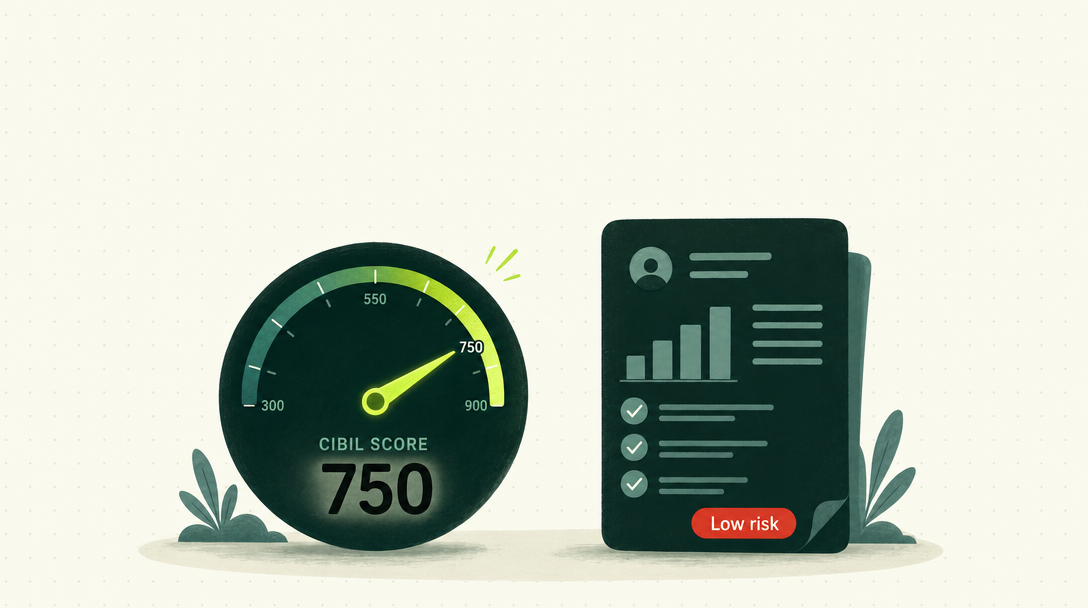
Your CIBIL score is a number between 300 and 900, calculated using data from your credit report. It’s designed to give lenders a fast, simple signal of your credit risk, without needing to review your entire history manually.
Think of it as a summary grade. Useful for a quick decision, but it doesn’t show the full story behind the number.
What Is a CIBIL Report?
Your CIBIL report is the detailed document the score is calculated from. It includes every credit account you’ve ever held, loans, credit cards, and their current status. Your complete payment history, month by month, across each account. Details of every credit inquiry made against your profile. And any remarks, such as settlements, write-offs, or disputes.
This is where the real detail lives; the score alone doesn’t show you which specific account might be dragging your number down, or which one is helping it.
Why the Score Alone Isn’t Enough
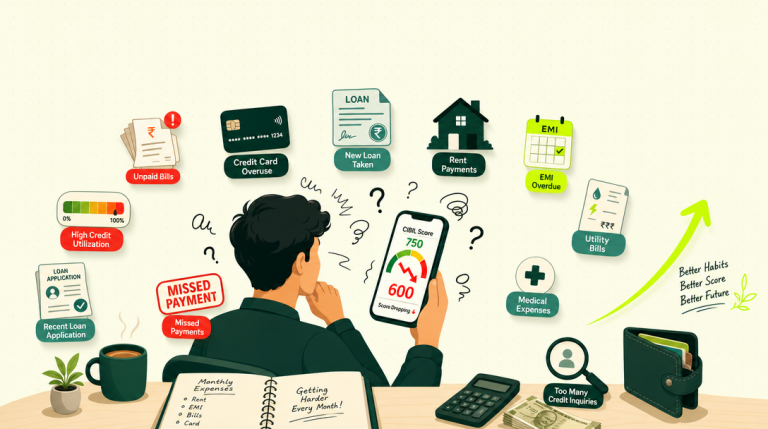
Imagine your score drops by 30 points in a month. The score alone tells you something changed, but not what. Only the full report reveals the actual cause: a new hard inquiry, a rise in utilization on a specific card, or a payment that was marked late.
This is exactly why reviewing your full report periodically matters more than just glancing at your score. The score tells you “how you’re doing.” The report tells you “why.”
A Side-by-Side Comparison
| Aspect | CIBIL Score | CIBIL Report |
|---|---|---|
| Format | A single 3-digit number | A detailed, multi-page document |
| Purpose | Quick risk summary for lenders | Full credit history detail |
| What it shows | Your overall creditworthiness | Every account, payment, and inquiry |
| How often it changes | Updates as new data is reported | Reflects the same underlying data |
| Best used for | A fast eligibility check | Diagnosing specific issues, disputing errors |
When Do You Need to Check the Full Report, Not Just the Score?
The score is enough for a quick check before a routine application. But the full report matters more in specific situations. If your score dropped unexpectedly, and you want to understand why. If you’re preparing for a major application, a home loan, and want to catch any errors well in advance. Or if you suspect fraud, such as an account you don’t recognize appearing on your profile.
How Lenders Use Each Differently
For smaller, routine loan applications, some lenders may rely primarily on the score for a fast initial decision. For larger loans, home loans especially, lenders typically review the full report in detail, since the financial exposure justifies a more thorough look at your complete history, not just the summary number.
This is one reason a strong score doesn’t always guarantee approval for a large loan; the underlying report might reveal something the score alone doesn’t fully capture.
What Information Appears in a Report That the Score Doesn’t Show
The report shows account-level detail your score doesn’t reveal on its own. Which specific lender reported which account. The exact sanctioned amount and current outstanding balance for each loan or card. The precise date of your most recent payment on each account. And a month-by-month payment history grid, showing exactly when, if ever, you were late.
How to Access Both
Both your score and your full report are available together through the same free annual check on CIBIL’s official website, and through most bank or fintech apps offering free score checks. You typically don’t need to request them separately; checking your score usually gives you access to at least a summary report alongside it.
Reading Your Report for the First Time
If you’ve never reviewed a full credit report before, it can look overwhelming. Start with the account summary section, listing every credit account under your name. Confirm each one is actually yours. Then move to the payment history section for each account, checking for any marks you don’t expect. Finally, check the inquiry section, confirming every listed inquiry corresponds to an application you actually made.
What to Do If Something in Your Report Looks Wrong
If you spot an account you don’t recognize, a payment marked late that you’re certain was on time, or any other inaccuracy, raise a dispute directly with CIBIL or through the specific lender who reported the information. Include any supporting documentation, payment confirmations, cor losure letters to speed up resolution. Errors, once corrected, can meaningfully improve your score.
Why Understanding Both Matters for Loan Applications
Before a major loan application, checking only your score can give a false sense of security or unnecessary worry. A borderline score might come with a report showing strong recent improvement, worth explaining to a lender. A seemingly good score might sit alongside a report showing a recently resolved dispute, worth understanding before a lender flags it themselves. Reviewing both together gives you the complete picture a lender will eventually see.
Frequently Asked Questions
The score is calculated from the data in your report, and typically appears as a summary at the top when you access your free annual report.
It’s possible, though less common. A generally strong score with one specific issue, a recent inquiry,r or a slightly high utilization on one card might not show a dramatically lower score, but the report would reveal the specific detail.
No. You’re entitled to one free report and score check per year directly through CIBIL, and many bank and fintech apps offer free access as well.
Raise the dispute directly with CIBIL, or through the lender who reported the incorrect information, providing supporting documentation wherever possible.
It’s a good idea to review your CIBIL report at least twice a year, or before applying for a major loan or credit card. Regular checks help you spot reporting errors, detect potential fraud, and ensure your credit information is accurate before lenders review it.
Your CIBIL score and CIBIL report work together, but they serve different purposes. The score provides a quick snapshot of your creditworthiness, while the report explains the complete credit history behind that number. Understanding both gives you a clearer picture of your financial health and helps you identify issues before they affect your loan or credit card application.
Whether you’re planning to apply for a home loan, personal loan, or simply want to build a stronger credit profile, reviewing both your CIBIL score and report regularly is a smart financial habit. By checking your report for errors, monitoring your repayment history, and maintaining responsible credit usage, you can improve your creditworthiness and increase your chances of securing better borrowing terms.