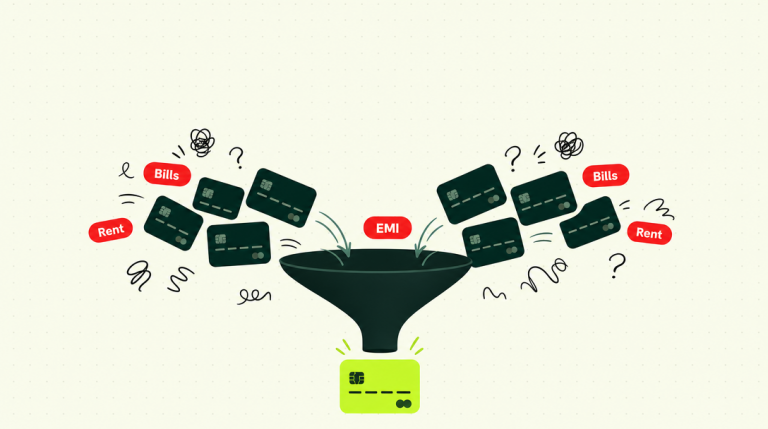







A loan against salary is not a separate loan category — it is the mechanism behind most salaried personal loans in India. The lender anchors the loan approval and amount to your verified salary, using the salary account and income documentation as the primary underwriting data. Understanding this mechanism helps salaried borrowers extract the most value from their employment status when applying for credit.
This guide explains the structure of salary-based lending, how much you can borrow relative to your salary, the fastest salary-linked products available in 2026, and why salary account relationships often unlock rates that external applications cannot match.
What ‘Loan Against Salary’ Actually Means
Technically, a loan ‘against salary’ in India refers to a loan where repayment is structured as an automatic deduction from your salary account — either through a standing instruction or through the employer’s payroll system. In practice, the term is used loosely to describe any personal loan for a salaried employee where income verification is the primary underwriting input.
In the strictest form, some lenders — particularly for government employees — coordinate directly with the employer’s finance department to deduct EMIs at source before the salary is credited to the employee. This arrangement eliminates default risk from the lender’s perspective and results in significantly lower interest rates.
How Salary-Based Loan Amounts Are Calculated
Loan amount eligibility is determined by three variables:
- Net monthly salary: Most lenders calculate the maximum loan as 15–25 times the net monthly take-home salary. At a net monthly salary of Rs. 50,000, this gives an eligibility range of Rs. 7.5 lakh to Rs. 12.5 lakh.
- FOIR limit: The proposed EMI must keep total fixed obligations within 50–55% of net monthly income. This is often the binding constraint rather than the salary multiplier.
- Employer tier: Higher employer tiers unlock higher salary multipliers. A government employee may access 25x net monthly salary; a private sector SME employee may be capped at 15x.
Salary-Linked Products vs. Standard Personal Loans
‘Salary linked’ products are typically pre-approved offers extended to existing salary account holders. They differ from external personal loan applications in several ways:
- Pre-approved offer: Based on account transaction history, the bank extends a pre-calculated loan amount at a pre-determined rate without requiring a fresh application. No hard enquiry is generated until the offer is formally accepted.
- Faster disbursal: Because KYC is already complete and income is verified through account transactions, disbursal can occur within 2–4 hours of offer acceptance.
- Better rate: Banks price pre-approved salary account offers 0.5–2.5% lower than external applications for the same borrower profile, because the account transaction data provides higher confidence in income and repayment behaviour.
Best Salary-Based Loan Options in India 2026
- HDFC Bank InstaLoan: Pre-approved personal loan for salary account holders. Amounts up to Rs. 40 lakh. Disbursal within 3–4 hours via net banking. Rate typically 10.5–13% for eligible profiles.
- SBI Xpress Credit: Best option for government employees with SBI salary accounts. Rates from 10.3% p.a. Amounts up to Rs. 35 lakh. Loan EMI is deducted from salary account automatically.
- Kotak Bank Online Personal Loan: Salary account holders receive pre-assessed offers with minimal documentation. Rates are competitive at 10.99% onwards.
- Axis Bank Happy Endings: Pre-approved personal loan for Axis salary account holders. Instant disbursal via mobile app for approved profiles.
- ICICI Bank Insta Personal Loan: Available to ICICI salary account and credit card holders. Fully digital, disbursal same day.
Salary Advance vs. Personal Loan: Which One?
Salary advance products — offered by fintech platforms like Fibe, Refyne, and Ola Financial Services — advance a portion of your earned but unpaid salary before payday. They are structurally different from personal loans:
- Salary advance: Amounts limited to 1–2 months’ salary. Tenure ends at the next payday. No interest in some cases (flat fee instead). Best for short-term liquidity needs.
- Personal loan against salary: Larger amounts (Rs. 1–25 lakh), longer tenures (12–84 months), standard EMI structure. Best for larger, multi-month or multi-year requirements.
The choice depends on the amount needed and the duration. For a Rs. 15,000 bridge gap before payday, a salary advance is appropriate and often cheaper than a personal loan. For a Rs. 3 lakh requirement over 18 months, a personal loan against salary is the correct product.
How the Salary Account Relationship Affects Loan Terms
Having your salary credited to the lending bank’s account is one of the most consistently undervalued factors in personal lending. The data advantage it provides to the lender — 12–24 months of visible salary credits, spending patterns, and average balance maintenance — functions as a risk reduction signal that manifests in better loan terms.
Quantifying this advantage: in controlled comparisons of the same borrower profile, salary account holders at a bank typically receive rates 1–2.5% lower than the same borrower applying as a new customer. On a Rs. 8 lakh loan over 5 years, this difference amounts to Rs. 24,000–Rs. 60,000 in total interest.
If you are planning to take a significant personal loan within the next 12 months, consider moving your salary account to the bank you intend to borrow from. The 6–12 months of relationship history built in advance can materially reduce your borrowing cost.
Eligibility and Documents Required
- Age: 21–60 years
- Employment: Minimum 1 year with current employer, 2 years total experience
- Net monthly salary: Minimum Rs. 20,000 (metro); Rs. 15,000 (non-metro)
- CIBIL: 700+ for banks; 650+ for NBFCs
- Documents: Aadhaar, PAN, last 3 salary slips, last 3 months’ bank statements showing salary credits
For pre-approved salary account loans, no fresh document submission is required in most cases.
Key Takeaways
- Pre-approved salary account loan offers are almost always cheaper and faster than external personal loan applications — check your bank app first.
- SBI Xpress Credit offers the best government employee salary-linked rates in India.
- Salary advances are appropriate only for short-term, small-amount needs before payday — not for multi-month borrowing requirements.
- Moving your salary account to your intended loan bank 6–12 months in advance can reduce borrowing rates by 1–2.5%.
Frequently Asked Questions
Generally, no. Even salary-linked loans involve a credit bureau pull. However, for existing salary account holders with 12+ months of account history and no negative credit events, some banks offer pre-approved loans with minimal CIBIL weight — effectively treating the salary account relationship as the primary risk signal.
For most personal loans, no. The employer’s involvement is limited to being listed as the employer of record on the application, which the lender may verify by calling the HR department. Salary deduction at source by the employer is only a feature of specific government employee products (like SBI Xpress Credit) and some employer partnership lending programmes.
The loan obligation continues regardless of employment status. Job loss does not cancel a personal loan. Borrowers who face unemployment-driven repayment difficulty should contact the lender immediately to discuss restructuring options — most banks offer temporary EMI moratorium or tenor extension arrangements for borrowers in documented financial distress.
Most lenders offer a loan amount between 15–25 times your monthly take-home salary, depending on your CIBIL score, FOIR, employer category and salary account relationship.
Yes. Pre-approved salary account loans usually offer lower interest rates, faster approvals and minimal documentation compared to standard personal loan applications from new customers.
Conclusion
The salary account relationship is India’s most underutilised lending advantage. For borrowers planning significant credit in the near term, the combination of salary account establishment, CIBIL maintenance above 720, and FOIR management below 45% creates the conditions for consistently accessing the best available rates — without negotiation, without shopping multiple lenders, and without credit score damage from multiple enquiries.
TapTap Loans advises borrowers on this preparation strategy as a standard part of the advisory process — ensuring that when the application moment comes, the profile is positioned to receive the most competitive offer available.