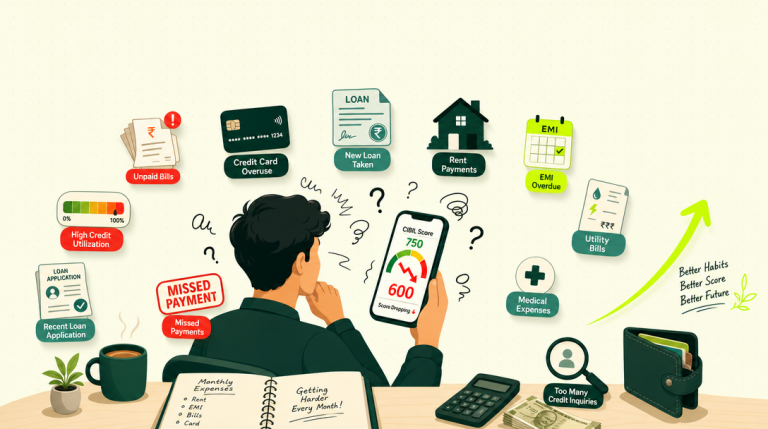







Yes, loan restructuring after missed EMIs is often possible, particularly if you approach your lender proactively rather than after multiple defaults. This guide covers eligibility, the process, and how restructuring differs from other options.
What Is Loan Restructuring?
Loan restructuring means formally revising your loan’s terms, EMI amount, tenure, or both, to bring it in line with your current ability to repay. Unlike a one-time moratorium, restructuring is typically a more lasting change to your repayment schedule.
When Banks Consider Restructuring Requests
Lenders are generally more willing to restructure when you approach them early, ideally before missing multiple payments, and when you can demonstrate a genuine, documentable change in circumstances, job loss, medical emergency, or business disruption.
Eligibility After 1-2 Missed EMIs
Restructuring after one or two missed payments, especially with prompt communication, is often achievable. Waiting until you’ve missed several payments, or reached a more serious overdue status, makes lenders considerably more cautious, though not always unwilling.
Restructuring vs Consolidation vs Moratorium
These three terms get confused often, but they’re distinct.
Moratorium is typically a short-term pause on payments, with the missed period added to the end of your tenure.
Restructuring is a more formal, often longer-term revision of your EMI amount or tenure, reflecting a genuine change in your repayment capacity.
Consolidation combines multiple debts into a new loan, usually at a different lender, rather than modifying your existing loan’s terms.
Impact on CIBIL Score
Restructuring is generally reported to credit bureaus and can carry some negative notation, since it signals the lender agreed to change terms due to repayment difficulty. That said, it’s typically viewed more favorably than an unmanaged default, which carries a much more severe and lasting impact.
Step-by-Step Application Process
- Contact your lender directly, as soon as you recognize repayment difficulty, ideally before missing further payments.
- Explain your situation clearly, with any supporting documentation, a job loss letter, medical bills, or similar evidence.
- Propose a realistic revised structure, whether that’s a lower EMI, a longer tenure, or both.
- Submit a formal restructuring application, if the lender agrees to proceed.
- Confirm the new terms in writing, and understand exactly how this will be reported to credit bureaus.
What Lenders Look For in a Restructuring Request
A clear, documented reason for the difficulty, not just a general request for easier terms. A realistic proposed structure that you can genuinely sustain going forward, rather than one that simply delays the same problem. And a track record, even if imperfect, that shows genuine intent to repay rather than avoidance.
Alternatives If Restructuring Isn’t Approved
If your lender declines restructuring, a few other options remain. Check whether consolidating this loan with other debts, through a different lender, could produce a more sustainable EMI. Consider a partial prepayment, if you have any funds available, to reduce the burden going forward. And keep communicating with your lender; even a declined request doesn’t mean the conversation is over.
How This Differs From Simply Missing Payments
Restructuring is a formal, agreed-upon change to your loan. Simply missing payments without any agreement is treated very differently, escalating toward overdue status, and eventually, potential default classification. The difference between these two paths often comes down to whether you initiated a conversation before the situation escalated.
Frequently Asked Questions
Yes, particularly if you approach your lender proactively, ideally after one or two missed payments rather than waiting longer.
Generally yes. Restructuring is reported to credit bureaus and can carry some negative notation, but it’s typically viewed more favorably than an unmanaged default.
Restructuring modifies your existing loan’s terms with your current lender. Consolidation replaces multiple debts with a new loan, often through a different lender entirely.
Evidence supporting your changed circumstances, a job loss letter, medical bills, or similar documentation, alongside a realistic proposal for revised terms.
Struggling with your current EMI structure? Check if consolidating your debts into one manageable payment could be a better fit.