





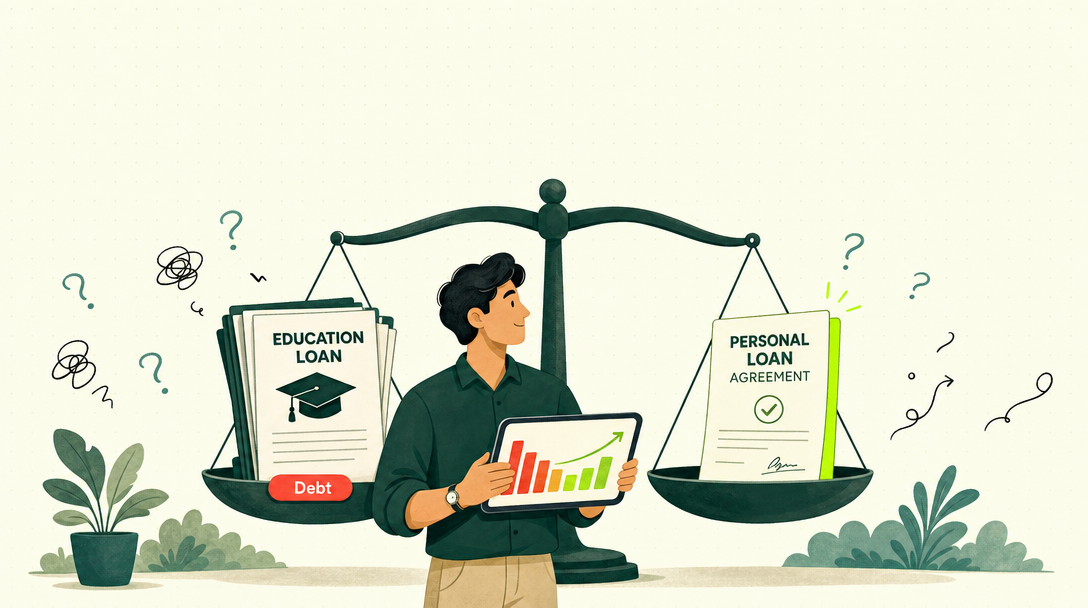
Using a personal loan to pay off an education loan can lower your rate in some cases, but it usually costs you valuable tax benefits. This guide compares both sides clearly, so you can decide with real numbers, not just gut feeling.
Why Borrowers Consider This Move
Education loan rates can run higher than expected, especially for loans taken years ago or from certain lenders. A personal loan, at a seemingly lower rate, can look like an easy win on the surface.
The Tax Benefit You’d Be Giving Up
This is the detail most borrowers miss. Education loan interest qualifies for a deduction under Section 80E, with no upper limit on the amount, for up to 8 years. Personal loans carry no such benefit at all.
For many borrowers, this tax saving alone can outweigh a modest interest rate difference.
A Worked Example
Say you have ₹5,00,000 in education loan debt, at 11%, with the interest fully deductible under Section 80E. In a 30% tax bracket, that deduction meaningfully reduces your effective borrowing cost, well below the stated 11%.
Move that same debt to a personal loan at 13%, with no tax benefit at all, and your effective cost is actually higher than staying with the education loan, despite the personal loan’s higher headline rate making this look like a bad trade even before comparing the raw numbers.
When It Might Still Make Sense
If your education loan’s rate is significantly higher, several points above what a personal loan would offer, and you’ve already used up most of your 8-year Section 80E window, the math can genuinely favor switching. This isn’t the common case, but it does happen.
A Quick Comparison Table
| Factor | Education Loan | Personal Loan |
|---|---|---|
| Typical rate | 8-12% | 11-20% |
| Tax benefit | Section 80E, no upper limit, 8 years | None |
| Repayment start | Often after course completion | Immediate |
| Best for | Funding education itself | General purposes, including this specific comparison |
What About the Moratorium Period on Education Loans?
Many education loans include a moratorium, no repayment required until after your course ends, plus a grace period. Switching to a personal loan usually means giving up this flexibility too, starting immediate EMI payments instead.
When Switching Genuinely Makes Sense
If you’re several years past your 8-year Section 80E deduction window, the tax benefit is no longer available to you regardless, removing that specific consideration from the decision. In this case, if a personal loan or balance transfer genuinely offers a lower rate, the comparison becomes simpler, purely about the rate difference.
A Better Alternative: Education Loan Balance Transfer
Rather than switching to a different loan type entirely, check whether you can transfer your education loan to a different lender at a better rate, while keeping the original loan type and its tax benefits intact. This often captures the savings without sacrificing Section 80E.
How to Actually Calculate This for Your Situation
Calculate your education loan’s effective after-tax cost, factoring in your specific tax bracket and remaining Section 80E eligibility. Compare this against a personal loan’s full rate, since it has no comparable benefit. Only proceed if the personal loan route genuinely comes out cheaper, after this full comparison, not just on the surface rate alone.
What Happens to Your Co-Applicant or Guarantor
Education loans often involve a parent as co-applicant or guarantor. Switching to a personal loan may change this arrangement entirely, worth discussing with them before making any final decision, since it affects their obligation too.
A Realistic Scenario
Consider a borrower three years into an 8-year Section 80E window, with ₹4,00,000 remaining on an education loan at 10.5%. The tax benefit alone likely outweighs a modest rate improvement from switching. This borrower would generally do better exploring an education loan balance transfer, preserving the 80E benefit, rather than moving to an unsecured personal loan entirely.
When the Comparison Genuinely Favors a Personal Loan
If your Section 80E window has fully expired, and your current education loan rate is meaningfully higher than personal loan rates available to you today, the calculation shifts. At this point, run the numbers directly, comparing your current rate against real personal loan offers you actually qualify for, not just advertised rates.
Frequently Asked Questions
Occasionally, mainly once your Section 80E tax benefit window has expired and your education loan rate is meaningfully higher than available personal loan rates.
It’s a tax deduction on education loan interest, with no upper limit, available for up to 8 years. Personal loans don’t offer this benefit, which often outweighs a modest rate difference.
Often yes. An education loan balance transfer to a different lender can capture rate savings while keeping your tax benefit intact.
Yes. Education loans often involve a parent as a co-applicant or guarantor, and switching loan types can change this arrangement.
Compare the interest rate, remaining tenure, processing or foreclosure charges, tax benefits, and total repayment cost. A lower rate alone doesn’t necessarily make the switch cheaper.
Conclusion
Replacing an education loan with a personal loan can sometimes reduce borrowing costs, but it may also mean losing valuable tax benefits and paying additional charges. Compare the total cost of both options, including Section 80E benefits, before switching. In many cases, an education loan balance transfer may offer savings without giving up the advantages of the existing loan structure.
Weighing your options for existing education loan debt? Compare consolidation and balance transfer options with TapTap.