





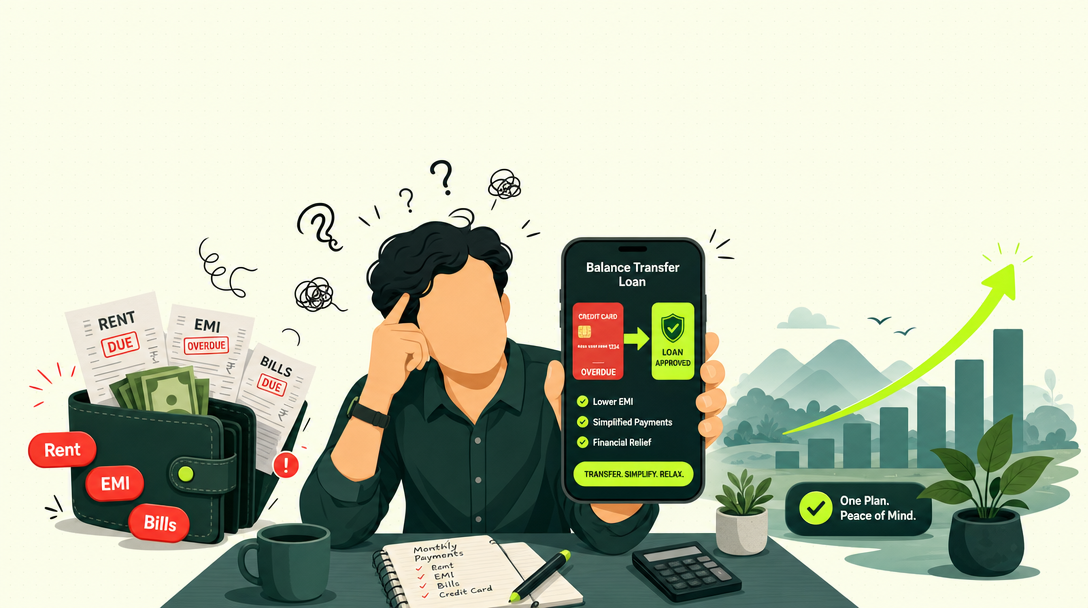
Understanding that a balance transfer can save you money is step one. Actually, completing the application loan balance transfer process is step two, and it has more moving parts than a standard personal loan application. You’re dealing with two lenders simultaneously, and the timing matters.
This is a complete, practical walkthrough of the balance transfer application process for Indian borrowers in 2026.
Before You Apply: Pre-Application Checklist
Run through these checks before initiating any application loan balance transfer :
- CIBIL score is 700+ (check for free on CIBIL.com or through your bank app)
- Zero missed EMIs on your existing loan in the past 12 months
- Minimum 12 months of remaining tenure on the existing loan
- Outstanding balance exceeds ₹50,000 (most lenders’ minimum for BT)
- The rate difference between the current and the new lender is at least 1.5–2%
- You’ve calculated total savings vs total transfer costs, and the math is favorable
Documents Required for Balance Transfer Application
For a loan balance transfer, you need to provide documentation to the new lender, plus details from your existing lender:
Standard KYC and income documents (for new lender):
- PAN card (mandatory)
- Aadhaar card (address verification + eKYC)
- Last 3 months’ salary slips
- Last 6 months’ bank statements
- Form 16 or ITR for 2 years
Existing loan documents (required for balance transfer):
- Original loan sanction letter from the current lender
- Last 12 months’ loan account statement
- Foreclosure quote letter (requested from the current lender after the new lender sanctions the transfer)
Where to Apply: Bank vs NBFC vs Fintech
For the best rate on an application loan balance transfer, compare offers from banks and NBFCs. Fintech lenders may be the fastest but often not the cheapest. Use a loan advisory platform to compare offers without submitting multiple applications.
How the Application Process Works
Here’s the sequence of events in a typical application loan balance transfer :
- Soft inquiry and rate comparison — use a comparison platform to get indicative rates from multiple lenders without affecting CIBIL.
- Formal application to chosen lender — submit application form and all documentation. This triggers a hard inquiry.
- Credit assessment — new lender verifies CIBIL, income, FOIR, and existing loan status (they will call your current lender to verify).
- Sanction letter issued — specifies approved amount, rate, tenure, and processing fee.
- Foreclosure quote from existing lender — you contact your current lender to get the precise closure amount, including foreclosure charges.
- Disbursement to existing lender — new lender issues DD or online transfer; old loan is closed.
- Confirmation and NOC — receive closure confirmation and NOC from the old lender.
What Lenders Evaluate in a Balance Transfer Application
A balance transfer application is assessed differently from a fresh loan in one key respect: lenders also evaluate your behavior on the existing loan, not just your current financial profile:
- Repayment consistency: 12 months of clean repayment on the existing loan is the gold standard
- CIBIL trajectory: Has the score improved since the original loan? Improvement signals credit discipline
- Loan seasoning: Most lenders require the existing loan to be at least 12 months old before approving a balance transfer
- Current FOIR: After the BT, your total EMI-to-income ratio must remain within limits
After Approval: Completing the Transfer
Once your application loan balance transfer is approved:
- Confirm the exact foreclosure amount with your existing lender (valid for 7–14 days)
- Coordinate with the new lender on disbursement timing — disbursement should ideally happen before the foreclosure quote expires
- Verify that the old loan account is closed within 2–3 working days of the fund transfer
- Request NOC from old lender (in writing or via email)
- Set up auto-debit for the new loan EMI immediately
- Check the CIBIL report within 45 days to confirm the old loan shows as “Closed”
Red Flags That Delay or Reject Balance Transfer Applications
- Any missed EMI on the existing loan — even one — in the past 12 months
- Existing loan is less than 12 months old (too short for most lenders to consider a BT)
- Outstanding balance is below ₹50,000
- CIBIL score dropped since the original loan was taken (raises red flags)
- Multiple hard inquiries in the last 3–6 months (signals credit stress)
- Incomplete documentation, especially the existing loan account statement
- Before starting a loan balance transfer application, confirm that your CIBIL score is 700+, you have zero missed EMIs, and the remaining tenure is 12+ months.
- You need both standard KYC documents and specific existing loan documents (sanction letter, 12-month account statement).
- Apply to one lender at a time — compare offers via soft inquiries before submitting a formal balance transfer application.
- The foreclosure quote from your existing lender has a validity window — coordinate timing with the new lender to avoid expiry.
- Always verify old loan closure on your CIBIL report within 45 days and keep your NOC safe.
FAQs
The application loan balance transfer process typically takes 7–15 working days from submission to final closure. Private banks and NBFCs can process faster (3–7 days) with complete documentation.
Yes. All major banks and NBFCs accept digital balance transfer applications. Document upload is done via the lender’s portal or app. Some digital lenders using account aggregator frameworks require minimal manual uploads.
Request a fresh foreclosure quote from your existing lender. Quote validity is typically 7–14 days. To avoid this, coordinate with both lenders on timing after receiving your new lender’s sanction letter.
The application loan balance transfer process typically takes 7–15 working days from submission to final closure. Private banks and NBFCs can process faster (3–7 days) with complete documentation.
Conclusion
The application loan balance transfer process involves more coordination than a standard personal loan application — but it’s manageable if you follow the steps in sequence and maintain clear communication with both your old and new lenders. The financial benefit is real and calculable. For borrowers with a strong repayment history and an improved credit profile, a balance transfer is one of the most efficient ways to reduce the cost of existing debt without taking on new borrowing.