





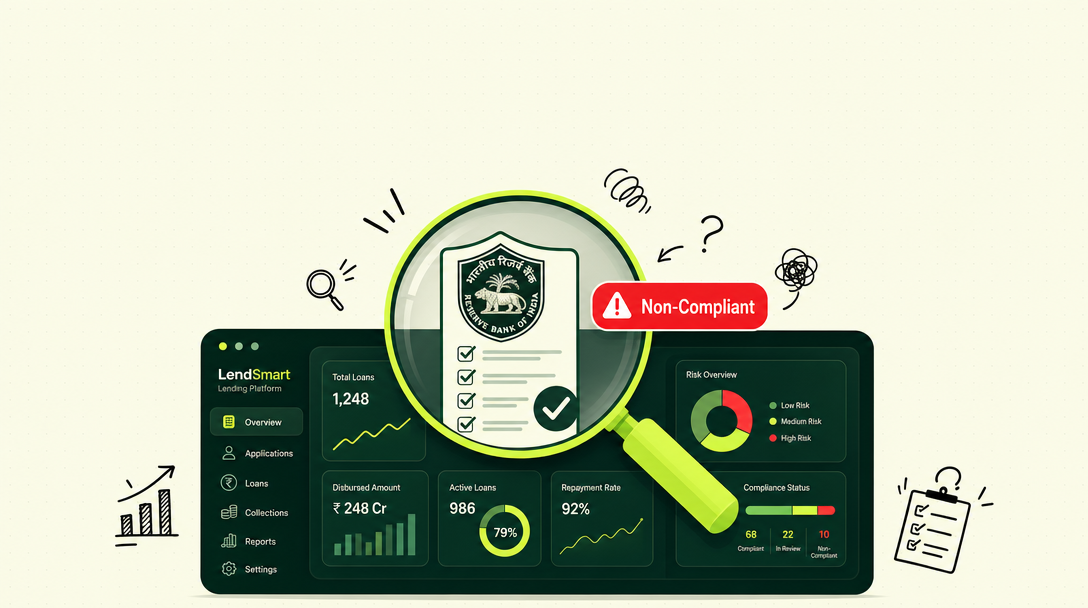
To check if a lending platform is RBI compliant, verify six things. Does it disclose the actual lender’s name? Is that lender on the RBI’s regulated entity list? Are fees and rates shown upfront? Is there a real registered address? Is there a grievance process? Do independent reviews exist?
This guide walks through each check, since India’s digital lending space has grown fast. Not every platform in it is what it claims to be.
Why This Check Matters More Than Ever
RBI’s Digital Lending Directions protect borrowers from unregulated, predatory lending apps. Every digital loan must ultimately come from a regulated entity, a bank or NBFC, not from an unlicensed app operating outside that framework.
Many apps present themselves as lenders when they’re really just a front end. Sometimes for a genuinely regulated partner. Sometimes not. Knowing the difference protects you from data misuse, hidden personal loan charges, and, in the worst cases, harassment during collections.
Check 1: Does It Name the Actual Lender?
A compliant platform clearly states which bank or NBFC is actually disbursing your loan. If a platform only shows its own brand name, with no mention of a regulated lending partner, that’s a significant red flag.
Check 2: Is That Lender on the RBI’s Regulated Entity List?
Once you know the lender’s name, verify their status directly on the RBI’s official website. It publishes lists of licensed banks and NBFCs. This takes a few minutes and removes the guesswork.
Check 3: Are Fees and Rates Disclosed Upfront?
RBI’s Digital Lending Directions require personal loan documents. This is a clear, standardized summary of the interest rate, all fees, and total cost, shown before you accept a loan. A platform vague about total cost, or one that reveals fees only after you commit, isn’t behaving compliantly.
Check 4: Is There a Real Registered Address and Legal Entity?
A legitimate platform can tell you its exact legal entity name and registered office. You can check this on the Ministry of Corporate Affairs portal. An app with no verifiable company behind it, just a name and a logo, should raise questions.
Check 5: Is There a Grievance Redressal Process?
Every RBI-regulated lending relationship needs a clear complaint escalation path. It should start with the lender’s own grievance officer, and escalate to the RBI’s Banking Ombudsman scheme if unresolved. No visible way to file a complaint? That’s a warning sign.
Check 6: Do Independent Reviews Exist?
Check Google, Trustpilot, or app store reviews. Not just testimonials curated on the platform’s own website. A pattern of complaints about aggressive recovery calls, hidden charges, or data misuse is a serious signal to walk away.
A Quick Comparison: Compliant vs Risky Signals
| Signal | Likely Compliant | Likely Risky |
|---|---|---|
| Lender identity | Named clearly, verifiable | Vague or unnamed |
| Fees | Disclosed upfront, in writing | Revealed only after commitment |
| Legal entity | Verifiable on MCA portal | No traceable registration |
| Grievance process | Clear escalation path | No visible complaint channel |
| Reviews | Present on independent platforms | Only on-site testimonials |
| App permissions | Limited to what’s needed | Excessive access to contacts, photos, SMS |
Why Excessive App Permissions Are a Red Flag
RBI guidelines restrict what data digital lending apps can access on your phone. A legitimate lending app has no real reason to request your full contact list, photo gallery, or SMS messages, beyond what’s strictly needed for verification. An app demanding broad permissions before you can even check eligibility is a serious warning sign.
What to Do If You Suspect a Platform Isn’t Compliant
Stop sharing further personal or financial information. Already borrowed, and suspect the platform isn’t legitimate? Document everything: communications, fee charges, collection behavior. File a complaint with the RBI directly, or through the Digital Lending Complaint mechanism where applicable.
A Quick Self-Test Before You Borrow
Before applying anywhere, ask yourself three questions. Can I name the actual bank or NBFC behind this platform? Have I seen the total cost, including all fees, in writing? Do I know how to file a complaint if something goes wrong? If you can’t answer yes to all three, pause before proceeding.
How TapTapLoans Fits This Checklist
We built our advisory model specifically to pass every check on this list. We name our lending partners clearly. Every loan is disbursed by an RBI-regulated bank or NBFC. Our fee structure and process are disclosed transparently. Read more on our Is TapTapLoans Legit page.
Frequently Asked Questions
Check whether it names the actual lending bank or NBFC, and verify that entity’s status directly on the RBI’s official regulated entity list.
It’s a standardized, upfront summary of a loan’s interest rate, fees, and total cost, required under the RBI’s Digital Lending Directions.
No app can legally disburse loans in India without ultimate backing from an RBI-regulated bank or NBFC.
Treat this as a red flag. RBI guidelines restrict digital lending apps from accessing data like your full contact list beyond what’s genuinely necessary.
Start with the lender’s own grievance officer. If unresolved, escalate through the RBI’s Banking Ombudsman scheme.
Want a transparent, RBI-compliant way to compare loan options? Check your eligibility with TapTap; every lender in our network is RBI-regulated.