





Getting a personal loan for a low CIBIL score is harder, but not impossible. NBFCs, secured loans, and co-applicants all remain real paths. This guide covers exactly what still works, and how to improve your odds.
What Counts as a “Low” CIBIL Score?
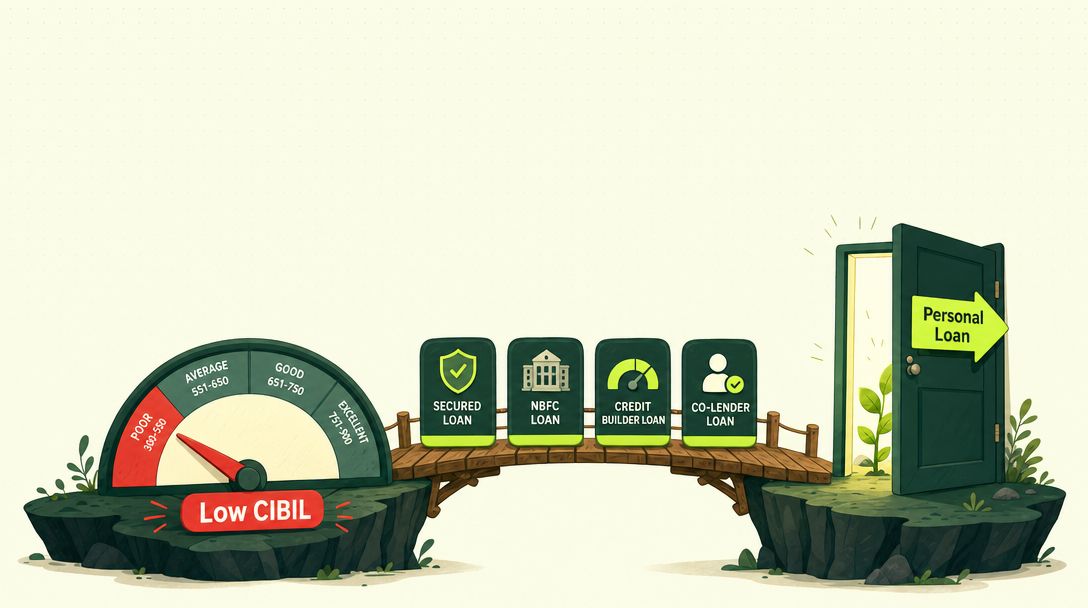
Generally, scores below 650 are considered low by most lenders. Below 550, options narrow further. Between 550 and 650, you still have real, workable choices, just not from every lender.
Why a Low Score Doesn’t Mean No Options
A low score signals higher risk to a lender. It doesn’t mean zero lenders will work with you. It means you need to look in the right places. It also means setting realistic expectations about rate and amount.
A Realistic Scenario to Understand the Difference
Consider two borrowers with a 610 score. One applies only to large, conservative banks, and gets rejected every time. The other checks NBFCs and secured options too, and finds a workable approval within days. The score is identical. The outcome differs entirely based on where, and how, each one looked.
Why Banks Are More Cautious Than NBFCs
Banks generally have lower funding costs and prefer lower-risk profiles to match. This isn’t a judgment on you personally; it’s simply how their business model is built. NBFCs operate differently, pricing in more risk through a higher rate, which is exactly what makes them more accessible to a wider range of scores.
Option 1: NBFCs Built for Wider Credit Bands
Many NBFCs specifically serve borrowers banks turn away. They price in the added risk through a higher rate, but approval is genuinely more achievable here than at a conservative bank.
Option 2: Secured Loans Instead of Unsecured Ones
A gold loan, or a loan against a fixed deposit, relies far less on your credit score. The pledged asset does most of the work in the lender’s decision, making this one of the most accessible paths if you have qualifying collateral.
Option 3: A Co-Applicant With a Stronger Score
Adding a co-applicant, a spouse, or a parent with a healthier credit profile can meaningfully improve both your approval odds and your rate. The lender assesses the combined profile, not just yours alone.
Option 4: A Smaller Loan Amount
Lenders are often more willing to approve a modest amount for a weaker profile than a large one. If your need allows, requesting less can improve your odds of approval at all.
A Quick Comparison Table
| Option | How It Helps | Trade-off |
|---|---|---|
| NBFC | Wider credit acceptance | Higher rate than banks |
| Secured loan | Relies on asset, not score | Need qualifying collateral |
| Co-applicant | Combined profile assessed | Requires a willing second party |
| Smaller amount | Easier approval threshold | May not cover your full need |
What Rate Should You Expect?
Rates for lower credit scores commonly run higher than for strong profiles, often into the high teens or low twenties percent annually, depending on the lender and your specific circumstances. This reflects real risk pricing, not an arbitrary penalty.
How to Improve Your Score Before Applying
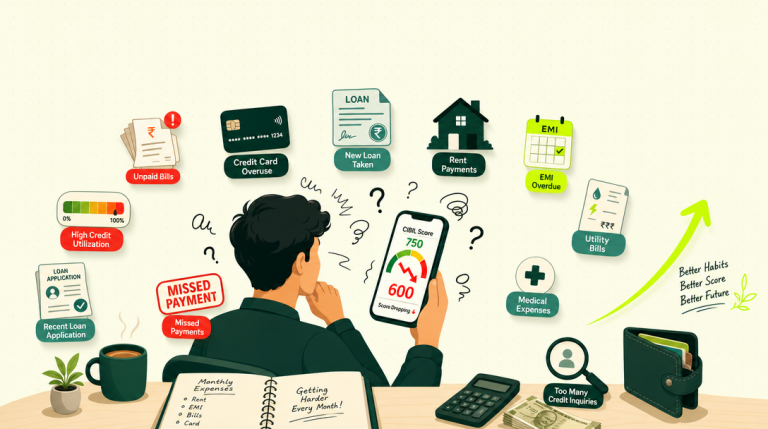
If your need isn’t urgent, spending a few months improving your score first often pays off. Clear any overdue payments immediately; this matters more than anything else. Reduce credit card utilization below 30%. Avoid new credit applications during this period, since each one causes a small, temporary dip.
A Realistic Timeline for Improvement
Moving from a low score to a fair one can take 6 to 12 months of consistent, on-time payments. This isn’t instant, but it’s genuinely achievable with the right habits, and can meaningfully change both your approval odds and your rate.
Should You Apply Now or Wait?
This depends on urgency. A genuine, immediate need, a medical bill, for example, may call for applying now, with realistic expectations. A need with more flexibility might benefit from a few months of score-building first, potentially saving significantly more in interest than the wait costs.
Watch Out for Predatory Offers Targeting Low Scores
Borrowers with weaker scores are sometimes targeted by platforms promising “guaranteed approval” at extremely high, sometimes hidden, costs. Always verify a lender’s RBI-regulated status, and get the full cost in writing before accepting anything, regardless of how urgent your need feels.
How Checking Multiple Lenders Helps
Different lenders assess the same profile differently. One might decline you outright. Another might approve you at a workable rate. Checking several lenders through a single soft inquiry, rather than applying to each one individually, protects your score while you find your real options.
What If You’re Rejected Everywhere You Try?
Ask each lender for the specific reason. Address that directly, whether it’s a specific overdue account or a FOIR that’s too high given your other obligations. A rejection today doesn’t mean permanent ineligibility; it means today’s specific profile didn’t meet today’s specific criteria.
A Realistic Path Forward
Consider someone with a 590 score, rejected by two banks. Rather than continuing to apply blindly, they check eligibility through an NBFC-inclusive platform, get approved at a workable rate, and use the following months of on-time payments to build toward a stronger score and better terms for their next borrowing need.
What Documents Help Most With a Weaker Profile
Beyond your score, strong documentation can meaningfully support your case. Consistent bank statements showing regular income help. A stable employment or business history helps too. If you’re self-employed, clean, consistently filed ITRs matter even more when your score alone isn’t doing you favors.
How FOIR Interacts With a Low Score
Even with a low score, a low FOIR, meaning you don’t already have much existing debt, can work in your favor. Lenders assess both together. A weaker score with minimal existing obligations sometimes fares better than a moderate score already stretched thin across several EMIs.
Why Timing Your Application Matters
If you’ve recently missed a payment, wait if you genuinely can. A few months of clean, consistent behavior after a miss looks meaningfully different to a lender than applying the same week. Timing isn’t everything, but it’s a real, controllable factor worth using to your advantage.
Frequently Asked Questions
It’s difficult but not always impossible, primarily through NBFCs or secured loan options. Approval and rate depend heavily on your other circumstances too.
Often yes. NBFCs typically serve a wider credit risk band than conservative banks, though usually at a higher interest rate.
Yes, significantly, provided the co-applicant has a stronger credit profile. Lenders assess the combined picture, not just your score alone.
Meaningful improvement typically takes 6-12 months of consistent, on-time payments and reduced credit utilization.
Check your credit report for errors, reduce existing credit utilization, clear overdue payments, and avoid multiple loan applications in a short period.
Conclusion
A low CIBIL score can make personal loan approval harder and may result in higher interest rates, but it does not always mean you cannot borrow. Improving your repayment history, reducing existing debt, and considering options such as a co-applicant or secured loan can strengthen your application. Most importantly, avoid taking on a loan you cannot comfortably repay, as further missed payments can make your credit profile worse.
Have a lower score and need to explore your real options? Check your eligibility with TapTap across 20+ lenders, with zero impact on your score.