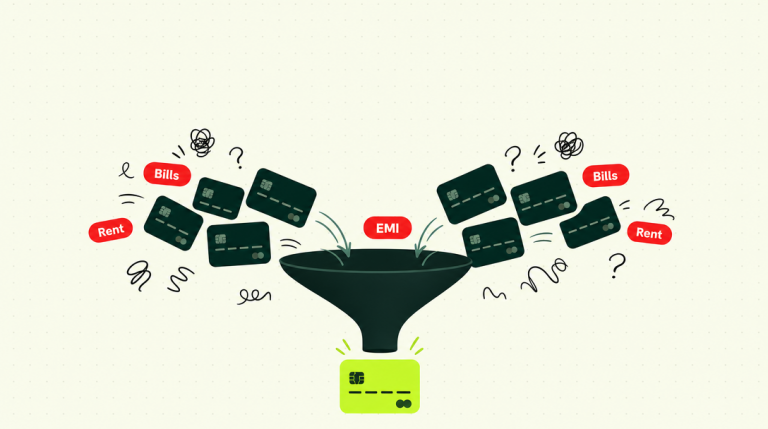






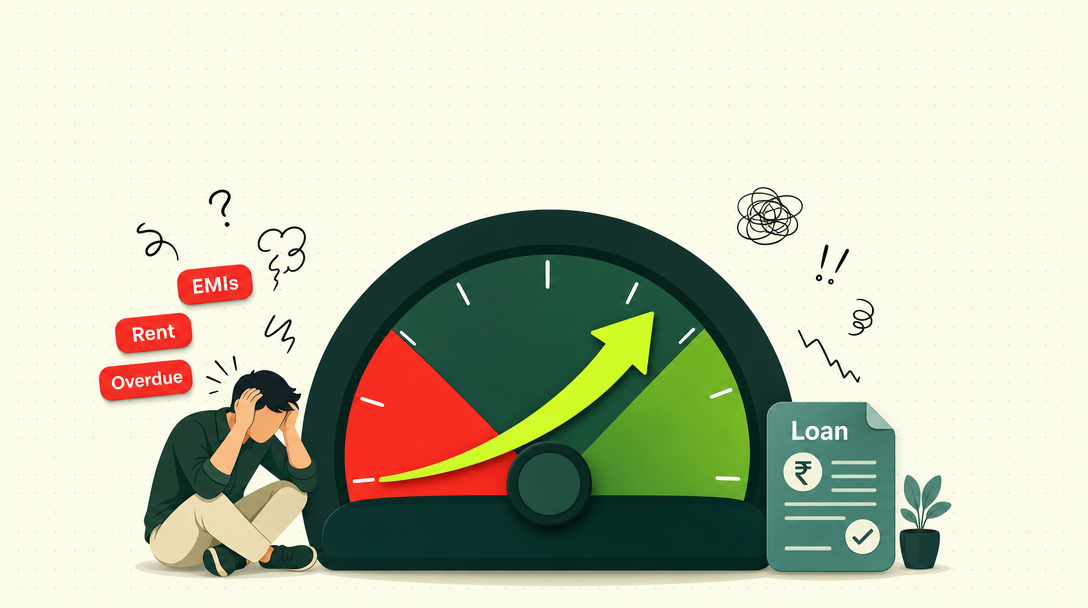
Here is something most personal loan applicants discover too late: applying to a lender to check whether you qualify is not the same as checking your eligibility. Every formal loan application — even one you submit just to see the rate offered — triggers a hard enquiry on your CIBIL report. That hard enquiry reduces your credit score by 5-15 points. Submit five applications to five banks in one week, and your score could drop by 25-75 points before you have received a single rupee.
The good news is that you can assess your personal loan eligibility across multiple lenders without triggering any hard enquiry. This guide explains the difference between soft and hard enquiries, shows you which methods are safe, and tells you exactly how to use them.
Hard Enquiry vs Soft Enquiry: The Critical Difference
| Hard Enquiry | Soft Enquiry | |
|---|---|---|
| What triggers it | Formal loan/credit card application | Checking your own score, eligibility tools, advisory platforms |
| CIBIL score impact | Yes — reduces score by 5-15 points per enquiry | No impact whatsoever |
| Visible to lenders | Yes — lenders can see all hard enquiries | Not visible to lenders |
| How long it stays | On report for 2 years | Does not appear on report |
| Risk | Multiple in 30 days = rejection signal | Zero risk |
What Triggers a Hard Enquiry in India
A hard enquiry is created whenever a lender accesses your credit report to make a lending decision. This happens when you formally apply for a personal loan, apply for a credit card, or apply for any form of credit where the lender needs to assess your creditworthiness. The act of submitting an application — even an incomplete one on a lender’s website — is enough to trigger a hard enquiry in many digital lending systems.
| Important: Most loan comparison websites that show you instant rates are using your actual data to generate hard enquiries with partner lenders. Unless the site explicitly states it uses soft checks, assume every rate quote involves a hard enquiry. |
Methods That Check Eligibility Without Affecting CIBIL
1. Loan Advisory Platforms
Loan advisory platforms like TapTap Loans assess your eligibility by reviewing your financial profile — income, FOIR, existing obligations, CIBIL score, and employment details — against lender criteria without formally applying to any lender. This is the most comprehensive soft-check method available and the only one that gives you a realistic view of your approvals across multiple lenders simultaneously. See: taptaploans.in/blog/loan-advisory-platform-vs-bank-india/
2. Lender Eligibility Calculators
Most major banks and NBFCs offer eligibility calculators on their websites that estimate your qualifying loan amount based on income, age, and existing EMIs. These calculators do not submit your application — they perform an internal calculation only. No hard enquiry is triggered. The limitation is that the estimate is approximate; it does not account for employer category, credit history, or documentation quality.
3. Pre-Approved Offer Checks
Your existing bank — where your salary account is held — often has a pre-approved loan offer for you based on your account behaviour and existing relationship data. Checking this offer via net banking or the mobile app does not trigger a hard enquiry. The enquiry only happens when you formally accept and apply.
4. CIBIL’s Own Eligibility Tool
CIBIL’s website offers tools that show your loan eligibility based on your current credit score and history. Since you are accessing your own data, no hard enquiry is generated. The tool gives you a broad view of which loan products you may qualify for at your current score.
Step-by-Step: How to Check Eligibility Safely
Step 1 — Pull your own CIBIL score.
Access your free annual credit report from CIBIL.com. This is a soft enquiry. Review your score, payment history, and existing credit obligations. This is the foundation for all subsequent eligibility checks.
Step 2 — Calculate your FOIR.
Add up all your existing monthly EMIs including credit card minimums. Divide by your monthly take-home salary. This is your current FOIR. Most banks approve at FOIR below 50-55%. Understanding your FOIR tells you how much additional EMI capacity you have. See: taptaploans.in/blog/foir-personal-loan-india/
Step 3 — Use lender eligibility calculators.
Based on your FOIR, score, income, and employment, use 2-3 lender eligibility calculators to get an approximate loan amount you qualify for. No hard enquiry is generated.
Step 4 — Consult a loan advisory platform.
Share your complete financial profile with a loan advisory platform. They will assess your eligibility across verified lenders and tell you which specific lenders are likely to approve your application, at what rate, and with what documentation.
Step 5 — Apply once, to the most appropriate lender.
Based on your advisory consultation, apply to one lender whose eligibility criteria your profile clearly meets. A single hard enquiry is acceptable and expected. The goal of all prior steps is to make this one application a high-probability one.
What Factors Determine Your Personal Loan Eligibility?
| Eligibility Factor | Minimum Typical Requirement | Impact on Approval |
|---|---|---|
| CIBIL Score | 650-700 (banks), 600+ (NBFCs) | Primary filter — often automated |
| Monthly Income | Rs. 15,000-25,000 (varies by city) | Determines loan amount |
| FOIR | Below 50-55% | High FOIR = rejection even with good score |
| Employment Stability | 12+ months current employer | Income consistency signal |
| Employer Category | Category A or B preferred | Affects rate and max loan amount |
| Documentation Completeness | All documents consistent | Mismatch = instant rejection |
How TapTap Loans Helps
TapTap Loans evaluates your eligibility profile against 50+ verified banks and NBFCs without triggering any hard enquiry. Our advisory process identifies which lenders will approve your current profile, what rate you are likely to be offered, whether your FOIR is blocking approval, and what you should fix before applying. This is the most efficient path to a successful personal loan application — one assessment, one application, one hard enquiry.
Key Takeaways
- Hard enquiries reduce your CIBIL score by 5-15 points each — multiple applications in a short period compound this damage
- Soft checks — through eligibility calculators, advisory platforms, and pre-approved offer checks — carry zero CIBIL impact
- The safest strategy is to fully assess your eligibility through soft-check methods before making any formal application
- A loan advisory platform can check your eligibility across 50+ lenders with zero hard enquiry
- Your FOIR, income, employer category, and documentation quality all affect eligibility — not just your CIBIL score
Frequently Asked Questions
A: It depends on the method. Checking your own score on CIBIL.com, using lender eligibility calculators, or using a loan advisory platform does not affect your score. Formally applying for a loan to any lender triggers a hard enquiry that reduces your score by 5-15 points.
A: Most lenders view 3+ hard enquiries within 30-60 days as a signal of credit desperation, which significantly increases rejection probability. Aim to keep hard enquiries to 1-2 in any 60-day window.
A: Yes — using their website eligibility calculators or a loan advisory platform. These are soft checks that do not appear on your CIBIL report. Only a formal loan application triggers a hard enquiry.
A: A pre-approved loan offer is extended by lenders based on your existing relationship data. Checking whether you have a pre-approved offer via net banking or mobile app does not trigger a hard enquiry. The hard enquiry only occurs when you formally accept and activate the offer.
A: Use a loan advisory platform. They assess your complete financial profile against lender-specific criteria and recommend the most suitable lender for your profile, eliminating the need to apply to multiple lenders.
Conclusion
The most expensive mistake Indian loan applicants make is applying to multiple lenders simultaneously to compare rates. Every application reduces your credit score, reduces your chances of approval at the next lender, and creates a negative signal that follows you on your credit report for two years. The right approach is to assess first, then apply once.
| Ready to take the next step? TapTap Loans provides personalised loan advisory with no hard enquiries and no pressure. Visit taptaploans.in today. |