





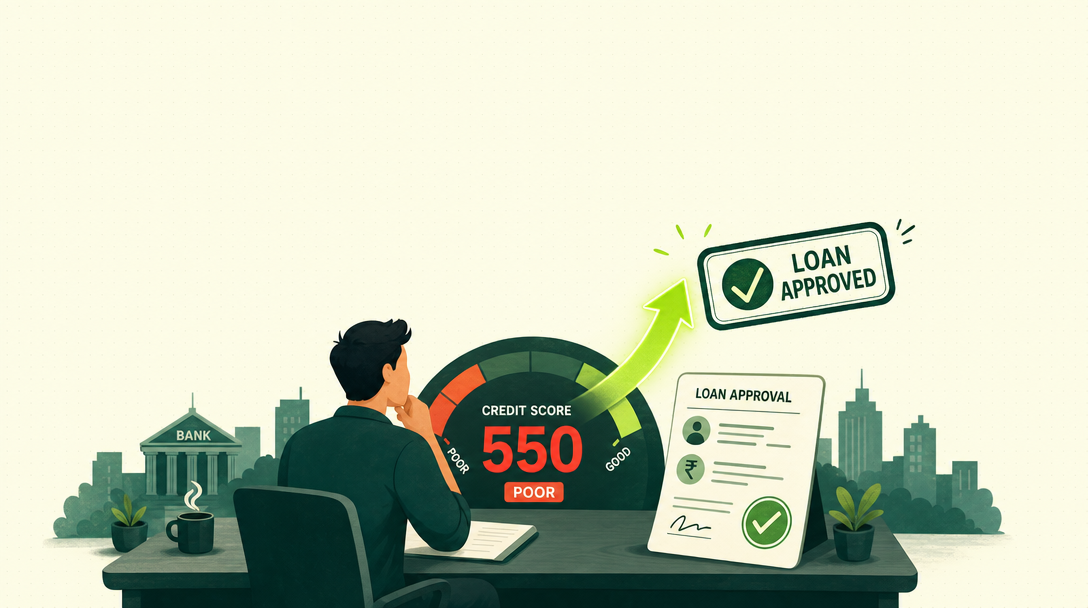
Getting a personal loan with a 550 credit score is difficult, but not impossible. This guide covers what genuinely works at this score level, what rate to expect realistically, and the fastest way to improve your position.
Where 550 Sits on the Score Range
CIBIL scores run from 300 to 900. A 550 sits in the lower-middle range, below what most banks consider acceptable, but above the very bottom. This matters because your specific options differ meaningfully even within this “low” bracket.
Why Most Banks Will Decline at This Level
Banks generally set a minimum threshold, often 650 or higher, for standard personal loan approval. A 550 score typically falls below this line, which is why direct bank applications at this score level usually don’t succeed.
Where You’re More Likely to Find Approval
NBFCs specializing in wider credit bands. Some are specifically built to serve this exact score range, at a correspondingly higher rate.
Secured loan options. A gold loan, or a loan against a fixed deposit, depends far more on the asset than your score.
A strong co-applicant. Someone with a considerably better score can shift the entire application’s risk profile.
What Rate Should You Realistically Expect?
At this score level, expect rates toward the higher end of what’s available in the market, often approaching or exceeding 20% annually, if approved at all through an unsecured route. Secured options typically offer meaningfully better rates, since the collateral does most of the risk-reduction work.
A Quick Comparison Table
| Route | Approval Likelihood at 550 | Typical Rate Range |
|---|---|---|
| Bank, unsecured | Low | N/A, likely declined |
| NBFC, unsecured | Moderate | 18-24% |
| Secured loan (gold/FD) | High | 9-14% |
| With strong co-applicant | Improved | 14-19% |
Why Your Score Alone Doesn’t Tell the Full Story
A lender reviewing your application often looks beyond the number itself. What caused the low score: a single old default, or a pattern of ongoing missed payments? How recent is the issue? Is your income currently stable? These details can shift a lender’s willingness to work with you, even at an identical score.
The Fastest Way to Improve From Here
Clear any currently overdue payment immediately; this single action often matters more than anything else. Bring down credit card utilization if you’re carrying balances. Avoid new credit inquiries while you’re working on this. Even 3 to 6 months of disciplined behavior can move your score meaningfully.
Should You Wait, or Apply Now?
If your need is genuinely urgent, explore the secured and NBFC options covered here, with realistic expectations about cost. If you have some flexibility, even a few months spent improving your score first can unlock materially better terms, often saving more in reduced interest than the wait costs you.
What Happens If You’re Rejected
Ask for the specific reason; most lenders will share this. Address it directly rather than reapplying blindly with the same profile. And avoid applying to many lenders in quick succession, since each hard inquiry adds a small additional dip on top of an already weak score.
A Realistic Path at This Score Level
Consider someone at 550, needing ₹1,50,000 urgently. A loan against a family fixed deposit, if available, offers the fastest, cheapest realistic path. Without that option, an NBFC-based unsecured loan, at a higher rate, remains available, alongside a parallel effort to improve the score for future, cheaper borrowing.
Building Toward a Better Score From 550
This score level isn’t permanent unless nothing changes. Payment history, the single biggest scoring factor, responds directly to consistent, on-time behavior going forward. Many borrowers who start around this level see meaningful movement within 6 to 12 months of disciplined repayment, on whatever credit they currently hold.
Why Checking Multiple Lenders Matters Even More Here
At a stronger score, most lenders offer similar terms. At 550, the gap between what different lenders will actually offer you widens considerably. One might decline outright. Another might approve at a workable rate. Checking several options through a single soft inquiry protects your score while revealing your genuine choices.
Frequently Asked Questions
It’s possible, primarily through NBFCs or secured options, though approval isn’t guaranteed and depends on your broader profile too.
Often 18% or higher for unsecured options, if approved. Secured loans, backed by an asset, typically offer better rates meaningfully.
Yes, significantly. The pledged asset reduces the lender’s risk far more than your credit score alone would allow for.
Clearing overdue payments and reducing utilization can show meaningful improvement within 3-6 months, with more substantial change over 6-12 months.
Avoid submitting multiple applications at once. Each hard inquiry can affect your credit profile, so compare eligibility first and apply only where you have a reasonable chance of approval.
Conclusion
A 550 credit score can make unsecured personal loans harder to get and more expensive, but borrowing may still be possible through NBFCs, secured loans, or a stronger co-applicant. Before applying, focus on clearing overdue payments, lowering credit utilization, and checking your credit report for errors. Improving your credit profile first can increase your chances of approval and help you qualify for better rates later.
Have a 550 score and need to explore what’s genuinely available? Check your eligibility with TapTap across 20+ lenders, with zero impact on your score.