





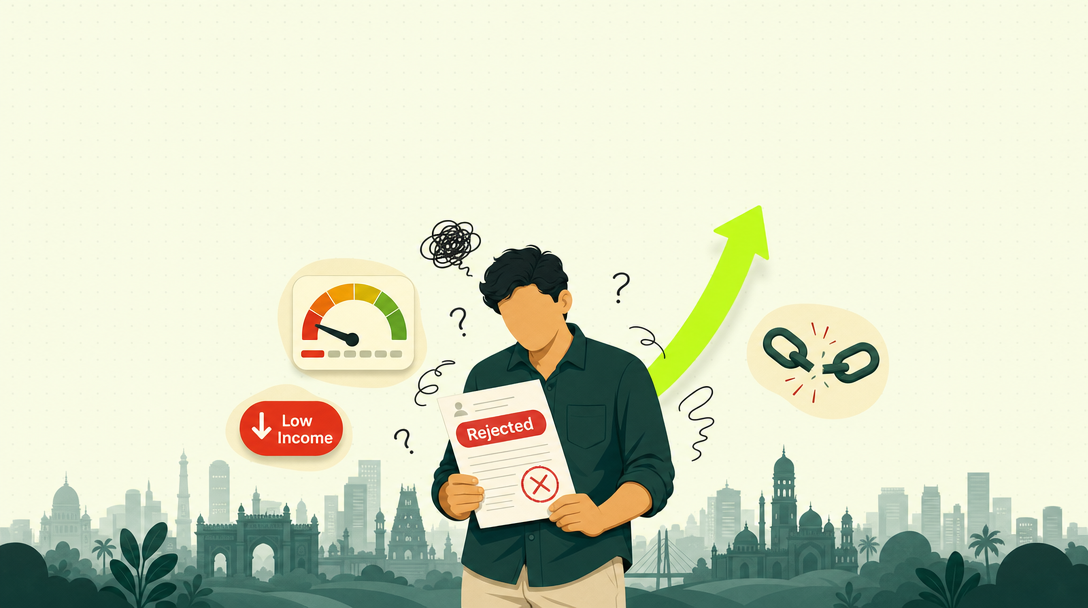
Getting a personal loan rejected feels like a door slamming shut at exactly the wrong moment. You needed funds, you applied, and you were told no — often without a clear explanation. The frustrating truth is that most loan rejections in India are entirely avoidable. Banks and NBFCs run applications through a checklist of risk filters, and if even one factor falls below their internal threshold, the system rejects the application automatically before a human even reads your file.
This guide breaks down the 11 most common personal loan rejection reasons in India, explains exactly what triggers each one, and gives you a clear recovery path so your next application succeeds.
The Hidden Truth About Loan Rejection in India
Here is something most lenders will not tell you: rejection is not a judgment on you as a person. It is a mismatch between your financial profile and that specific lender’s risk policy on that specific day.
Different banks have different minimum requirements. HDFC Bank may require a minimum monthly salary of Rs. 25,000, while an NBFC like Tata Capital may approve at Rs. 15,000. ICICI Bank may reject an applicant with a 680 CIBIL score that Axis Bank approves. The lender’s eligibility engine is proprietary, and you rarely know exactly where you fell short.
This is why applying blindly to multiple lenders after a rejection is genuinely dangerous. Every application triggers a hard enquiry on your CIBIL report. Multiple hard enquiries within 30-60 days signal financial desperation to lenders and can reduce your credit score by 10-50 points collectively.
11 Real Reasons Your Personal Loan Was Rejected
1. Low CIBIL Score (Below 650-700)
Banks like SBI and HDFC typically require a minimum score of 700-750. NBFCs may approve from 650 but at higher interest rates. A score below 650 almost always triggers automatic rejection regardless of income.
Fix: Check your CIBIL report at CIBIL.com immediately. Identify late payments, dispute any errors, and pay down credit card balances. Allow 3-6 months of clean repayment history before reapplying. See: taptaploans.in/blog/cibil-score-for-personal-loan-india/
2. High FOIR (Fixed Obligation to Income Ratio)
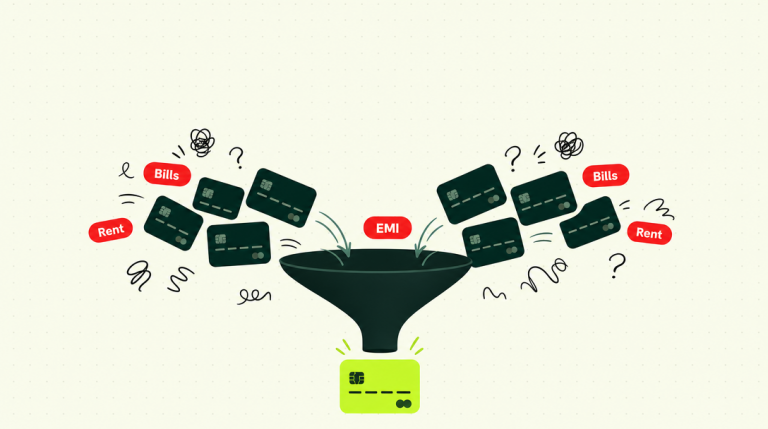
Lenders calculate your FOIR — the percentage of monthly income already committed to existing EMIs. Most banks cap approval at 40-55% FOIR. Example: Monthly income Rs. 50,000, existing EMIs Rs. 28,000 = FOIR 56%. Most banks reject this even with a 750 CIBIL score.
Fix: Pay off smaller loans before applying. Consider consolidating multiple EMIs into a single lower EMI. See: taptaploans.in/blog/foir-personal-loan-india/
3. Multiple Hard Enquiries in a Short Period
Every loan application places a hard enquiry on your credit report. Multiple enquiries in 30-60 days signal financial desperation, increasing perceived risk and reducing your score by 10-50 points cumulatively.
Fix: Stop applying immediately. Use soft-check eligibility tools which do not affect your score to identify lenders likely to approve you before submitting a formal application.
4. Income Below Minimum Threshold
Most banks require a minimum monthly take-home salary of Rs. 15,000-Rs. 25,000 for salaried applicants. In metros like Mumbai and Bengaluru, this threshold is often Rs. 25,000-Rs. 30,000.
Fix: Apply to lenders or NBFCs that match your income profile. A loan advisory platform can match you to the right lender without trial and error.
5. Employment Instability or Short Job Tenure
Most banks require salaried applicants to have at minimum 2 years of total work experience with at least 6-12 months at their current employer. Frequent job changes or very recent onboarding signal income instability.
Fix: Wait until you have completed 12 months at your current employer before applying. Document your employment continuity clearly if you changed jobs recently.
6. Employer Category Risk
Banks categorise employers as Category A (MNCs, PSUs, government), Category B (established private companies), and Category C (small firms, startups). Applicants at Category C companies face higher scrutiny and sometimes automatic rejection.
Fix: Some NBFCs are more flexible on employer categories. Matching your application to the right lender type is critical.
7. Documentation Errors or Mismatches
A mismatch between your PAN card, Aadhaar card, salary slips, and bank statements is a common rejection trigger. Even a minor spelling difference or outdated Aadhaar address can cause rejection.
Fix: Verify that your name, date of birth, and address are consistent across all documents. Update your Aadhaar address if you have moved.
8. Existing Loan Defaults or Settlements
A loan settlement or default stays on your CIBIL report for up to 7 years. Most banks reject applicants with settled accounts outright, even if the rest of the profile is clean.
Fix: Build positive credit history through secured credit products while exploring NBFCs that specialise in credit-impaired borrowers.
9. High Credit Card Utilisation
Using more than 30% of your total credit card limit signals financial stress. Using above 60-70% can cause a significant CIBIL score drop.
Fix: Pay down credit card balances to below 30% of the limit. Even requesting a credit limit increase without spending more can improve your utilisation ratio immediately.
10. Incorrect Loan Amount Request
Applying for an amount disproportionate to your income raises red flags. If your monthly income is Rs. 30,000 and you apply for Rs. 20 lakh, most banks will reject this as beyond your repayment capacity.
Fix: Use a personal loan eligibility calculator to understand the realistic loan amount your income and credit profile supports.
11. Credit Report Errors
A notable percentage of Indian credit reports contain errors — closed loans shown as active, incorrect missed payment entries, or duplicate accounts — that pull down your CIBIL score.
Fix: Obtain your free credit report from CIBIL, Experian, or Equifax. File a dispute for any incorrect entries. Corrections can take 30-45 days to reflect.
How Each Rejection Reason Affects Your CIBIL Score
| Rejection Reason | CIBIL Impact | Recovery Timeline |
|---|---|---|
| Hard enquiries (multiple applications) | -5 to -20 points per enquiry | 3-6 months |
| High credit utilisation | -20 to -50 points | 30-60 days after paydown |
| Late payment history | -30 to -80 points | 6-12 months of clean history |
| Loan settlement on record | Up to -100 points | 2-7 years |
| Credit report errors | Variable | 30-45 days after dispute |
| Important: Loan rejection itself does not lower your CIBIL score. The hard enquiry made during the application process does. Avoid repeat applications immediately after rejection. |
The Smart Recovery Roadmap: What to Do After Rejection
Step 1 — Get your rejection reason in writing.
Under RBI guidelines, lenders are required to inform applicants of the broad reason for rejection. Contact the lender’s customer service formally if not communicated.
Step 2 — Pull your credit report from all four bureaus.
CIBIL, Experian, Equifax, and CRIF High Mark each hold separate records. Errors may appear in one but not another.
Step 3 — Identify which rejection category applies to you.
Use the 11 reasons above to diagnose whether it is a score issue, a documentation mismatch, or an income problem.
Step 4 — Do NOT apply for another loan for at least 45-60 days.
Every application adds another hard enquiry. Give your score and profile time to stabilise.
Step 5 — Fix the specific issue before reapplying.
If it is FOIR, reduce existing EMIs. If it is score, rebuild for 3-6 months. If it is documentation, correct the mismatch. See: taptaploans.in/blog/emi-too-high-what-to-do-india-2/
Step 6 — Use a loan advisory platform to match before you apply.
TapTap Loans assesses your profile against lender eligibility criteria before you make a formal application — protecting your credit score from unnecessary hard enquiries. See: taptaploans.in/blog/loan-advisory-platform-vs-bank-india/
Why Reapplying Immediately Is the Worst Mistake
The instinct after rejection is to try another lender immediately. This is exactly the wrong move. Every new application creates a new hard enquiry. Three applications in 30 days can drop your score by 20-50 points, pushing you deeper into rejection territory and creating a damaging cycle: rejection — application — hard enquiry — lower score — next rejection.
The borrowers who recover fastest are those who stop, diagnose, fix, and then reapply strategically to the right lender for their profile.
How TapTap Loans Helps You Apply Smarter
TapTap Loans is not a lender. We are a loan advisory platform that helps Indian borrowers understand their financial profile, compare suitable lenders, and apply only where they are likely to be approved. When you have experienced a rejection, the last thing you need is to trigger more hard enquiries.
- A profile assessment that identifies your current eligibility across verified lenders
- Guidance on which rejection reason applies to your profile
- Recommendations on the right lender type based on your income, score, and employment
- Support to consolidate existing EMIs if high FOIR is your main barrier — taptaploans.in/blog/loan-consolidation-calculator-india/
Key Takeaways
- Loan rejection in India is almost always traceable to one of 11 specific, fixable reasons
- Multiple hard enquiries after rejection damage your CIBIL score further — stop applying immediately
- The rejection itself does not lower your score; the hard enquiries and underlying issues do
- Recovery timelines range from 30 days (documentation fixes) to 6 months (score rebuilding)
- A loan advisory platform can pre-assess your eligibility before you trigger any hard enquiry
Frequently Asked Questions
A: The rejection itself does not directly lower your score. However, the hard enquiry made when the lender checks your credit report reduces your score by 5-15 points. Multiple rejections compound this effect.
A: Wait at least 45-60 days before reapplying. If the rejection was due to a low CIBIL score, wait 3-6 months to allow your score to recover through consistent repayment behaviour.
A: Yes. A rejection from one lender does not prevent you from applying elsewhere. Identify the rejection reason, address it, then apply to a lender whose eligibility criteria matches your improved profile.
A: Under RBI guidelines, lenders are expected to communicate the broad reason for rejection. If a reason was not provided, contact the lender in writing through their grievance redressal mechanism.
A: Yes. Advisory platforms assess your eligibility profile before you apply formally, identifying which lender types are appropriate for your current CIBIL score, income, and employment category.
Conclusion
A personal loan rejection is not the end of your borrowing journey — it is a diagnostic signal. The 11 reasons detailed in this guide cover nearly every rejection scenario faced by Indian borrowers. Most are fixable within 30 to 180 days with the right approach. Take the time to understand what happened, fix the underlying issue, and approach your next application strategically. TapTap Loans can help you assess where you stand.
| Ready to take the next step? TapTap Loans provides personalised loan advisory with no hard enquiries and no pressure. Visit taptaploans.in today. |