





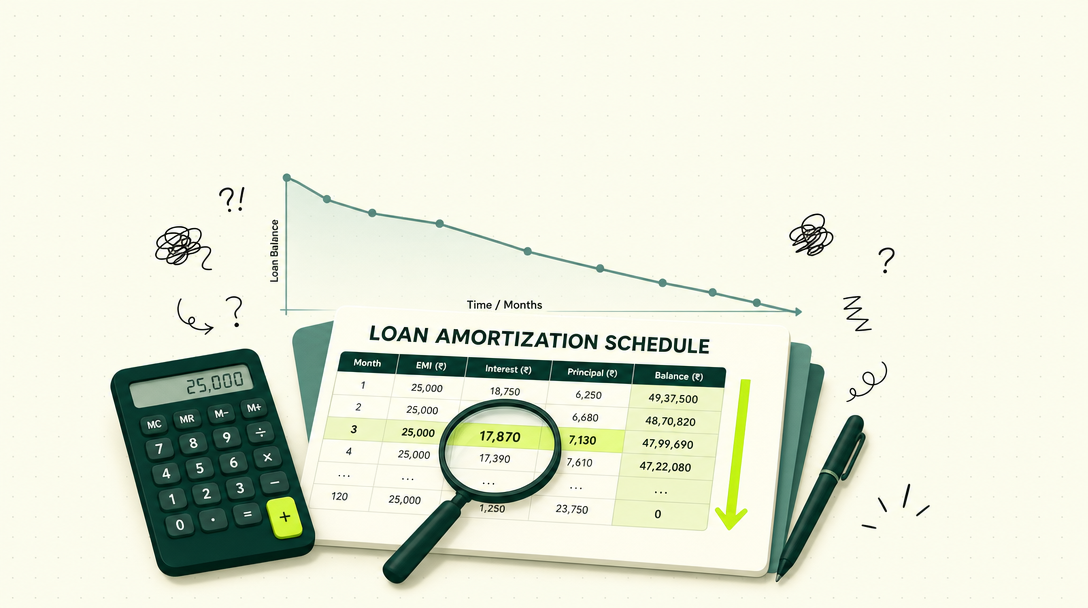
An amortization schedule shows how every single EMI splits between principal and interest, month by month, until your loan is fully repaid. Once you know what each column means, it becomes genuinely useful. Here’s how to read it.
What This Document Actually Is
Your lender provides this alongside your loan agreement. It’s a month-by-month table showing your EMI and exactly how much of each payment reduces your principal versus covers interest.
The Core Columns, Explained
Opening balance. What you owe at the start of that month.
EMI. Your fixed monthly payment, the same every month for a fixed-rate loan.
Interest portion. How much of that EMI covers interest this month.
Principal portion. How much actually reduces what you owe.
Closing balance. What you owe after this month’s payment becomes next month’s opening balance.
Why the Split Changes Every Month
Early in your loan, the interest portion is larger, since it’s calculated on a bigger outstanding balance. As months pass and your balance shrinks, more of each EMI goes toward principal instead.
A Simplified Example
Month 1: Opening balance ₹5,00,000. EMI ₹16,600. Interest portion roughly ₹5,400. Principal portion roughly ₹11,200. Closing balance roughly ₹4,88,800.
By month 24, the same EMI might split closer to ₹4,000 interest and ₹12,600 principal, since the outstanding balance has dropped meaningfully by then.
Why This Document Matters for Prepayment Decisions
If you’re considering a prepayment, your amortization schedule shows exactly how much interest remains on your loan. This helps you calculate genuine savings from paying early, rather than guessing.
How to Use It to Compare Loan Offers
Request the amortization schedule for any loan offer you’re seriously considering. Comparing the total interest column across offers gives you a clearer picture than comparing headline rates alone.
A Quick Reference Table
| Column | What It Tells You |
|---|---|
| Opening balance | What you owe at the start of the month |
| EMI | Your fixed monthly payment |
| Interest portion | Cost of borrowing this month |
| Principal portion | How much you actually paid off |
| Closing balance | What carries into next month |
What to Check If Something Looks Wrong
If your closing balance doesn’t seem to match what you’d expect, particularly after a prepayment, request an updated schedule from your lender. This confirms your account reflects any changes correctly.
Why This Helps You Understand “Why My Balance Isn’t Dropping Faster”
Many borrowers feel frustrated early in a loan, wondering why their balance seems to barely move despite paying every month. The amortization schedule shows this is normal, not a problem, simply how interest-heavy early payments naturally are.
A Realistic Way to Use This Document
Before making any prepayment decision, pull up your current schedule. Check how much interest remains on your loan overall. This tells you the real, maximum possible savings from paying it off early, a genuinely useful number to have before deciding.
Frequently Asked Questions
Interest is calculated on your outstanding balance, which shrinks over time. As it shrinks, less of each EMI goes to interest, and more goes to principal.
Yes, most lenders provide this with your loan agreement and can typically share an updated version on request.
Yes. A prepayment reduces your principal, which changes the remaining schedule, either lowering future EMIs or shortening your tenure, depending on your lender’s process.
The concept applies to any standard EMI loan, personal, home, or vehicle, though the exact numbers depend on your specific loan’s amount, rate, and tenure.
Yes. You can use an EMI calculator or spreadsheet by entering your loan amount, interest rate, and tenure. However, your lender’s official schedule is best for checking the exact outstanding balance and repayment details.
Conclusion
An amortization schedule makes your loan much easier to understand by showing exactly where every EMI goes. It explains why your balance falls slowly in the early months and faster later in the tenure. Checking this schedule regularly can also help you plan prepayments, compare loan costs, and track your outstanding balance more accurately.
Want to see your own loan’s real breakdown before deciding on a prepayment? Talk to TapTap about your specific numbers.