





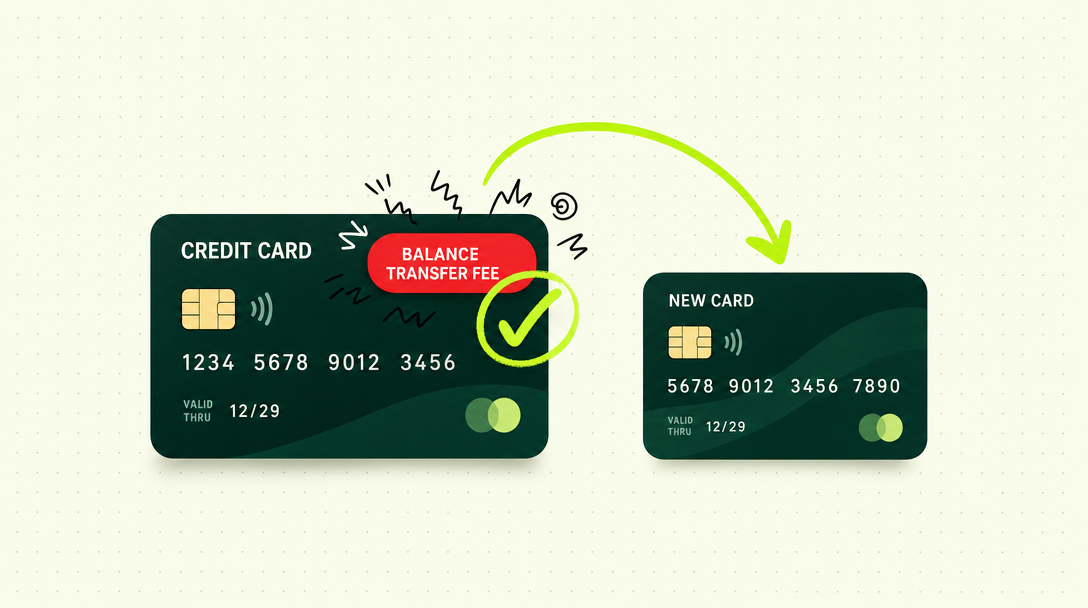
A balance transfer fee waiver means the usual 1-3% transfer charge gets removed, often as a promotional offer. This makes an already attractive balance transfer even cheaper. Here’s how these waivers typically work.
The Simple Idea
Normally, transferring a balance costs a fee, a percentage of the amount moved. A waiver removes this cost entirely, or reduces it significantly, usually for a limited time or specific card.
Why Card Issuers Offer This
It’s a customer acquisition tool. Waiving the fee makes a card’s balance transfer offer more attractive than competitors, encouraging you to move your debt to them instead.
What to Check Beyond the Waiver Itself
A waived fee is great, but it’s only one part of the total cost. Check the promotional interest rate, how long it lasts, and the rate it reverts to afterward. A waived fee with a short promo window and high reversion rate can still cost more than a smaller fee with better overall terms.
A Quick Comparison Table
| Offer | Fee | Promo Rate | What to Watch |
|---|---|---|---|
| Fee waived, 6-month 0% | None | 0% for 6 months | Reversion rate after 6 months |
| 2% fee, 12-month 0% | 2% of balance | 0% for 12 months | Longer window may still cost less overall |
A Worked Example
Transfer ₹1,00,000 with a waived fee, at 0% for 6 months. Total cost, if repaid in full during the window: just ₹1,00,000. Compare this to a 2% fee, 0% for 12 months, offer. Total cost: ₹1,02,000, but with double the repayment time.
Which is actually cheaper depends on how fast you can realistically repay, not just which offer waives the fee.
Why Waivers Are Often Time-Limited
Card issuers typically run these as promotional windows, not permanent features. Check the exact offer terms, since a waiver you see today may not be available if you wait, or may only apply to a specific application period.
Does a Fee Waiver Affect the Promotional Interest Rate?
Not directly; these are usually separate terms. A card could waive the fee but still offer a modest promotional rate, rather than the most aggressive 0% available. Always check both details together, not just the fee waiver alone.
How to Find These Offers
Compare multiple card issuers actively, since waivers aren’t universal or constant. Checking during a period when issuers are competing for balance transfer customers often reveals better combined terms, fee and rate together.
A Realistic Scenario
Someone comparing two balance transfer offers finds one with a waived fee but a shorter 4-month 0% window, and another with a 1% fee but a 9-month window. Given their realistic repayment timeline of 7 months, the second offer, despite the fee, actually costs less overall.
Frequently Asked Questions
Not necessarily. Check the full offer, including the promotional rate and its duration, not just whether the fee is waived.
These are usually promotional and time-limited, varying by issuer and current market competition.
It removes the transfer fee specifically, but interest may still apply after any promotional period ends, so check the full terms.
Only if your current debt isn’t urgently costly. If you’re paying high interest now, the cost of waiting may exceed the fee you’d save.
Yes, depending on the card issuer’s terms. However, always check how your payment is applied and whether new purchases carry different interest rules.
Conclusion
A balance transfer fee waiver can save money, but it should never be the only factor in your decision. Compare the transfer fee, promotional interest rate, offer duration, and the regular rate that applies afterward. The best option is the one that matches your realistic repayment timeline and reduces your total borrowing cost.
Comparing balance transfer offers? Check your full options with TapTap fees, rates, and total cost together.