





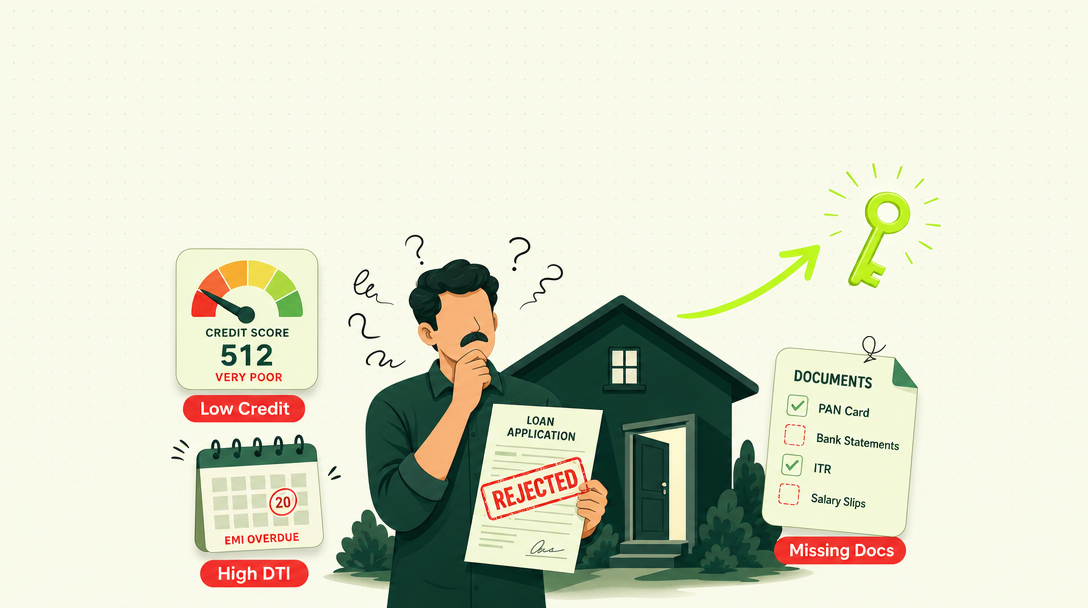
The most common home loan rejection reasons are a low credit score, a high FOIR, property legal issues, and documentation mismatches. This guide covers all eight major reasons and exactly how to fix each one before reapplying.
Reason 1: Low CIBIL Score
A score below 650 makes approval difficult at most lenders. This is often the single biggest reason for rejection.
The fix: Check your score before applying. Pay every existing EMI and card bill on time for several months, and keep credit utilization low, before reapplying.
Reason 2: High FOIR or Existing EMIs
Your total EMI obligations, including the new home loan, generally can’t exceed 50-60% of your income. Too many existing loans or cards can push you over this limit.
The fix: Pay down or close smaller existing debts before applying. Or consider consolidating them into a single, lower-EMI loan first.
Reason 3: Property Legal Issues
An unclear title, missing approvals, or disputes over the property can lead to rejection, regardless of how strong your personal profile is.
The fix: Verify the property’s legal documents independently before applying, ideally with a lawyer’s review, rather than relying solely on the builder’s or seller’s assurances.
Reason 4: Income Documentation Mismatch
Declared income that doesn’t match your bank statements, ITR, or salary slips raises red flags during verification.
The fix: Ensure your documents are internally consistent. If there’s a genuine explanation for a discrepancy, a bonus, or a raise, be ready to explain it clearly with supporting documents.
Reason 5: Job Instability
Frequent job changes, or a very short tenure in your current role, can concern lenders assessing your income stability.
The fix: If possible, wait until you’ve completed at least 6-12 months in a new role before applying. If you must apply sooner, a strong track record in your previous role can help offset this.
Reason 6: Under-Construction Property Risk
Some lenders are more cautious about projects from builders with a weaker track record, or projects facing delays.
The fix: Check the builder’s approval status and track record before committing. Established builders with RERA registration and a clean delivery history face fewer concerns from lenders.
Reason 7: Age and Tenure Mismatch
Applying for a 30-year tenure at an age where you’d be well past typical retirement by the loan’s end can lead to a reduced eligible tenure, or rejection if the math doesn’t work for the lender.
The fix: Choose a tenure that comfortably fits within your expected working years, or consider a shorter tenure with a co-applicant to boost eligibility.
Reason 8: Multiple Recent Loan Applications
Applying to several lenders in a short period, each triggering a hard inquiry, can itself look like financial distress to a new lender reviewing your credit report.
The fix: Use a soft-inquiry eligibility check across multiple lenders first, rather than applying to each one individually and accumulating hard inquiries.
How to Reapply Successfully After a Rejection
Understand the specific reason for your rejection first; most lenders will share this if asked. Address that specific issue directly, rather than reapplying with the same profile hoping for a different outcome. And consider checking your eligibility across multiple lenders before your next formal application, since different lenders weigh these factors differently.
Does a Rejection Show on My Credit Report?
The hard inquiry from the application itself shows on your report and can cause a small, temporary score dip. The rejection decision itself isn’t reported as a negative mark, but repeated rejections, each with their own hard inquiry, can compound the score impact if you apply too many times in a short period.
Frequently Asked Questions
Yes. Address the specific reason for rejection first, then reapply, ideally after a few months to let your profile improve and any hard inquiries age.
The hard inquiry itself can cause a small, temporary dip. Multiple rejections in a short period can compound this effect.
No score guarantees approval, since lenders assess multiple factors together. That said, a score of 750 or above significantly improves your odds and the rate you’re offered.
Been rejected elsewhere? Check your eligibility with TapTap across 20+ lenders; different lenders weigh your profile differently.