





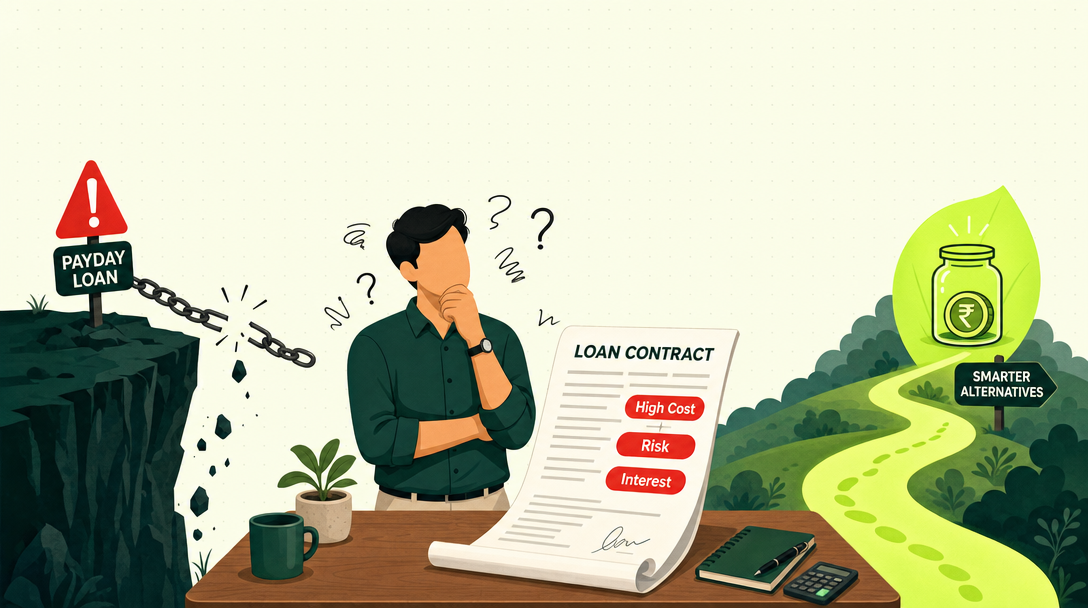
A payday loan is a small, short-term loan you repay on your next salary day, usually within 7 to 30 days. It’s fast and needs little paperwork. But the fees are high, so the yearly cost can exceed 100%. A payday loan should be a rare last resort, never a monthly habit.
Let’s walk through how it works, what it really costs, and what you can do instead.
What Is a Payday Loan?
A payday loan bridges the gap between today and your next salary. Here’s what’s typical:
- Amount: ₹2,000 to ₹50,000
- Tenure: 7 to 30 days
- Repayment: one lump sum on salary day
- Approval: within minutes, mostly through apps
- Checks: light credit checks, sometimes none
In India, most of these products come through NBFC-linked apps. Some are regulated. Many aren’t.
How Much Does It Really Cost?
This is where most people get surprised. Let’s take a simple example.
| Detail | Amount |
|---|---|
| Loan amount | ₹20,000 |
| Tenure | 30 days |
| Processing fee (5%) + 18% GST | ₹1,180 |
| Interest (1% per day) | ₹6,000 |
| Total repayment | ₹27,180 |
That’s over ₹7,000 in cost for one month. Over a full year, the annualised rate works out to well above 300%.
Not every lender charges this much. But even “cheaper” ones often cost far more than a bank loan. Always check the APR in the Key Fact Statement.
Why This Becomes a Trap
These loans are built for one month. Life doesn’t always cooperate.
Here’s the common story:
- You borrow for rent.
- Salary day comes, and the whole amount goes to repayment.
- Now you’re short again for groceries and bills.
- So you borrow again.
- The cycle repeats, each month a little worse.
This is exactly how a one-time need becomes a debt trap. The problem isn’t one loan. It’s the loop.
Urgent Payday Loan in India: Is It Ever Okay?
Many people search for an urgent payday loan in India during a real emergency. That’s understandable.
It can be okay if all of these are true:
- It’s a genuine one-time emergency.
- You’re sure you can repay it in full on salary day.
- The lender is a regulated bank or NBFC.
- You’ve read the Key Fact Statement and know the total cost.
- You have no cheaper option available today.
If even one of these isn’t true, pause and look at the alternatives below.
Smarter Alternatives to a Payday Loan
Most people have at least one of these options. They just don’t think of them in a panic.
Salary Advance From Your Employer
Many companies offer an advance against next month’s pay. It’s often interest-free. Ask HR.
Gold Loan
If you have gold at home, a gold loan is fast and far cheaper.
Loan Against FD
Have a fixed deposit? Borrow against it at a rate just above the FD rate. Your FD keeps earning.
Credit Card EMI
If the expense can go on a card, convert it to EMI. It costs much less, though more than a secured loan.
Talk to Your Existing Lender
If an EMI is the problem, ask your lender for a date change or short pause. Many will help if you ask early.
Family or Friends, With a Written Note
Borrowing from people you trust can feel awkward. A simple written plan keeps the relationship healthy.
Payday Loan vs Other Short-Term Options
| Option | Typical cost | Speed | CIBIL needed |
|---|---|---|---|
| Payday loan | Very high | Minutes | Low focus |
| Gold loan | Low | Hours | Low focus |
| Loan against FD | Low | Same day | Not needed |
| Credit card EMI | Medium | Instant | Already have card |
| Personal loan | Medium | 1 to 3 days | Yes |
| Salary advance | Often free | Days | No |
How to Protect Yourself If You Borrow Anyway
If you do go ahead, follow these rules:
- Borrow the smallest amount you need.
- Check the lender name and RBI registration.
- Read the Key Fact Statement for the full cost.
- Never share OTPs or give access to your contacts.
- Set a reminder for the repayment date.
- Don’t take a second loan to pay the first.
Building a Buffer So You Never Need One Again
The real fix is a small cushion. Even ₹10,000 can change everything.
Start small. Put aside ₹500 or ₹1,000 each month in a separate account. Don’t touch it for anything except emergencies. Over time, it grows into real security.
If EMIs are eating your salary before you can save, look at your debts. Sometimes restructuring or consolidating them frees up enough room to start saving. At TapTap Loans, that’s the kind of plan we help people build.
Frequently Asked Questions
A payday loan is a small, short-term loan that you repay in one lump sum on your next payday, usually within 7 to 30 days. It’s quick but expensive.
Payday loans from RBI-regulated banks and NBFCs are legal. Many apps offering payday loans are not regulated, though. Always check the lender’s name and RBI registration before borrowing.
High processing fees and daily interest on a very short tenure push the cost up. When converted to an annual rate, a payday loan can cost several times more than a personal loan.
If the lender is regulated, it reports to credit bureaus. Paying on time can help, but missing the payment can hurt your score. Unregulated lenders may not report at all.
A salary advance, gold loan, loan against F, D, or credit card EMI usually costs much less. Talking to your existing lender about a short EMI pause can also help.p
Conclusion
A payday loan solves today’s problem by borrowing from next month. With high fees, it often creates a bigger problem than it solves.
Before you apply, check your alternatives: salary advance, gold loan, loan against, chat with your lender. If you still need a payday loan, use a regulated lender, borrow little,tle and repay on time.
And once the crisis passes, start building a buffer. It’s the best protection there is.