




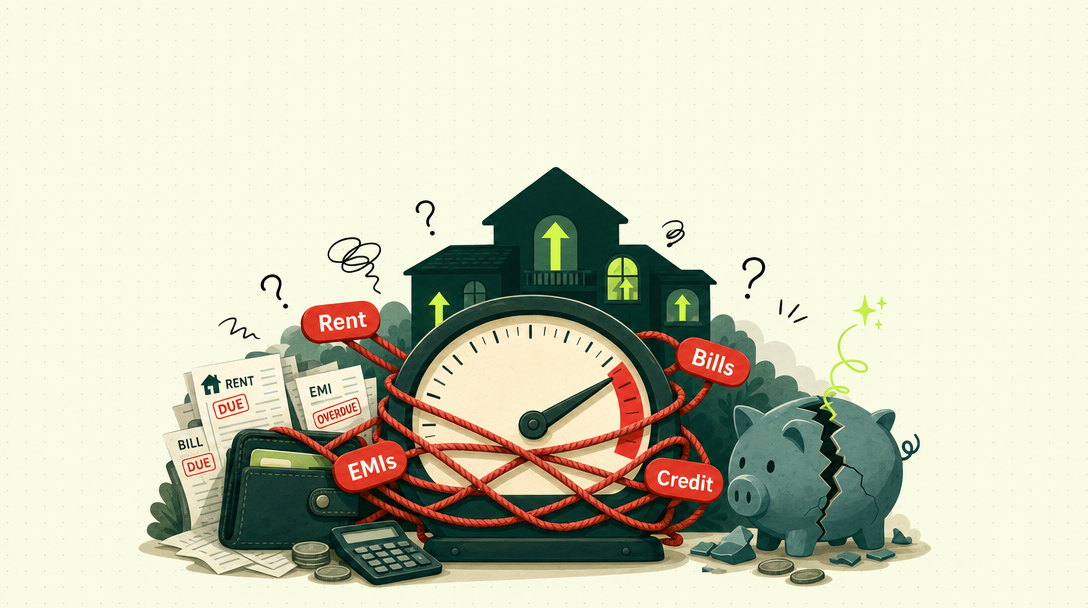
The clearest signs of too much debt include your EMIs exceeding half your income, using one card to pay another, and not knowing your total monthly obligation off the top of your head. This guide covers all seven signs and what to do about each.
Sign 1: Your Total EMIs Exceed 40-50% of Your Income
This is the clearest structural signal. If your combined loan and credit card minimum payments consistently take up more than 40-50% of your take-home income, you’re carrying a debt load most financial guidelines would flag as high risk, regardless of how you feel about it day to day.
What to do: Calculate this figure precisely; many people underestimate it. If you’re above this threshold, consolidating high-rate debts into a lower blended rate is often the fastest way to bring this ratio down.
Sign 2: You’re Using One Card to Pay Another
Making a payment on one credit card using funds from another, or a cash advance, is a strong sign your monthly cash flow can’t currently support your obligations. This pattern tends to compound quickly, since it typically involves shifting balance onto whichever card carries the least available room, rather than resolving anything.
What to do: Stop this pattern immediately, and map out your full debt picture honestly. This is often a clear signal that consolidation, replacing multiple revolving debts with one fixed EMI, is worth exploring urgently.
Sign 3: You Don’t Know Your Total Monthly Debt Obligation
If someone asked you right now what your combined EMI and minimum card payments add up to each month, could you answer confidently? Many people carrying too much debt genuinely can’t, because facing the full number feels uncomfortable, so it never gets calculated.
What to do: Calculate it today, even if it’s uncomfortable. You can’t fix a problem you haven’t measured.
Sign 4: You’ve Missed a Payment in the Last Six Months
A single missed payment can happen to anyone, for genuinely unrelated reasons. But if you’ve missed, or come close to missing, more than one payment in recent months, this reflects your obligations outpacing your cash flow, not just an isolated slip.
What to do: Review whether this is a timing issue, misaligned due dates, or a genuine capacity issue- too much total debt for your income. The right fix depends on which one it is.
Sign 5: You Have No Emergency Savings Left
If a genuine emergency, a medical bill, or a job disruption would immediately force you to borrow more, rather than draw on savings, that’s a sign your current debt and spending structure has left no room for a financial buffer.
What to do: Even a small, consistent monthly contribution toward an emergency fund, alongside addressing your existing debt, helps break this fragile cycle over time.
Sign 6: You’re Only Paying Minimum Amounts, and Balances Aren’t Shrinking
If you’re paying the minimum due on your cards every month, but your balances aren’t meaningfully decreasing, or are even growing, the interest is outpacing your repayment.
This is one of the clearest signs that your current debt structure, not just your effort, is the actual problem.
What to do: This specific pattern is often best addressed through consolidation, converting revolving, interest-heavy card debt into a fixed, amortizing loan that actually reduces over time.
Sign 7: Thinking About Your Debt Causes Real Stress or Avoidance
This is a softer signal, but a genuinely important one. If you find yourself avoiding checking your balances, feeling anxious about upcoming due dates, or generally trying not to think about your financial situation, this emotional pattern often accompanies a debt load that’s become genuinely unsustainable, not just uncomfortable.
What to do: Avoidance tends to make debt problems worse over time, not better. Taking even one concrete step- calculating your total obligation, exploring consolidation options, checking your credit report- tends to reduce this anxiety more than continued avoidance ever does.
How Many of These Signs Apply to You?
One or two of these signs, in isolation, don’t necessarily indicate a crisis; everyone experiences a tight month occasionally. But three or more together is a much stronger signal that your current debt structure needs active attention, not just better budgeting discipline around the edges.
What to Do If You Recognize Several of These Signs
Start with an honest, complete accounting of every debt you have, balances, rates, and due dates. From there, two paths typically help most. If your debts carry high, varied interest rates, especially credit cards, consolidating them into one lower-rate loan often provides immediate, structural relief. If your total debt amount itself is simply too large relative to your income, a combination of consolidation and a deliberate repayment plan, alongside reduced discretionary spending, tends to be necessary.
Why Recognizing These Signs Early Matters
The earlier you recognize these patterns, the more options you genuinely have. A borrower who acts after one missed payment has considerably more flexibility and better loan terms available than one who waits until several payments have been missed and their credit score has already taken meaningful damage. None of these signs, addressed early, need to become a lasting crisis.
Frequently Asked Questions
Most financial guidelines flag total debt obligations exceeding 40-50% of take-home income as a significant risk level, worth addressing directly.
No, this is a clear warning sign, not a normal cash-flow management technique. It typically indicates your obligations currently exceed your monthly capacity.
Not by itself. The number of cards matters less than your total utilization and whether you’re carrying revolving balances at high interest across them.
For high-interest debt like credit cards, consolidating into a single lower-rate loan often provides the fastest structural relief, alongside a deliberate, realistic repayment plan.
Yes. Even a small emergency fund can prevent unexpected expenses from forcing you to borrow again, helping you stay on track with your repayment goals.
Conclusion
A successful debt repayment plan is built on consistency, not perfection. Start by understanding exactly what you owe, choose a repayment strategy that fits your situation, and make steady progress every month. Small, consistent extra payments and avoiding new debt can significantly reduce both your repayment time and total interest. The earlier you start, the sooner you’ll regain financial freedom.
Recognize a few of these signs in your own situation? Check how consolidating your debt could help no judgment, just your real numbers.