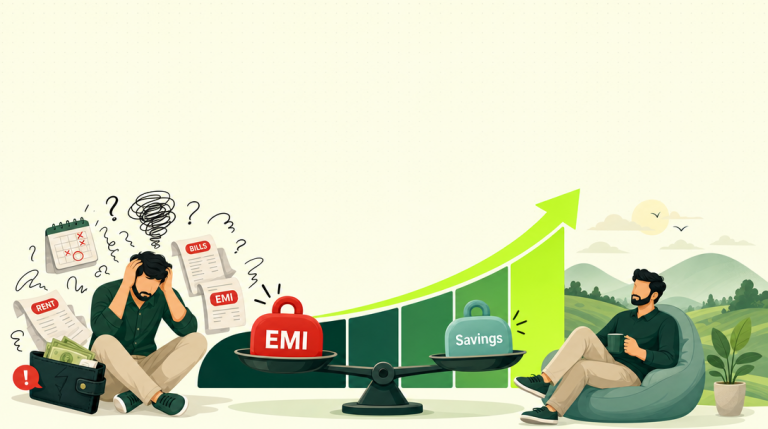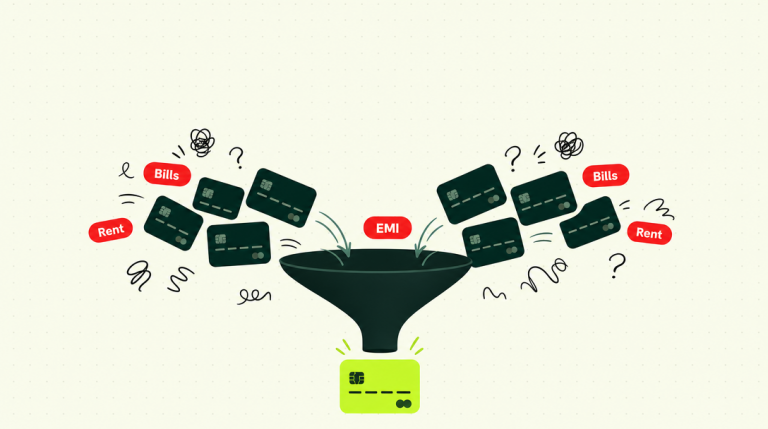







Credit card interest in India is the most expensive form of consumer debt available. At 36–42% per annum, carrying a ₹1 lakh balance for one year costs ₹36,000–42,000 in interest alone. And unlike a fixed EMI, revolving credit card debt compounds every month you don’t pay in full.
Credit card consolidation is how you get out from under that rate. This guide covers the three main methods, the real math, and how to choose the right approach for your situation.
Why Credit Card Interest Is So Expensive in India
Indian banks charge 3–3.5% per month on revolving credit card balances. That doesn’t sound alarming until you annualise it: 36–42% per year. For context, the best personal loan rates in 2026 start around 10.5%. The gap between these two numbers is where credit card consolidation extracts its value.
RBI data shows that outstanding credit card balances in India exceeded ₹2.7 lakh crore in early 2026. A significant portion of cardholders pay only the minimum due each month, which covers mostly interest, leaving principal barely touched. This is how credit card debt becomes a multi-year trap.
What is Credit Card Consolidation?
Credit card consolidation means moving your high-interest credit card balances to a lower-interest debt instrument. The goal is simple: stop paying 36–42% and start paying 10–18%. The difference is the savings.
There are three primary methods for doing this in India. Each works differently, and each has a different risk profile.
Three Methods of Credit Card Consolidation
Method 1: Personal Loan for Credit Card Debt
Take a personal loan at 12–16% per annum and use it to pay off your credit card balance in full. The card goes from outstanding to zero. You now repay the personal loan in fixed EMIs over 12–60 months.
This is the most common and most effective form of credit card consolidation for Indian borrowers. The rate drops from 36–42% to 12–16% is immediate and substantial.
Method 2: Credit Card Balance Transfer
Some banks offer a balance transfer facility where you move the outstanding balance from one credit card to another card at a promotional rate — often 0% or 1–1.5% per month — for a specified period (typically 3–6 months). After the promotional period, the standard rate (36–42%) applies again.
This method works if you can fully repay the transferred balance within the promotional window. If you can’t, you’re back to the same high rate — and potentially with a balance transfer fee (1–3%) already paid.
Method 3: EMI Conversion
Most credit card issuers allow you to convert an existing outstanding balance (or a single large transaction) into an EMI plan at a lower interest rate — typically 12–18% per annum. This is the fastest method (no new application required) but often has the highest effective rate among the three options and may include processing charges.
The Math: How Much Can You Save?
Scenario: ₹2 lakh credit card balance, paying the minimum due only.
The personal loan route saves approximately ₹1.5 lakh compared to minimum-due-only payments and ₹11,600 compared to EMI conversion — on a ₹2 lakh balance. On larger balances, these differences scale proportionally.
Eligibility Requirements
For credit card consolidation via a personal loan, standard eligibility applies:
- CIBIL score of 700+ (some NBFCs at 650+)
- Stable employment with income documentation
- FOIR below 50–55% after the new loan
For a balance transfer, your new card issuer assesses your creditworthiness as part of the approval. Your credit utilisation on the existing card (close to the limit signals risk) can affect approval.
What to Watch Out For
Don’t start using the cleared card again. The most common mistake after successful credit card consolidation: the card is now at zero, which feels like available credit. Using it while paying the personal loan EMI puts you in a worse position than before — two debts where there was one.
Check the effective rate on balance transfers. A 0% balance transfer that charges 2% processing plus reverts to 40%+ after 3 months is only beneficial if you can clear the entire balance in those 3 months.
Foreclosure charges on the personal loan. If you plan to prepay the loan early, check whether your lender charges a foreclosure fee (typically 2–5% of outstanding principal for fixed-rate loans). Under RBI guidelines, banks cannot charge foreclosure fees on floating-rate personal loans — but most personal loans are on fixed rates.
- Credit card interest in India runs at 36–42% p.a. — replacing it with a personal loan at 12–16% is where credit card consolidation creates real savings.
- Three main methods: personal loan, credit card balance transfer (promotional rate), and EMI conversion. A personal loan typically offers the lowest total cost.
- On a ₹2 lakh balance, moving from a credit card minimum payment to a personal loan at 13% saves over ₹1.5 lakh in interest.
- The most dangerous mistake after consolidation is re-using the cleared credit card — this creates dual debt instead of solving it.
- Balance transfers require a clear repayment plan within the promotional window, or you revert to the same high rate plus fees.
FAQs
For most borrowers, a personal loan at 10.5–16% per annum offers the best combination of rate reduction and repayment certainty. Credit card consolidation via balance transfer can work, but requires discipline to repay within the promotional window.
Taking a personal loan triggers a hard inquiry (temporary 5–10 point dip). But clearing your credit card balance drops your credit utilisation ratio significantly — which is a positive CIBIL signal. Net effect over 6–12 months is typically positive.
Yes. A personal loan for credit card consolidation can cover the outstanding balance across multiple cards simultaneously. Include all card balances in your loan amount calculation.
Conclusion
Paying 36–42% interest on credit card debt is not an unavoidable reality — it’s a choice that becomes harder to undo the longer it continues. Credit card consolidation through a personal loan is one of the most financially impactful moves available to Indian borrowers with revolving card debt. The math is unambiguous. What matters is the discipline: clear the card, keep it clear, and repay the personal loan on schedule.