






Three different products get lumped together in everyday conversation: top-up loan, personal loan, and consolidating my EMIs, and picking the wrong one usually means paying more interest than necessary or going through a full fresh application when a simpler option existed.
This guide separates the three clearly, so you can match the product to the actual problem: needing more money, needing money fast with no existing loan, or needing to simplify several EMIs into one.
What a Top-Up Loan Actually Is
A top-up loan is additional borrowing layered onto an existing loan you already hold with a lender, most commonly a home loan, though personal loan and loan-against-property top-ups exist too. Instead of opening a new loan account from scratch, the lender increases your existing facility, usually at a rate close to your original loan’s rate.
Because the lender already has your repayment history and existing collateral (where applicable) on file, a top-up typically involves less documentation and a faster turnaround than a fresh loan application.
Top-Up Loan vs a Fresh Personal Loan
The two solve different starting points:
- A top-up loan only works if you already hold an eligible existing loan with that lender in good standing. It typically comes at a lower rate than an unsecured personal loan, since it inherits some of the pricing benefit of the original (often secured) loan.
- A fresh personal loan is the right tool if you don’t have an existing loan to top up, need funds faster than a top-up’s approval cycle, or want to keep the new borrowing entirely separate from an existing loan account.
A practical rule of thumb: if your existing loan is a home loan and you’re several years into repayment with a strong track record, a top-up is usually cheaper than a new personal loan for the same amount. If you have no existing loan, the comparison doesn’t apply; a personal loan is your only route.
Top-Up Loan vs EMI Consolidation
These are commonly confused but solve opposite problems:
- A top-up loan gives you additional money on top of an existing loan; your total debt increases.
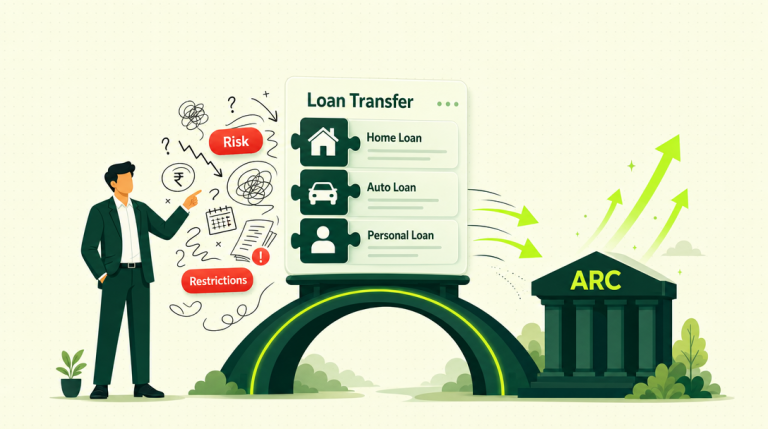
- EMI consolidation combines multiple existing loans into a single new loan, typically to simplify repayment and often to secure a lower blended interest rate. Your total debt doesn’t necessarily increase, but your monthly outgo is restructured.
If your problem is “I need more money,” you’re looking at a top-up or a fresh loan. If your problem is “I’m juggling too many EMIs and want one manageable payment,” consolidation is the relevant product, not a top-up.
When a Top-Up Makes the Most Financial Sense
A top-up is generally the stronger choice when all of the following are true:
- You already hold an eligible loan (commonly a home loan) with a clean repayment record.
- The amount you need is moderate relative to your existing loan, since top-up limits are usually capped as a percentage of your original sanctioned amount or current property value.
- You’d rather avoid a completely fresh underwriting cycle, since a top-up generally moves faster.
It’s less useful when you need a large sum unrelated to your existing loan’s collateral value, or when your existing loan is with a lender that doesn’t offer competitive top-up terms compared to what a fresh personal loan market comparison would get you.
Eligibility: What Lenders Check for a Top-Up
Beyond your existing repayment track record, lenders typically look at:
- Loan-to-value headroom, for secured top-ups, based on current property valuation
- Time elapsed on the existing loan, since most lenders require a minimum repayment history, often 12–18 months, before offering a top-up
- Updated income verification, though usually lighter than a fresh application since the lender already has a relationship
- No missed payments on the existing loan in recent history
How to Decide Which Product Fits Your Situation
A simple way to route yourself:
- If you’re managing several separate EMIs and the complexity itself is the problem, look at consolidation, not a top-up.
- If you need more money and hold an eligible existing loan in good standing, compare a top-up’s rate with tap tap loans against a fresh personal loan’s rate for the same amount before deciding.
- If you have no existing loan, or need funds faster than a top-up’s typical timeline, a personal loan is the direct route.
Key Takeaways
- A top-up loan adds to an existing loan; it requires you to already hold an eligible loan with a clean repayment history.
- Top-ups are usually cheaper and faster than a fresh personal loan, but only apply if you have that existing loan relationship.
- EMI consolidation and top-up loans solve opposite problems: simplifying existing debt versus adding new debt.
- Most lenders require 12–18 months of clean repayment history on the original loan before offering a top-up.
- Comparing the top-up rate against a fresh personal loan’s market rate is worth doing before assuming the top-up is automatically cheaper.
Frequently Asked Questions
Some lenders offer personal loan top-ups, though eligibility is typically stricter and the additional amount smaller than what’s available on secured loans like a home loan.
Usually not additional collateral beyond what secures the original loan, though the lender will revalue the existing collateral (for secured loans) to determine how much top-up headroom exists.
It’s usually close, but not always identical. Many lenders apply a small premium over the original loan’s rate, still typically lower than an unsecured personal loan rate.
Generally, yes,s for personal and home loan top-ups, though some lenders restrict top-up usage on home loans to home improvement or specified end-uses, worth confirming before applying.
Since a top-up is added to your existing loan account, a missed payment affects the entire combined loan, including the original amount, not just the top-up portion.
Conclusion
The right product depends entirely on which problem you’re solving: more money, faster money, or simpler repayment, and conflating the three is what leads people to overpay or apply for the wrong thing. Working out which bucket you’re in takes five minutes and can save meaningfully more than that in interest.
Not sure whether a top-up, a fresh loan, or consolidation fits your situation? Talk to a TapTap loan advisor and get a clear recommendation before you apply anywhere.