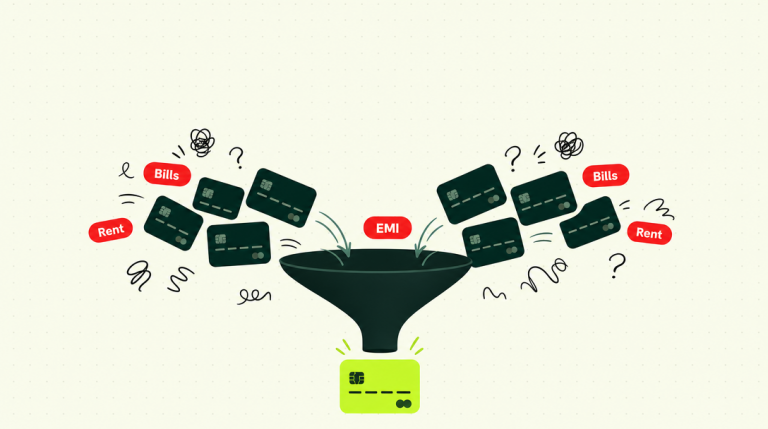







If you’re carrying high-interest debt, two tools are likely to come up as solutions: a balance transfer and loan consolidation. Both reduce your interest burden. Both involve taking new credit to replace existing debt. But they work differently, cost differently, and suit different financial profiles.
This is a direct comparison with real numbers so you can identify which one actually saves you more.
Quick Definitions
A balance transfer moves the outstanding balance of a single existing loan to a new lender at a lower interest rate. The number of loans doesn’t change — one loan moves to better terms.
Loan consolidation uses a new loan to pay off multiple existing debts simultaneously, replacing them with a single EMI at a (hopefully) lower blended rate. Multiple debts become one.
When Balance Transfer Is the Better Choice
A balance transfer outperforms consolidation when:
- You have one primary high-interest loan, and your other debts are manageable or at reasonable rates.
- The existing loan has a significant remaining tenure (18+ months) enough time for rate savings to exceed transfer costs.
- Your CIBIL score has improved since the original loan was taken, unlocking a materially better rate.
- You don’t want the complexity of bundling multiple debts just want to reduce the cost of one.
When Loan Consolidation Is the Better Choice
Loan consolidation makes more sense when:
- You’re managing three or more active debts with different due dates, rates, and lenders.
- At least one debt (especially a credit card) carries a rate far above what a personal loan would cost.
- The operational simplification one payment and one due date has real value for your financial management.
- Your CIBIL score is good enough for a competitive consolidation rate.
Side-by-Side Cost Comparison
Two borrower scenarios with identical outstanding debt but different debt structures:
Scenario A: One personal loan, ₹4 lakh, 20% p.a., 24 months remaining
Scenario B: Three debts totaling ₹4 lakh (credit card ₹1.5L + personal loan ₹1.5L + consumer loan ₹1L)
Takeaway: For a single loan, a balance transfer is the efficient route. For multiple debts, loan consolidation produces greater net savings with less administrative complexity.
The Decision Framework
Ask these four questions to determine which option fits your situation:
- How many debts do you have? (1 loan → balance transfer; 3+ loans → consider consolidation)
- What is the blended interest rate across all debts? (If heavily skewed by credit card debt, consolidation often saves dramatically more)
- What is the remaining tenure on each debt? (Short tenure → transfer economics are less compelling)
- Can you manage the FOIR increase from a consolidated loan amount vs. individual balance transfers?
- A balance transfer is best for a single loan with a meaningful rate improvement available; loan consolidation is best for multiple debts, especially when credit card debt is involved.
- In a multiple-debt scenario, consolidation typically produces higher net savings than individual balance transfers and fewer administrative steps.
- Both options require break-even analysis: rate savings must exceed total transfer/processing costs within your remaining tenure.
- Neither option helps if you re-accumulate debt on cleared credit cards or take additional EMIs after the transfer/consolidation.
Frequently Asked Questions
It depends on your debt structure. A balance transfer is simpler and appropriate for a single loan. Loan consolidation is more comprehensive and typically produces larger savings when multiple high-rate debts are involved.
Not simultaneously through the same transaction. However, some lenders offer consolidation loans that include balance transfer functionality; you can combine multiple existing loans, including your current high-rate loan, into one new loan. This achieves both objectives.
Both involve one hard inquiry and close old accounts as “Closed.” The CIBIL impact is broadly similar. However, consolidation (which clears credit card balances) may have a larger positive effect on credit utilization, which can result in a faster CIBIL recovery.
A balance transfer suits a single high-interest loan, while consolidation is better for managing multiple debts under one EMI.
It depends on your debt structure, interest rates, remaining tenure, and transfer costs. Compare the total cost before deciding.
Conclusion
The choice between a balance transfer and loan consolidation is ultimately a numbers decision, not an intuitive one. Run the break-even analysis for your specific debt structure before committing to either. For most borrowers with mixed debt (at least one credit card in the mix), consolidation produces the superior financial outcome. For borrowers with one primary high-rate loan and everything else in order, a targeted balance transfer is the cleaner, lower-cost solution.