





Introduction
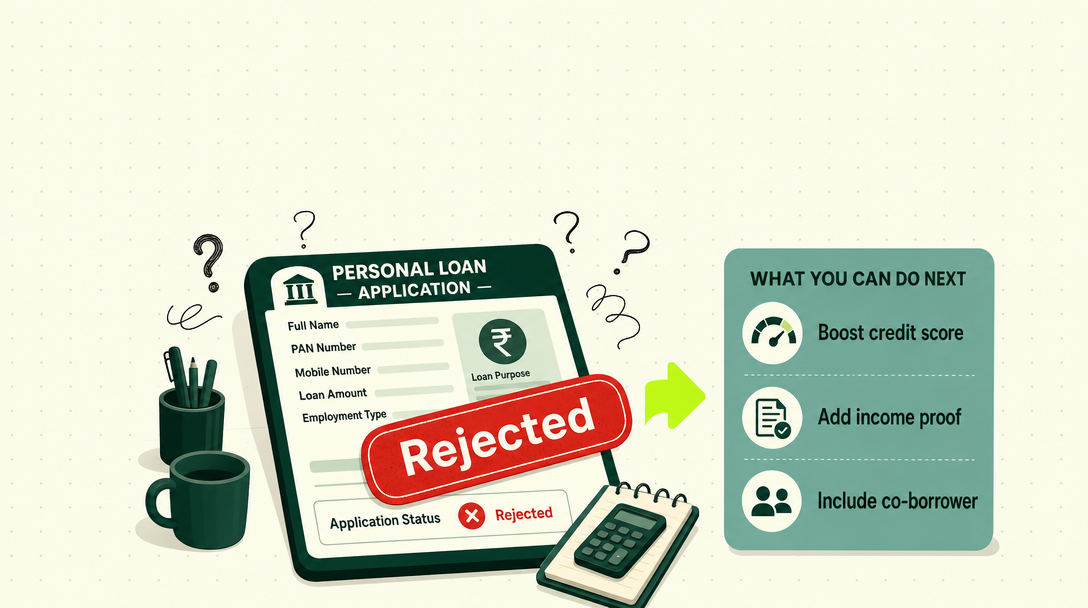
Personal loan rejection reasons India borrowers face are usually linked to CIBIL score, FOIR, income, employment stability, documents, or repeated hard enquiries. A rejection is not just a simple “no” — it can leave you without funds, trigger a hard inquiry on your CIBIL report, and make your next application harder if you reapply without fixing the real issue.
Banks are not required to tell you why they rejected your application. They rarely do. So borrowers try again at another bank, generate another hard inquiry, and sometimes enter a rejection spiral that makes their next application even harder.
This guide explains the 8 most common reasons personal loan applications are rejected in India — and exactly what you can do about each one before applying again.
Reason 1: Low or Absent CIBIL Score
The most common reason. Most banks require a minimum CIBIL score of 700–750 for personal loans. Below 700, approval chances drop sharply. Below 650, most banks decline outright.
How to Fix It
- Pay all existing EMIs and credit card bills on time, every month — this is the single fastest-moving lever
- Reduce your credit utilisation ratio below 30% (don’t max out credit cards)
- Dispute any errors in your CIBIL report — incorrect defaults or wrong loan records that bring your score down
- Don’t apply for any new credit for at least 4–6 months while rebuilding
Timeline to improvement: A disciplined borrower can improve their CIBIL score by 40–70 points in 6 months.
→ CIBIL Score for Personal Loan: What You Need & How to Fix It Fast
→ How to Improve Your CIBIL Score Fast: What Actually Moves the Number in 2026
Reason 2: High FOIR (Fixed Obligation to Income Ratio)
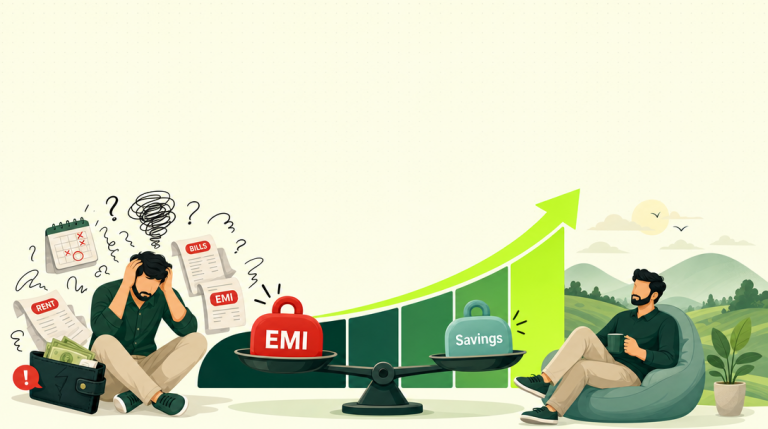
If your existing EMIs + credit card minimum payments already consume 50%+ of your net monthly income, most lenders will reject the application — regardless of your CIBIL score.
FOIR formula: (All monthly fixed obligations ÷ Net monthly income) × 100. Most lenders cap eligibility at 40–50% FOIR.
How to Fix It
- Close or prepay smaller loans and credit cards before applying
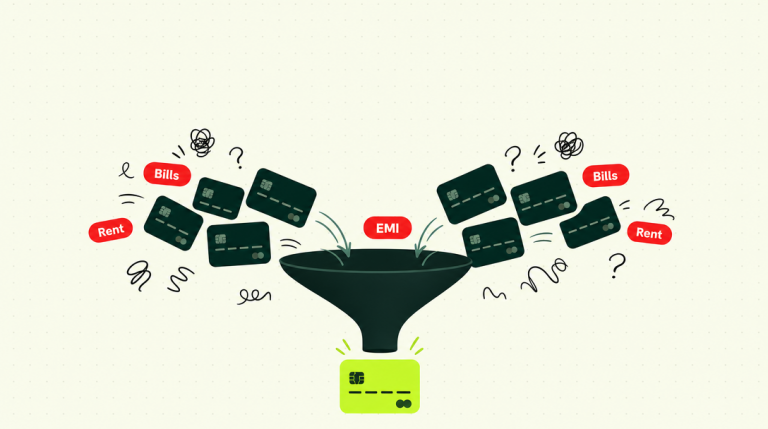
- Consider debt consolidation to reduce the total monthly EMI obligation
- If possible, wait until one existing loan completes before applying for another
→ FOIR in Personal Loan India: What Banks Check and How to Improve It
→ What is FOIR, and Why It Decides Your Personal Loan Eligibility More Than Your CIBIL Score
Reason 3: Income Below the Lender’s Minimum Threshold
Most banks require a minimum net monthly income of ₹20,000–₹25,000 for personal loan approval. NBFC minimums are sometimes lower (₹10,000–₹15,000), but the rates are higher.
How to Fix It
- Apply to lenders with lower income thresholds (some NBFCs accept from ₹15,000)
- Include additional income sources (rental income, freelance earnings) if you can document them.
- Apply for a lower loan amount that your income can support more comfortably.
- Wait for a salary increase before applying — even a ₹5,000 increase can significantly improve eligibili.ty.
Reason 4: Unstable Employment or Short Tenure
Frequent job changes, probationary employment, contractual roles, or being self-employed without documented income are all red flags for lenders. Most banks prefer 1–3 years of stability with the current employer.
How to Fix It
- Wait until you’ve been with your employer for at least 12 months before applying.
- Self-employed applicants should have 2+ years of ITR filings before applying.
- If your employer is in an unrated or unstable industry, explore NBFCs, which are more flexible on employer type.
Reason 5: Multiple Hard Enquiries in a Short Period
When you apply to 5 banks in a week, all 5 run hard enquiries on your credit report. The bureau interprets this as credit-hungry behaviour, reducing your score by 5–10 points per inquiry. The cumulative effect is a 20–40 point drop that makes you less attractive to the very lenders you’re applying to.
How to Fix It
- Never apply to multiple lenders simultaneously without first checking eligibility through a soft-inquiry platform.
- Wait 4–6 months after multiple rejections before applying again, to allow the hard inquiry impact to fade.
- Use TapTap Loans or similar advisory platforms to match with the right lender before a single application is made.
Reason 6: Incorrect or Incomplete Documentation
Applications are rejected on document grounds more often than borrowers realise. A mismatch between the name on your PAN and your bank account, an expired Aadhaar, mismatched addresses, or missing ITR years can all trigger rejection.
How to Fix It
- Ensure PAN, Aadhaar, and bank records all show exactly the same name spelling
- Check that your Aadhaar address matches your current KYC records
- For salaried applicants: have last 3 months salary slips, 6 months bank statements, and Form 16 ready
- Self-employed: ITR for 2 years, bank statements for 12 months, and GST registration if applicable
→ Why Personal Loan Applications Get Rejected in India: 8 Real Reasons and How to Fix Them
Reason 7: Loan Amount Too High for Your Profile
Asking for a loan amount that exceeds what your income and credit profile can support is a common reason for rejection. Most lenders calculate maximum eligibility as 10–15x your monthly net income for personal loans, adjusted for FOIR.
How to Fix It
- Use a lender’s eligibility calculator (or TapTap Loans’ advisory) to estimate your maximum approved amount before applying
- Apply for a slightly lower amount — sometimes a 10–15% reduction in the requested amount is the difference between approval and rejection
- If you need more than your profile currently supports, a top-up on an existing loan may be a better path
→ Personal Loan Top-Up in India: When It Makes Sense and When It Costs You More
Reason 8: Sector or Employer Blacklist
Banks maintain internal blacklists of employers and sectors they’ve had high default rates with in the past. This isn’t publicly disclosed. If you work in certain industries — some real estate developers, small manufacturing companies, or volatile startup sectors — your employer may be on one of these lists.
How to Fix It
- NBFCs are generally more flexible on the employer category than banks
- A loan advisory platform can identify which lenders are likely to approve your employer category
- Providing a co-applicant with a different employer can sometimes overcome this barrier
Before You Reapply: The Smart Checklist
- Pull your CIBIL report and check for errors — dispute any wrong records
- Calculate your current FOIR — if above 45%, reduce obligations first
- Confirm your employment tenure is 12+ months
- Prepare complete, consistent documentation
- Use a loan advisory platform to identify the right lender before making a single application.
Rejected before? TapTap Loans advisors identify exactly which criteria are affecting your application and match you to lenders most likely to approve your profile. Visit taptaploans. in
Frequently Asked Questions
Wait at least 3–4 months before applying again — this allows the impact of hard inquiries to begin fading. Use this time to address the specific reason for rejection (CIBIL improvement, FOIR reduction, or documentation correction). Applying too quickly in a worse position generates another rejection and compounds the problem.
Banks are not legally required to disclose the reasons for rejection in India. However, you can request a CIBIL report (free once per year) to identify what may have triggered rejection. TapTap Loans advisors can also review your profile and identify likely rejection factors before any application is made.
The rejection itself doesn’t appear on your CIBIL report. The hard enquiry triggered by the application does — reducing your score by approximately 5–10 points. Multiple applications in a short period create multiple hard enquiries, compounding the impact.
Yes, but it’s harder. After settling a default, maintain 12–18 months of clean repayment history on any remaining obligations before applying for new personal loans. Some NBFCs specialise in borrowers recovering from defaults — though at higher rates. CIBIL score typically takes 24–36 months to recover meaningfully after a settled default.
For most banks, CIBIL 700+ is the minimum for a ₹5 lakh personal loan. CIBIL 750+ gets you significantly better rates. NBFCs will consider applications with 650+, though at materially higher interest rates.
Key Takeaways
- The most common rejection reasons are low CIBIL, high FOIR, and income below threshold — all addressable with 3–6 months of disciplined effort.
- Multiple simultaneous applications generate multiple hard inquiries that reduce your score further — making the next application harder, not easier.
- Always pull your CIBIL report before reapplying — errors in your report may be causing rejection that can be fixed in weeks.
- A loan advisory platform identifies the right lender for your profile before any formal application — preventing wasted inquiries and rejection spirals.