





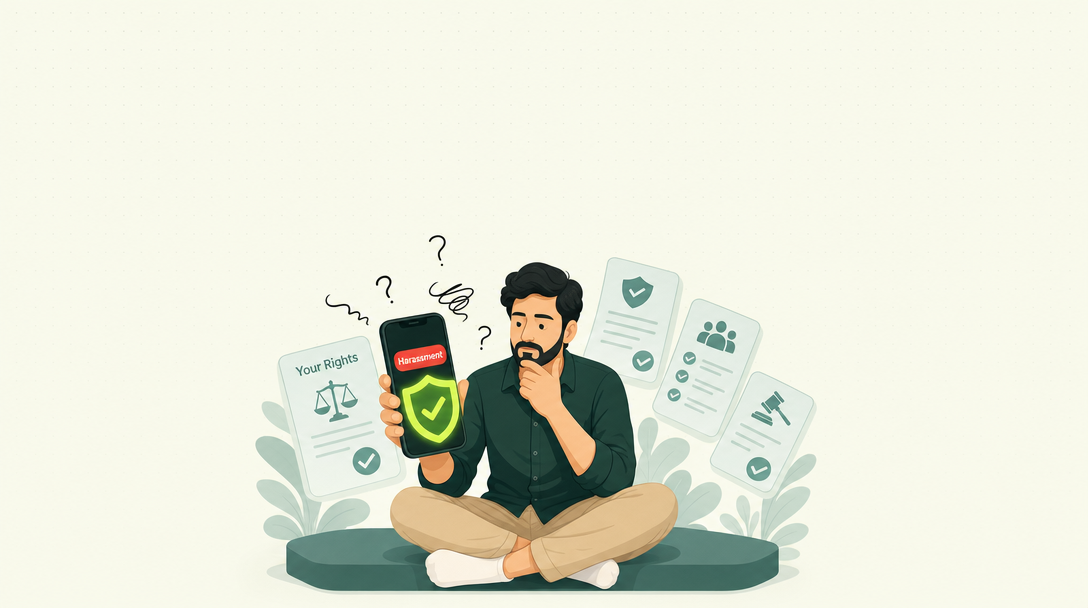
Recovery harassment is illegal in India, no matter how overdue your payment is. RBI’s rules set clear limits on what any lender or recovery agent can do. This guide covers your exact rights and what to do right now.
Why This Problem Became So Visible
Digital lending grew fast in India. Some apps crossed serious lines. Threatening calls. Contacting family and employers. Public shaming. This pushed regulators to set firmer rules protecting borrowers.
What Counts as Harassment
Calls outside reasonable hours. Generally before 8 AM or after 7 PM. Threatening language. Contacting your family, friends, or employer to pressure you. Posting about your debt publicly. Pretending to be police or a legal authority.
What Lenders Are Allowed to Do
Contact you during reasonable hours about your overdue amount. Send formal written notices. Visit your registered address, respectfully, during the day. These are all legitimate.
A Quick Reference Table
| Behavior | Legal | Illegal |
|---|---|---|
| Call at 6 PM about overdue EMI | Yes | — |
| Call at midnight with threats | .— | Yes |
| Formal written notice | Yes | — |
| Contacting your employer to shame you | — | Yes |
| Polite daytime visit to your address | Yes | — |
| Posting your debt on social media | — | Yes |
Your Immediate Rights
Document everything. Dates, times, exact words used. The caller’s name, if given. This is your strongest tool if you need to escalate.
Step-by-Step: What to Do Right Now
- Document the incident as thoroughly as you can.
- Contact the lender directly, not just the recovery agent.
- File a written complaint with the lender’s grievance officer.
- Escalate to the RBI Banking Ombudsman, if unresolved.
- File a police complaint for genuinely serious threats.
Does This Apply to Every Lending App?
These rules cover RBI-regulated banks and NBFCs, and their agents. So check an app’s regulatory status before you borrow. Not after a problem starts.
What If Your Lender Isn’t RBI-Regulated?
Some formal protections may not fully apply. But threats and privacy violations stay illegal either way, under general law.
Why Staying Silent Makes Things Worse
Recovery often gets worse after a borrower goes quiet. Lenders read silence as avoidance. This brings more calls, more often. Speaking up early usually eases the pressure.
How to Avoid Reaching This Point
At risk of missing a payment? Call your lender first. Before the due date, not after. Ask about restructuring if things are genuinely hard. Managing several EMIs? Consider merging them into one payment. This cuts your risk of ever reaching a high-pressure stage.
What a Formal Complaint Actually Does
It creates a real record. Even if nothing changes right away, that record matters later. It puts the lender on notice.
The RBI Banking Ombudsman, Explained Simply
Lender’s own team won’t fix it? The RBI Banking Ombudsman is a free, formal next step. It’s real. It’s accessible. Use it if your first complaint goes nowhere.
Frequently Asked Questions
No. RBI’s rules limit contact to reasonable hours, generally 8 AM to 7 PM.
Generally no, except in limited cases involving a formal guarantor. Contacting your employer to shame you isn’t allowed.
Document the incident thoroughly. Then report it formally to the lender’s grievance officer.
No. These protections apply no matter how overdue the payment is. Owing money doesn’t make harassment legal.
Escalate the complaint through the lender’s grievance process and, if it remains unresolved, use the appropriate RBI complaint mechanism.
Conclusion
Being behind on a loan does not give a lender or recovery agent the right to use harassment, threats, or intimidation. Know your rights, keep records of every interaction, and raise complaints through the proper channels. At the same time, communicate with your lender and explore a realistic repayment solution to resolve the overdue debt.
Managing multiple EMIs and worried about reaching this stage? See how consolidating them into one payment could reduce that risk.