





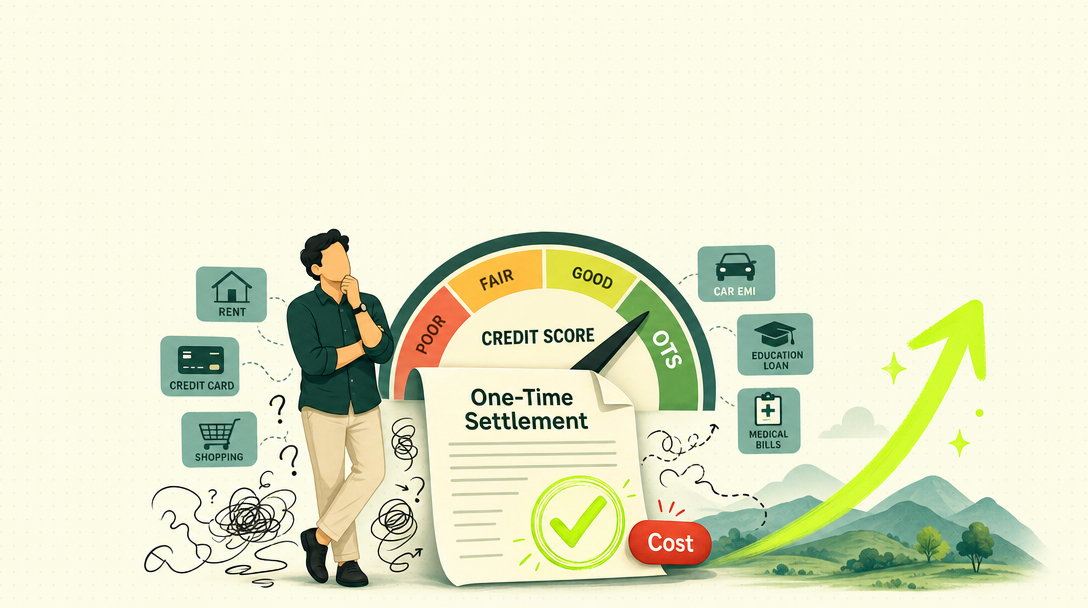
One-time settlement (OTS) is a deal where your lender accepts a lower lump-sum amount to close a loan you can’t fully repay. The rest is waived. But your credit report will show the loan as “Settled,” not “Closed.” That label can make new loans harder to get for years.
So OTS can be a lifeline. It can also be an expensive shortcut. This guide helps you tell the difference.
OTS Full Form and Meaning
The OTS full form in banking is One Time Settlement.
Here’s the simple meaning. You owe ₹3 lakh. You can’t pay it. The bank agrees to take ₹1.8 lakh in one go, or in a few quick instalments. It writes off the remaining ₹1.2 lakh as a loss.
Banks don’t do this out of kindness. They do it when recovery looks unlikely. Some money now is better than a long court case later.
You’ll usually hear about a one-time settlement only after your loan has been overdue for many months. Often it’s after it has turned into an NPA (non-performing asset), which happens after 90 days of non-payment.
How a One-Time Settlement Works
Most OTS deals follow the same path:
- You fall behind. EMIs stay unpaid for 90 days or more.
- You or the lender raisess a settlement. Some banks run OTS schemes. Others offer it case by case.
- You negotiate. The first offer is rarely the best one.
- You get a written sanction letter. It states the amount, due dates, and that the loan will be closed.
- You pay into the lender’s official account only.
- You collect a settlement letter or NOC. This is your proof.
- The lender reports “Settled” to the credit bureaus.
That last step is the part most people don’t expect. One-Time
One-Time Settlement and Your CIBIL Score
Here’s the truth. A one-time settlement hurts your credit profile badly.
| Status on report | What it means to a new lender |
|---|---|
| Closed | Paid in full. Low risk |
| Settled | Paid less than owed. High risk |
| Written off | Lender gave up on recovery. Very high risk |
A “Settled” account can stay on your credit history for up to seven years. Many banks will reject a new loan application just because of it. Some NBFCs may approve, but usually at a much higher rate.
There’s also the score drop itself. Months of missed EMIs before the settlement already pull your score down. The settled tag keeps it from recovering fast.
When a One-Time Settlement Makes Sense
OTS is not always wrong. It can be the right call when:
- You’ve lost your income and don’t expect it back soon.
- You’ve had a serious medical or family crisis.
- The debt has grown far beyond what you can ever pay.
- The lender has already started legal recovery.
- You don’t plan to need a loan for the next several years.
In these cases, closing the chapter can bring real relief. Peace of mind matters too.
When You Should Avoid OTS
Pause before you settle if:
- You can still pay, just not the current EMI.
- The problem is short-term, like a two-month income gap.
- You’ll need a home loan or car loan soon.
- Someone is pushing you to stop paying so you can “qualify” for settlement.
That last one is a red flag. Deliberately stopping EMIs to force a settlement damages your report and invites recovery calls. It’s rarely worth it.
Better Options to Try Before One Time Settlement
Most people jump to OTS because nobody showed them the other doors. Try these first:
- Loan restructuring. Ask your lender to extend the tenure and lower the EMI. Your report stays cleaner than with a settlement.
- Moratorium or EMI holiday. Some lenders allow a short pause during genuine hardship.
- Debt consolidation. If you have many small loans at high rates, one lower-rate loan can make the EMI manageable. This only works if your profile still qualifies.
- Gold loan or loan against FD. Using your own assets can clear a costly debt at a much lower rate.
- Partial prepayment. Even a bonus or family help can bring the account back to regular.
At TapTap Loans, this is often our first conversation. We look at whether you can stay current before we ever talk about settlement.
How to Negotiate a One Time Settlement
If OTS really is the right path, do it properly.
Know Your Numbers
Get a full statement. Separate the principal, interest, and penal charges. Lenders often waive penal charges and part of the interest first.
Start Lower Than You Can Pay
Offer an amount you can actually arrange. Leave room to go up. Explain your hardship clearly, with proof if possible.
Get Everything in Writing
Never pay on a verbal promise. The sanction letter must mention:
- Loan account number
- Settlement amount
- Payment dates
- A line saying no further dues will be claimed after payment
Pay Only to the Lender
Never pay a recovery agent in cash. Never pay into a personal account. Use a traceable bank transfer to the lender’s official account.
Collect Your NOC
After the final payment, get a settlement letter or NOC. Store it safely. You may need it years later.
Can You Change “Settled” to “Closed” Later?
Yes, in many cases.
You can go back to the lender and pay the waived amount. The lender may then update the status to “Closed.” Ask for this in writing before you pay.
It’s worth doing before a big loan, like a home loan. Many borrowers do this once their finances recover.
What RBI Says About Compromise Settlements
In 2023, RBI issued a framework for compromise settlements and technical write-offs. Banks and NBFCs now need a board-approved policy for them.
The framework also sets a cooling period before a lender can give fresh credit to the same borrower after a compromise settlement. For most retail loans, it’s at least 12 months, and lenders may set longer periods.
The key point for you: settlement is a formal process. It must follow the lender’s policy. Anyone who promises a “guaranteed 70% waiver” is guessing.
Frequently Asked Questions
OTS stands for One Time Settlement. It’s an agreement where the lender accepts a smaller lump sum to close a loan, and waives the rest of the dues.
Yes. The loan is reported as “Settled,” which lenders see as high risk. It can stay in your credit history for up to seven years and make new loans harder to get.
It’s possible, but harder. Many banks reject applicants with a settled account. Some NBFCs may lend at higher rates. Converting “Settled” to “Closed” by paying the balance improves your chances.
There’s no fixed rule. It depends on the lender’s policy, how old the dues are, and your hardship. Penal charges and some interest are usually waived first. Be wary of anyone promising a fixed percentage.
Only if you truly can’t pay. Paying in full keeps your report clean. A one-time settlement is a last resort for genuine hardship, not a way to save money.
Conclusion
A one-time settlement ends a debt you can’t carry. But it trades short-term relief for long-term credit damage.
Before you choose OTS, ask one question. Can I stay current with a different structure? Restructuring, consolidation, or a secured loan might get you there.
If the answer is truly no, settle smartly. Negotiate, get it in