






In the self-employed vs salaried loan consolidation comparison, salaried applicants often get marginally better rates. Mainly because their income is easier to verify. But the gap is smaller than most people assume. A strong self-employed profile can outperform a weak salaried one.
This guide breaks down what drives the difference, and how self-employed borrowers can close the gap.
Why Salaried Applicants Often See Slightly Better Rates
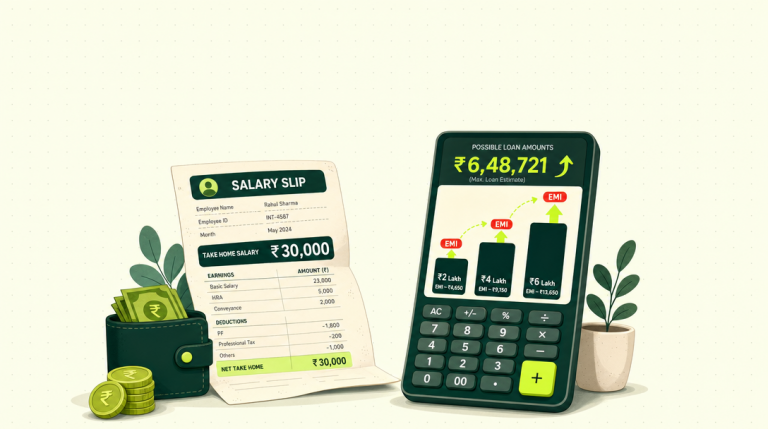
Salary slips and steady bank credits give lenders a clean, easy-to-verify picture of income. Less uncertainty for the lender generally means marginally better pricing.
This isn’t a fixed rule. It reflects how easily a lender can assess repayment risk, which self-employed applicants can address with the right documentation.
What Self-Employed Applicants Are Assessed On Instead
- 2 to 3 years of ITR filings, showing consistent income over time.
- GST returns, if applicable, backing up business turnover.
- Bank statements, showing steady income credits, not just the closing balance.
- Business vintage and continuity.
The Real Factors That Matter More Than Employment Type
Credit score matters more than almost anything else. A self-employed applicant with a 780 score often gets a better rate than a salaried applicant with a 650 score, regardless of employment type.
Income consistency matters more than income source. A self-employed applicant with steady, well-documented income across 2-3 years can look just as reliable as a salaried applicant.
FOIR matters equally for both. Whether salaried or self-employed, lenders cap total EMI obligations at a similar percentage of income, generally 50-60%.
A Side-by-Side Comparison
| Factor | Salaried | Self-Employed |
|---|---|---|
| Primary income proof | Salary slips, Form 16 | ITR, GST returns, bank statements |
| Documentation | Simpler, faster to verify | More detailed, takes longer to verify |
| Rate impact | Marginally better, all else equal | Slightly higher, closeable with strong documentation |
| Business vintage needed | Not applicable | Usually 2-3 years minimum |
| Bank vs NBFC preference | Both work well | NBFCs often more flexible |
How Self-Employed Borrowers Can Close the Rate Gap
- File ITR consistently, every year, on time. Gaps raise questions lenders would rather not ask.
- Keep personal and business finances separate. Makes your income easy to trace cleanly.
- Build and maintain a strong personal credit score. Matters as much for self-employed applicants as salaried ones.
- Check both banks and NBFCs. NBFCs are often more flexible with self-employed profiles, sometimes at a comparable rate to what a bank offers a salaried applicant.
A Realistic Comparison
Consider two applicants, both with a 740 CIBIL score, seeking to consolidate ₹4,00,000 in debt. One is salaried, three years at the same company. The other is self-employed, with three years of consistent ITR filings and steady bank statement history.
In practice, both are likely to see fairly similar rate offers. Credit score and income consistency, not employment type alone, do most of the work in the lender’s decision. The self-employed applicant may see more documentation requested, but not necessarily a meaningfully worse rate.
Why This Matters for Consolidation Specifically
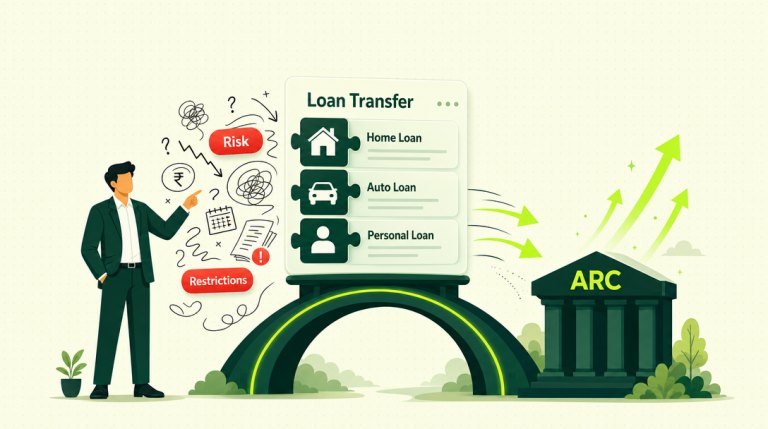
Consolidation loans are underwritten similarly to any other personal loan. The same income-verification principles apply. A well-documented self-employed applicant isn’t meaningfully disadvantaged in consolidating existing debt, provided their documentation is thorough and consistent.
How TapTap Helps Level the Playing Field
Facing a single lender’s conservative assessment? Self-employed applicants checking their eligibility through TapTap get compared across 20+ banks and NBFCs at once. This includes several NBFCs that specifically cater well to self-employed profiles. This often surfaces better options than a single bank application would.
A Note on Business Type
Not every self-employed profile looks the same to a lender. A consultant with predictable monthly retainer income is easier to assess than a seasonal retailer with sharply fluctuating cash flow. If your business income varies significantly month to month, presenting a clear annual summary alongside your ITR can help lenders see the full picture, rather than judging you on a few weak months in isolation.
Frequently Asked Questions About Self-Employed vs Salaried Consolidation Rates
Not always. The gap, where it exists, is often modest, driven more by documentation quality and credit score than employment type alone.
Consistent ITR filings over 2-3 years, GST returns where applicable, and clean bank statements showing steady income are the strongest factors.
NBFCs are often more flexible with self-employed documentation and business vintage requirements, sometimes at a comparable rate to banks.
It can, to a degree. Businesses with more predictable, documented revenue streams are generally easier to assess than highly variable or cash-heavy businesses.
Self-employed and looking to consolidate your debt? Check your eligibility with TapTap across 20+ lenders, including several that specialize in self-employed profiles.