





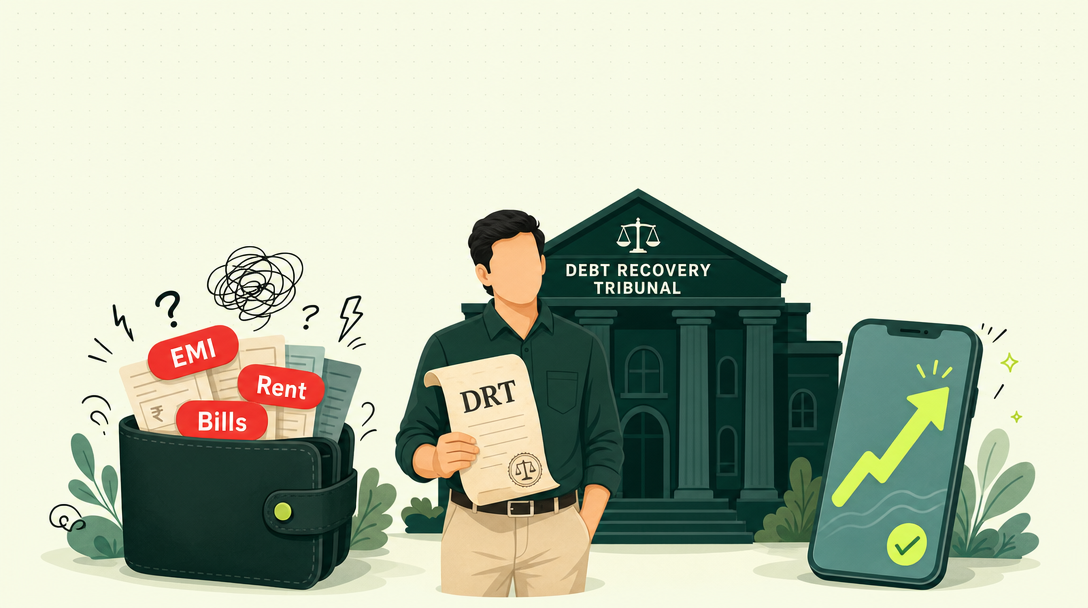
A Debt Recovery Tribunal (DRT) is a special court set up to help banks and financial institutions recover large unpaid loans quickly. It handles cases where the dues are ₹20 lakh or more. If you’ve received a DRT notice, you have the right to reply, defend yourself, and even negotiate. Ignoring it is the one thing you shouldn’t do.
A legal notice can feel terrifying. Let’s slow down and understand what it actually means.
DRT Full Form and Meaning
The DRT full form is Debt Recovery Tribunal.
DRTs were created under the Recovery of Debts Due to Banks and Financial Institutions Act, 1993. The law is now called the Recovery of Debts and Bankruptcy Act.
The idea was simple. Civil courts were slow. Banks needed a faster route for big defaults. So the government set up tribunals that deal only with debt recovery.
India has around 39 DRTs across major cities. Appeals go to Debt Recovery Appellate Tribunals, called DRATs.
When Can a Bank Take You to a Debt Recovery Tribunal?
Not every missed EMI ends up ata DRT. Here’s the rule:
| Outstanding amount | Where the case usually goes |
|---|---|
| ₹20 lakh or more | Debt Recovery Tribunal |
| Below ₹20 lakh | Civil court, Lok Adalat or arbitration |
So most personal loans and credit card dues never reach a debt recovery tribunal. It’s more common with:
- Home loans
- Loans against property
- Business and MSME loans
- Large secured loans where the bank also uses SARFAESI
If you have a ₹3 lakh personal loan, a DRT case is very unlikely. But you may get a demand notice, a legal notice,e or an arbitration notice.
How a DRT Case Works: Step by Step
Here’s the usual flow once a bank files at a debt recovery tribunal. The bank
- nk files an application listing the dues and documents.
- DRT issues a summons to you. This is the notice you receive.
- You file a written statement with your side of the case. Usually within 30 days.
- Hearings happen. Both sides present arguments and documents.
- The Presiding Officer passes an order.
- A Recovery Certificate is issued if the bank wins.
- Recovery Officer enforces it. This can include attaching property or bank accounts.
The process can take months or years. Many cases settle along the way.
Your Rights in a Debt Recovery Tribunal Case
You are not powerless here. You have clear rights:
- The right to be heard. You can file your reply and attend hearings.
- The right to question the amount. Wrong interest, extra charges, or double counting can be challenged.
- The right to a lawyer, or you can appear yourself.
- The right to settle. Many banks agree to a one-time settlement even during a case.
- The right to appeal the order at the DRAT.
For an appeal at DRAT, you usually need to deposit a part of the ordered amount. It’s often 50%, and the tribunal can reduce it to 25%.
DRT and SARFAESI: How They Connect
Secured loans add another layer. Under the SARFAESI Act, a bank can take possession of a mortgaged property without going to court first.
But you can challenge that action at the debt recovery tribunal. You must file under Section 17 within 45 days of the bank’s action.
This is one of the most important uses of DRT for borrowers. It’s your way to stop an unfair or wrongly processed possession.
How to Check DRT Case Status Online
You can track a case yourself. Here’s how:
- Visit the official DRT portal at drt.gov.in.
- Choose “Case Status.”
- Select the DRT city where the case is filed.
- Search by case number, party name, or diary number.
- View the next hearing date and past orders.
You can also check the DRT cause list to see which cases are listed for hearing on a given day. For filings, there’s the e-DRT portal.
What to Do If You Get a DRT Notice
Take a deep breath. Then act in this order:
Don’t Ignore It
If you don’t reply, the tribunal can pass an order without hearing you. That’s called an ex parte order. It’s much harder to undo.
Read the Claimed Amount Carefully
Check the principal, interest rate, and charges. Compare them with your loan agreement and statements.
Get Legal Help
A lawyer who handles DRT matters can guide you well. Some legal aid services also help borrowers who can’t afford a lawyer.
Talk to the Bank
Banks prefer recovery over long cases. Propose a realistic plan. It could be restructuring or a settlement.
Keep Paying What You Can
Even small, regular payments show good faith. Keep proof of every payment.
Can You Avoid a Debt Recovery Tribunal Case Altogether?
Yes, in most cases, if you act early.
DRT is usually the last stop after months of missed payments and notices. The earlier you talk to your lender, the more options you have:
- Restructuring with a longer tenure
- A short EMI pause during hardship
- Selling or refinancing a property on your own terms
- Consolidating smaller high-cost loans to free up cash
At TapTap Loans, we see many borrowers who waited too long because they felt ashamed. Please don’t. Talking early is a sign of responsibility, not failure.
Frequently Asked Questions
DRT stands for Debt Recovery Tribunal. It’s a special tribunal that handles loan recovery cases filed by banks and financial institutions, mainly for dues of ₹20 lakh or more.
A bank can approach a debt recovery tribunal when the outstanding debt is ₹20 lakh or more. Smaller dues usually go to civil courts, Lok Adalats,s or arbitration.
A DRT case is a civil recovery matter, not a criminal case. It can lead to attachment of assets. Arrest is extremely rare and only possible in narrow situations during recovery.
Go to drt.gov.in and choose the case status option. Select the right DRT and search by case number or party name. You’ll see hearing dates and orders.
Yes. Many cases end in settlement or a payment plan. You can propose terms to the bank at any stage, and the tribunal can record the settlement.
Conclusion
A debt recovery tribunal is not a criminal court. You won’t be arrested for a DRT case. It’s a civil process to recover money.
It does carry real consequences, like property attachment. So treat a notice seriously. Reply on time, check the numbers, get advice, and keep talking to the bank.
And if you’re not there yet, but EMIs are slipping, act now. The best DRT case is the one that never gets filed.