






If you’re wondering what to do about too many EMIs, start here. List every EMI you owe, in one place. Note the amount, due date, and interest rate. You can’t fix a problem you haven’t mapped out.
Once you see the whole picture, you have real options. This guide walks through all of them, in order of urgency.
First: Get the Full Picture
Grab a notebook, or open a spreadsheet. Write down every loan and card. Note the outstanding balance, the EMI or minimum due, the interest rate, and the due date. Here is a debt consolidation guide
Add it all up. This one number, Fixed Obligation to Income Ratio (FOIR), tells you more than any single EMI does. Most overwhelmed borrowers have never actually added this up.
Step 1: Check If You’re Actually Overextended
A common rule of thumb: your total EMIs shouldn’t exceed 40 to 50% of your take-home income. Above that, the pressure is real and fixable.
Below that threshold but still feel stretched? The issue may be timing. Several EMIs falling in the same week can feel worse than the total amount suggests.
Step 2: Identify the Most Expensive Debt First
Not all EMIs are equal. A credit card at 36% is far more damaging than a personal loan at 14%, even with a smaller balance. Here is a credit card consolidation guide
Rank your debts by interest rate, highest to lowest. This tells you exactly where to focus first.
Step 3: Consider Consolidating Everything Into One EMI
This is often the single most effective fix. A consolidation loan combines everything, cards and loans, into one new loan. One blended rate. One due date.
Instead of tracking four dates and four rates, you track one. Since the blended rate is usually well below your card rates, your total monthly outflow often drops too.
Step 4: Align Due Dates Where You Can’t Consolidate Everything
Not ready for full consolidation? Ask your lenders if you can shift due dates closer together, or closer to your salary credit date. Fewer scattered dates means fewer chances to miss one.
Step 5: Build a Small Buffer
Even a modest cushion helps. One month’s worth of your smallest EMI reduces the risk of a bounce if timing gets tight. Keep it separate from your everyday spending account.
Step 6: Stop Adding New Debt
This sounds obvious. But it’s the step most people skip. Already juggling too many EMIs? Taking a new instant loan app loan to cover a shortfall almost always makes things worse.
What Happens If You Do Nothing
Ignoring the problem doesn’t make it smaller. It usually leads to one of two outcomes. Either you start missing payments, triggering bounce charges and score damage. Or you keep paying everything, but with rising stress and shrinking savings.
Neither outcome is necessary. Almost every “too many EMIs” situation has a workable fix, once you’ve mapped it out.
A Realistic Example
Consider a borrower with four EMIs. A personal loan at ₹9,000. Two card minimum payments totaling ₹7,500. A phone EMI at ₹1,200. Total: ₹17,700, on a ₹45,000 salary. That’s close to 40% of take-home pay, right at the edge.
Consolidate the personal loan and both cards into one loan, at a lower blended rate. The combined EMI can often drop to ₹13,000 to ₹14,000. That change frees up real breathing room, without cutting spending anywhere else.
When to Get Outside Help
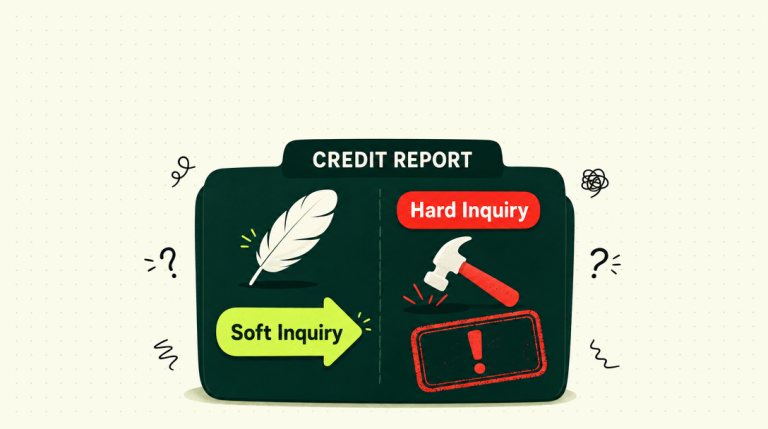
Mapped everything out, and the total still feels unmanageable? That’s the moment to talk to a lender or advisory platform, not to keep managing it alone. A platform like TapTap checks your eligibility for consolidation across 20+ lenders, with one soft credit check.
Signs You Should Act Now, Not Later
- You’ve had to choose which EMI to pay this month, more than once.
- You’re relying on one card to pay another card’s bill.
- You genuinely don’t know your total monthly EMI outflow.
- A missed payment has already happened in the last six months.
Any one of these is worth acting on now. Waiting rarely makes the math easier.
What a Consolidation Conversation Actually Looks Like
If you decide to explore consolidation, the first step is simple. You share your full list of debts, the same list you built in the first step of this guide. A lender or advisory platform checks what rate you’d qualify for on a combined loan. You compare that new EMI against your current total. If it’s genuinely lower, you proceed. If not, you’ve lost nothing but a few minutes.
Common Fears That Stop People From Acting
Many borrowers delay consolidating because they worry it looks bad, or that it’s complicated, or that it will hurt their credit score. None of these hold up well under scrutiny. Consolidation is a standard financial tool, used across every income level. The process itself typically takes a few days. And the credit score impact, once you account for lower utilization and steadier payments, is usually positive within months.
Frequently Asked Questions
If your total EMIs exceed 40 to 50% of your take-home income, or you’re regularly stressed about which payment to prioritize, that’s a strong signal. The exact threshold varies by circumstance.
Not always, but it’s usually worth checking. It works best with three or more debts, especially high-rate credit card debt, and a stable income to support one new EMI.
Yes. A consolidation loan isn’t tied to any single existing lender. The new loan is sized to cover your combined outstanding, regardless of who issued each debt.
If your score or income doesn’t currently support it, focus on aligning due dates, clearing the highest-rate debt first, and rebuilding your score before reapplying in a few months.
It depends on your comfort with keeping an emergency fund. Draining savings entirely can leave you exposed to the next unexpected expense. Often, combining a partial prepayment with consolidating the rest works better.
Feeling stretched by multiple EMIs? Check your consolidation options with TapTap one soft credit check across 20+ lenders, no impact on your score.