





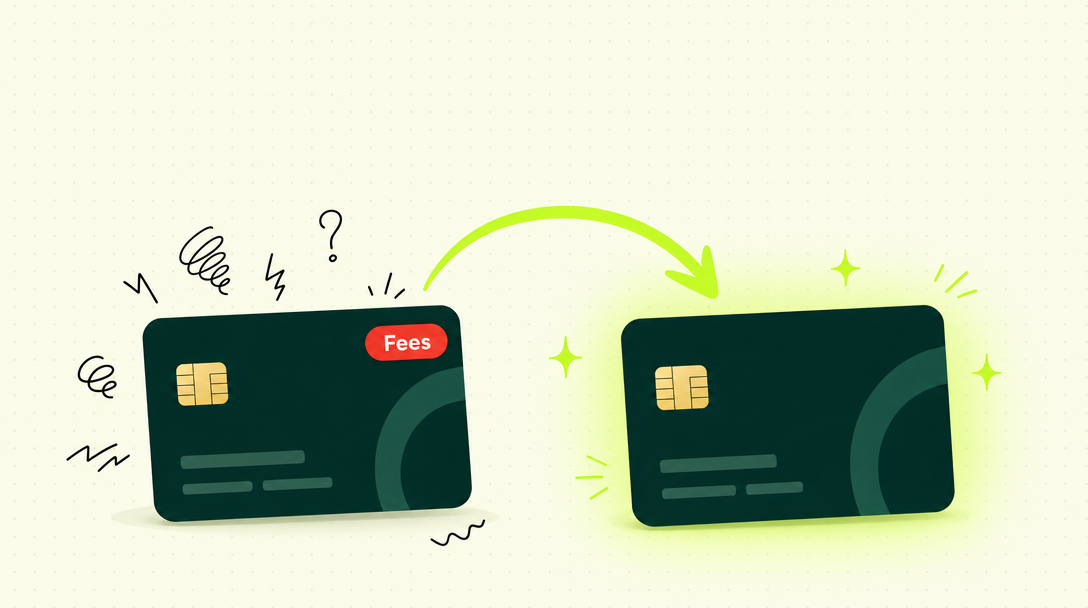
Credit card balance transfer in India lets you move the outstanding balance on one credit card to another card. Usually, it offers a low or 0% promotional interest rate for a fixed period, typically 3 to 12 months. The new card issuer pays off your old card balance (up to your approved credit limit), and you repay the new card during the promotional window, ideally clearing it entirely before the low rate expires.
It’s one of the fastest ways to stop high-interest credit card debt from compounding, but only if you have a realistic plan to pay off the transferred balance before the promotional rate reverts to the card’s standard rate, which in India commonly sits between 30% and 42% per annum.
Step-by-Step Process
- Compare balance transfer offers across cards you’re eligible for; look at the promotional rate, the length of the promotional window, and the transfer fee.
- How to apply for a balance transfer loan, providing your existing card details and outstanding balance.
- Approval and transfer — the new issuer pays off your old card balance directly, usually within 3–7 working days.
- Repay aggressively during the promo period — every rupee paid during this window goes toward reducing a 0% or low-rate balance.
- Clear the balance before the promo ends, or have a plan (like consolidation) ready if you can’t.
Fees You’ll Pay
Credit card balance transfer isn’t free. Expect:
- Transfer fee: typically 1–3% of the amount transferred, charged upfront
- Annual fee on the new card, if applicable, which may be waived for the first year on some balance transfer offers
- Processing charges, occasionally applied separately from the transfer fee; always check the fine print
A transferred balance of ₹1,00,000 at a 2% transfer fee costs ₹2,000 upfront money well spent if it means avoiding 36% annual interest for 6–12 months, but worth factoring into your total cost comparison against alternatives like a personal loan.
Eligibility for Credit Card Balance Transfer
Not every applicant qualifies for the best promotional offers. Card issuers typically look for a CIBIL score of 700+ for the most attractive 0% offers, a clean recent payment history (issuers are cautious about approving large transfers for applicants who’ve recently missed payments elsewhere), and sufficient income to support the required monthly repayment during the promotional window. Applicants with scores in the 650-700 range may still find offers, but often with shorter promotional periods or higher transfer fees than what’s advertised to top-tier applicants.
Interest-Free Period Explained
The promotional 0% (or low-rate) period is the entire point of a balance transfer,r but it’s strictly time-bound. Common windows in India run 3, 6, or 12 months. During this period, none (or very little) of your payment goes to interest, meaning your full payment reduces the principal directly. This is why balance transfer works best for balances you’re confident you can clear within the window; ow the shorter the promotional period, the more aggressive your repayment needs to be.
What Happens After the Offer Ends
This is where balance transfers go wrong for many borrowers. Once the promotional period expires, any remaining balance starts accruing interest at the card’s standard rate, which is frequently higher than what you were paying on your original card, not lower. A borrower who transfers ₹1,00,000 expecting to pay it off in 6 months, but only manages to clear ₹60,000, finds the remaining ₹40,000 suddenly accruing interest at 36%+ often worse off than if they’d never transferred at all, once the transfer fee is factored in.
The fix is straightforward but requires discipline: calculate your required monthly payment before transferring (outstanding balance ÷ number of months in the promo period), and treat that as a non-negotiable minimum, not a target.
Comparing Offers: What to Check Beyond the Headline Rate
Two balance transfer offers advertising the same “0% for 6 months” can differ meaningfully once you read past the headline. Always check: the exact transfer fee percentage (and whether it’s capped at a maximum rupee amount), the standard rate the card reverts to after the promotional period, whether the promotional rate applies only to the transferred balance or also to new purchases on the card, and any minimum monthly payment requirement during the promo period (missing even this minimum can void the promotional rate entirely on some cards). A seemingly generous offer with a high reversion rate and an uncapped fee can end up costing more than a shorter, cheaper offer;r the full terms matter more than the headline number.
A Worked Example
Consider a borrower carrying ₹1,20,000 on a credit card at 38% p.a. They transfer the full balance to a new card offering 0% interest for 9 months, with a 2% transfer fee.
Upfront cost: ₹2,400 (2% of ₹1,20,000), charged immediately.
Repayment plan: To clear the balance within the 9-month window, they need to pay roughly ₹13,335 per month. If they stick to this plan, the total cost of the transfer is exactly ₹1,22,400: the original balance plus the fee, with zero interest paid. Compare this to continuing on the original card at 38%: over the same 9 months, interest charges alone (even while paying down principal) would likely exceed ₹15,000-₹20,000, making the transfer a clear win provided the full repayment plan is followed without missing a month.
Building a Repayment Plan Before You Transfer
The single biggest determinant of whether a balance transfer saves or costs you money is whether you can stick to a fixed monthly repayment plan for the length of the promotional window. Before transferring, divide your outstanding balance by the number of months in the promotional period to get your required monthly payment, and honestly assess whether that amount fits your budget. If it doesn’t, either the transfer period is too short for your situation (consider a longer-window offer if available) or the debt amount may be better suited to a consolidation loan with a longer, more comfortable fixed EMI instead.
Balance Transfer vs Personal Loan for Card Debt
If you’re not confident you can clear the balance within a typical promotional window, a personal loan interest rate in India (either standalone or as part of a broader consolidation) is often the safer route. A personal loan locks in a fixed rate commonly 10.5–18% p.a. for a fixed tenure, with no rate-reversion cliff to worry about. It won’t match a successful 0% balance transfer’s total cost, but it removes the risk of missing the payoff deadline and ending up back at a punishing card rate.
Frequently Asked Questions
The transfer itself, once approved, typically completes within 3–7 working days, with the old card balance paid off directly by the new issuer. The application and approval process before that can take anywhere from the same day (for pre-approved offers) to a few days for a fresh application.
Yes — you can generally only transfer up to your approved credit limit on the new card, which may be lower than your existing outstanding balance, especially for a first-time applicant with the new issuer. Some issuers also cap balance transfers at a percentage of the approved limit rather than the full amount.
No, in most cases your old card remains open with a zero (or reduced) balance unless you specifically request closure. Many advisors recommend keeping it open but unused, since closing it can affect your overall credit utilization ratio and average account age.
Any remaining balance starts accruing interest at the new card’s standard rate, which is often 30%+ p.a. in India — potentially higher than your original card’s rate, especially once the transfer fee is factored in. This is the single biggest risk of balance transfer and the main reason a realistic repayment plan matters more than the promotional rate itself.
This depends on the specific card’s terms. On many balance transfer cards, the 0% promotional rate applies only to the transferred balance, while new purchases accrue interest at the standard rate from day one — and in some cases, payments are applied to the lower-rate balance first, meaning the purchase balance keeps accruing interest until the transferred amount is fully cleared. It’s generally safest to avoid new spending on a balance transfer card until the transferred balance is paid off.
If clearing the balance within a short promotional window feels risky, TapTap can help you compare a fixed-rate consolidation loan with no rate-reversion cliff and no deadline pressure.