





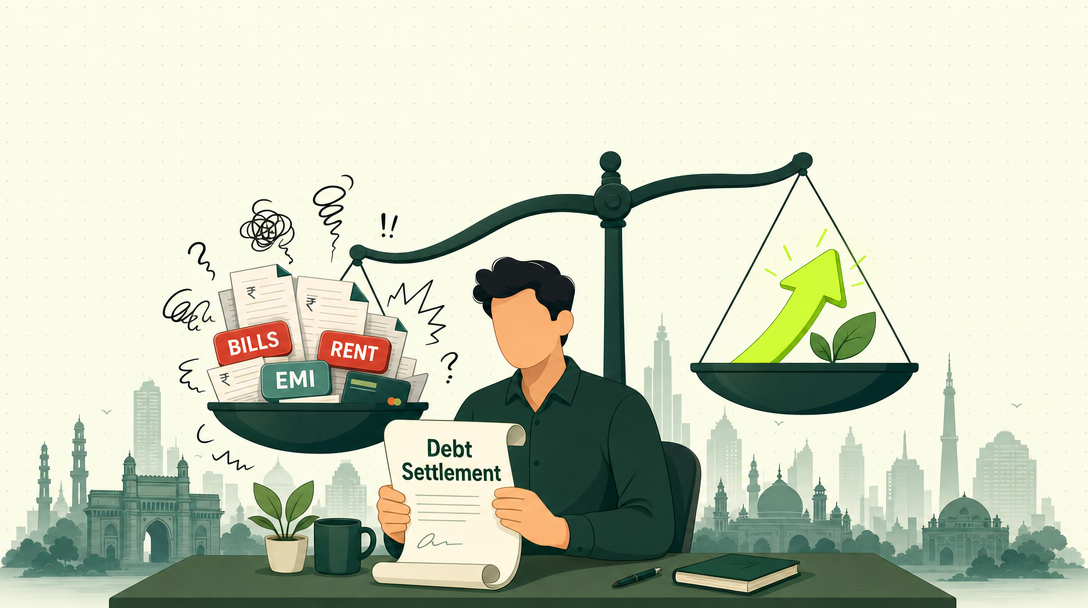
Debt settlement companies negotiate with your lenders to close your loans or card dues for less than you owe. They usually charge a fee, often a monthly subscription plus a share of the amount saved. Settlement can bring relief in real hardship. But it marks your credit report as “Settled,” which can hurt your borrowing for years. It’s also not something you must pay a company to do. You can negotiate yourself.
This guide helps you decide if hiring one is right for you, and what to check if it is.
What Do Debt Settlement Companies Do?
Most debt settlement companies in India follow a similar model:
- Assess your debts. They review your loans, cards, and income.
- Enrol you in a plan. You pay them a fee, often monthly.
- Build a settlement fund. You set aside money each month.
- Negotiate with lenders. Once enough money is saved, they approach lenders.
- Close accounts. Each lender accepts a reduced amount.
Some also offer help with recovery-agent harassment and legal notices.
How Debt Settlement Companies Charge
Fees vary a lot. Common structures include:
| Fee type | How it works |
|---|---|
| Registration fee | A one-time amount to start |
| Monthly subscription | A fixed fee each month you’re enrolled |
| Success fee | A percentage of the amount saved or settled |
| Legal support fee | Extra, if notices or cases need handling |
Always get the full fee structure in writing. Add it all up before you sign. Sometimes fees take a large share of what you “save.”
The Hidden Cost: What Settlement Does to Your CIBIL
This is what many people don’t hear clearly enough.
A settled loan shows as “Settled” on your credit report, not “Closed.” Lenders see that as high risk. It can stay in your credit history for up to seven years.
There’s another risk. Many settlement plans only work once you’ve stopped paying your EMIs for a while. That’s because lenders rarely settle current accounts. During those months:
- Late fees and penal interest pile up.
- Your score keeps falling.
- Recovery calls and notices increase.
- Legal action becomes possible.
So by the time settlement happens, the damage to your credit profile is often serious.
Are Debt Settlement Companies Regulated by RBI?
This matters. Banks and NBFCs are regulated by RBI. Debt settlement companies generally are not lenders, so they aren’t regulated the same way.
That means:
- There’s no RBI licence you can check for them.
- Their promises aren’t backed by RBI rules.
- Complaints may need to go through consumer courts, not the RBI Ombudsman.
Some companies are professional and ethical. Others are not. You have to do your own checks.
Red Flags When Choosing Debt Settlement Companies
Be careful if a company:
- Guarantees a fixed waiver, like “we’ll cut 70% of your debt”
- Tells you to stop all EMIs immediately without discussing other options
- Asks you to pay settlement money to them instead of directly to the lender
- Promises to “remove” negative entries from your CIBIL report
- Charges large fees upfront before any real work
- Pressures you to sign today
No company can guarantee what a lender will accept. And no one can legally delete accurate history from your credit report.
8 Questions to Ask Before You Sign Up
- What’s your total fee, including every charge?
- Do I pay the lender directly, or through you?
- What happens if a lender refuses to settle?
- Can I exit the plan, and will I get a refund?
- How will my CIBIL report look after settlement?
- Have you considered restructuring or consolidation for me?
- Will you help if I get a legal notice?
- Can you share a sample agreement before I pay anything?
A trustworthy company will answer all of these clearly.
Debt Settlement vs Other Options
Settlement is one option. It’s rarely the first one to try.
| Option | Credit impact | Best when |
|---|---|---|
| Loan restructuring | Mild | Income dropped but still steady |
| Debt consolidation | Neutral to positive over time | Many high-rate debts, still eligible |
| Balance transfer | Neutral | One costly loan, good profile |
| Gold loan or loan against FD | Neutral | You have assets to use |
| Debt settlement | Severe | Genuine hardship, no way to pay |
If you still have income and a reasonable credit profile, consolidation or restructuring usually protects your future far better.
Can You Settle Without a Company?
Yes. You can talk to your lender directly. Ask for their settlement or one-time settlement options. Explain your hardship, negotiate the amount, and get everything in writing.
It takes time and patience. But you save the company’s fees, and you stay in control.
If legal notices are involved, a lawyer may be worth the cost for that part.
Our Honest View
At TapTap Loans, we’re not a debt settlement company. We help people find better loan options and plan their way out of debt.
We don’t think settlement is always wrong. Sometimes it’s the kindest option for someone in deep hardship. But we’ve met too many people who were told to stop paying before anyone checked if consolidation, restructuring,g or a gold loan could have worked.
So our advice is simple. Look at every door before you choose the one that closes your credit profile for years.
Frequently Asked Questions
Debt settlement companies negotiate with your lenders to close your loans or card dues for less than the full amount. They usually charge fees, such as a monthly subscription and a share of the savings.
Yes, they can operate legally. But they’re generally not regulated by the RBI like banks and NBFCs. You must check their terms, fees, and track record carefully.
The settlement itself does. Settled accounts show as “Settled,” which lenders see as high risk. Missed EMIs before settlement also lower your score.
Yes. You can contact your lender directly and ask for a settlement or a one-time settlement. Negotiate, get the offer in writing, and pay the lender directly.
If you still have income, loan restructuring or debt consolidation usually protects your credit far better. Gold loans or loans against FD can also clear costly debt cheaply.
Conclusion
Debt settlement companies can help in real hardship. But they come with fees, credit damage, and little regulation. They’re not the only path, and often not the first one to try.
Explore restructuring, consolidation, and secured options first. If settlement truly is the answer, compare companies carefully, get everything in writing, and pay lenders directly. Or negotiate yourself.