





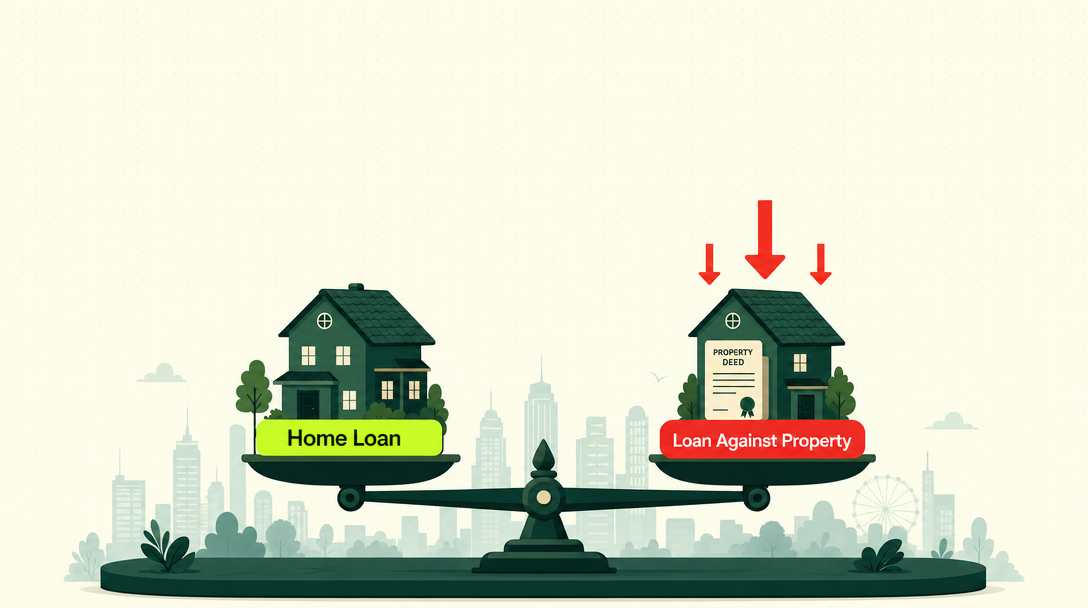
In home loan vs loan against property, the core difference is purpose. A home loan buys a new property. A loan against property unlocks funds using a property you already own, for any purpose. This guide compares both in full.
Quick Comparison Table
| Factor | Home Loan | Loan Against Property |
|---|---|---|
| Purpose | Buying, constructing, or renovating a home | Any purpose, business or personal |
| Interest rate | Lower, typically 8.25%-11% | Higher, typically 9%-14% |
| Loan-to-value | Up to 90% for smaller amounts | Usually 50-70% of property value |
| Tax benefits | Available under 80C and 24(b) | Limited, only if funds are used for specific purposes |
| Tenure | Up to 30 years | Usually up to 15-20 years |
What Is a Home Loan?
A home loan is specifically for buying, constructing, or renovating residential property. The property you’re purchasing becomes the collateral. Because the purpose is fixed and clearly defined, lenders offer the most competitive rates on this product.
What Is a Loan Against Property?
A loan against property, often called LAP, lets you borrow money by pledging a property you already own, residential or commercial, as collateral. The funds can be used for almost anything: business expansion, a child’s education, medical expenses, or even consolidating other debt.
Why Loan Against Property Costs More
Home loans carry lower rates partly because the funds are used to buy the exact asset securing the loan, which reduces risk in the lender’s eyes. A loan against property has no such restriction on end use, which increases the lender’s risk, and therefore the rate.
Interest Rate Difference: A Worked Example
Borrow ₹50,00,000 as a home loan at 8.75%, over 20 years, and your EMI runs around ₹44,200. Borrow the same amount as a loan against property at 11%, and your EMI climbs to roughly ₹51,600. That’s over ₹7,000 more every month, for the same borrowed amount.
Tax Benefit Comparison
Home loans offer clear tax benefits. Up to ₹1.5 lakh on principal repayment under Section 80C, and up to ₹2 lakh on interest under Section 24(b), for a self-occupied property.
Loan against property generally doesn’t offer these same benefits, unless the funds are specifically used for business purposes or for purchasing or constructing another residential property, in which case some deductions may apply. Always confirm the specific tax treatment with a tax advisor for your situation.
When to Choose a Home Loan
Buying a new home, or renovating your current one? A home loan is almost always the better choice. Lower rate, longer tenure, and real tax benefits make it the more cost-effective option for this specific purpose.
When to Choose a Loan Against Property
Need funds for a purpose other than buying property, but have real estate you already own? A loan against property can unlock a large amount, often at a lower rate than an unsecured personal loan, since it’s backed by a valuable asset.
This makes it a reasonable option for business expansion, or consolidating multiple high-interest debts into one, if you’re comfortable pledging a property you own.
Can You Use a Loan Against Property to Buy Another Property?
Some borrowers do this, using a LAP on an existing property to fund the down payment for a new one. This works, but adds real risk, since you’re now leveraging one asset to acquire another. It’s worth careful thought before proceeding, and ideally a conversation with a financial advisor.
A Practical Decision Framework
Ask one question first: what will the money actually buy? If the answer is “this specific property,” go with a home loan. If the answer is “something else entirely,” and you own property you’re willing to pledge, a loan against property is the more relevant option.
Frequently Asked Questions About Home Loan vs Loan Against Property
Yes, typically 1 to 3 percentage points higher, reflecting the unrestricted end-use and the lender’s correspondingly higher risk.
No. Home loans are specifically for buying, constructing, or renovating residential property. Using funds for other purposes isn’t permitted under the loan terms.
Home loans offer clearer, more substantial tax benefits under Sections 80C and 24(b). Loan against property has limited tax benefits, mostly tied to specific end-use conditions.
Generally, yes, provided there’s sufficient equity in the property beyond your existing loan. The lender will assess the property’s current value against what’s still owed.
Not sure which option fits your need? TapTap compares your home loan options across 20+ lenders to help you find the best fit.