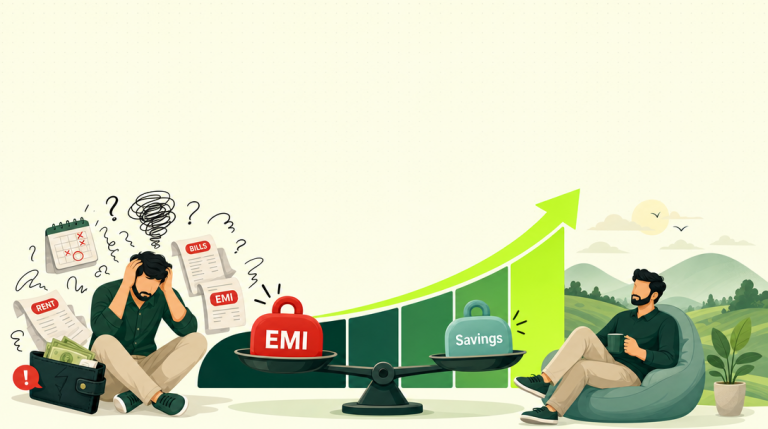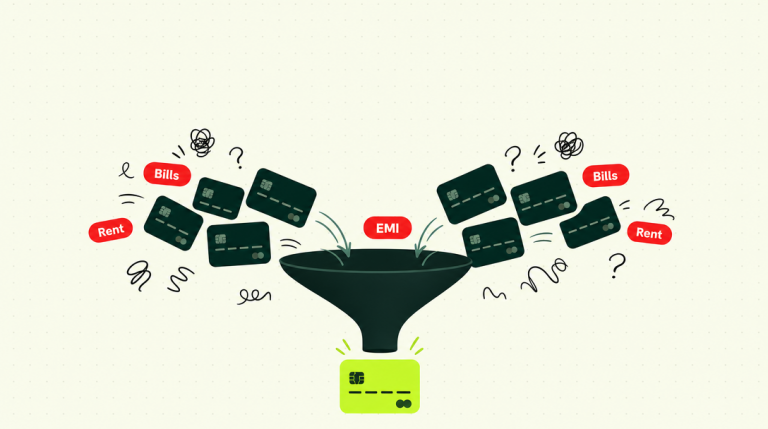






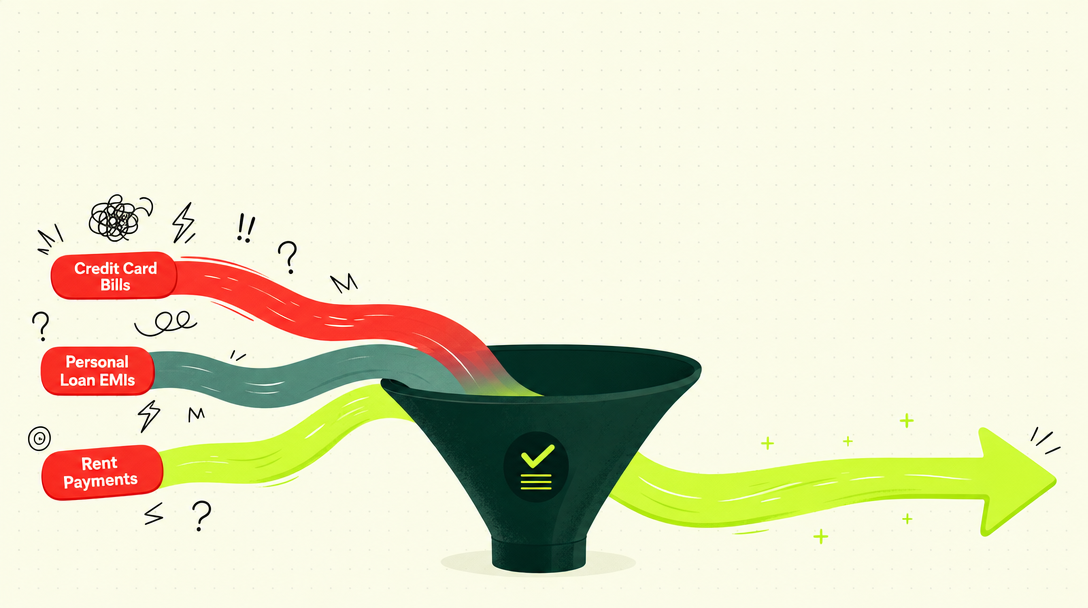
A debt consolidation personal loan can be one of the most practical ways for Indian borrowers to manage multiple debts through one EMI but only when the numbers work in your favour. If used correctly, it can reduce high-interest debt, simplify repayments, and make monthly payments easier to track. If used without checking the total cost, it can extend your repayment period, increase fees, and create a false sense of financial progress.
This guide is about getting honest with the numbers. When does a personal loan for debt consolidation actually make you better off? And when should you look at other options?
How Using a Personal Loan for Debt Consolidation Works
You apply for a personal loan in an amount equal to your total outstanding debts. Once approved and disbursed, you use that money to foreclose or pay off each existing obligation credit card balances, existing personal loans, EMI schemes. You then repay the single consolidated loan in monthly instalments to one lender.
The logic: if you’re averaging 22% interest across multiple debts and can get a personal loan at 13%, you save 9% per annum on the entire outstanding balance. On ₹5 lakh, that’s ₹45,000 per year in interest savings before accounting for the reduced complexity.
When It Makes Clear Financial Sense
A personal loan for debt consolidation works well when:
- Your existing debt is high-interest. If you’re paying credit card rates (36–42%) or NBFC personal loan rates (20–24%), a bank personal loan at 12–15% creates immediate and significant savings.
- Your CIBIL score qualifies you for a competitive rate. A score of 750+ unlocks rates in the 10.5–13% range. At this level, the savings are substantial and the break-even period is short.
- You have multiple debts with different due dates. The operational simplification one EMI, one due date, one lender has value beyond just the interest rate savings.
- You’re not planning to foreclose the personal loan early. Processing fees and foreclosure charges eat into savings if the loan tenure is cut short.
When It Doesn’t Work As Well
A personal loan for debt consolidation can backfire in these scenarios:
- Your existing loans already have low rates. If you’re consolidating a home improvement loan at 10% and a vehicle loan at 8%, a personal loan at 14% makes your debt more expensive, not less.
- The tenure extension offsets the rate saving. A lower rate over 5 years can cost more in total interest than a higher rate over 2 years. Always compare total interest outgo, not monthly EMI.
- Your CIBIL score is below 700. You may get approved, but at 20–22%, which may not provide enough savings to justify the consolidation fees and the new hard inquiry on your credit.
- You plan to continue using your credit cards after clearing them. This is the most common failure mod clearing cards via a personal loan and then accumulating new card debt.
Running the Numbers: A Real Example
Borrower profile: Three debts totaling ₹4 lakh outstanding.
Weighted average interest rate: approximately 26.25% per annum.
Consolidation personal loan at 13.5% over 30 months:
- EMI: approximately ₹14,900/month
- Total interest: ₹47,000
- Versus continuing existing loans: Total interest ≈ ₹95,000+
- Estimated saving: ₹48,000+ over repayment period
Minus processing fee (1.5% on ₹4 lakh = ₹6,000) and foreclosure charges on existing loans (estimated ₹4,500): Net saving still approximately ₹37,500.
Key Factors to Evaluate Before Applying
Before applying for a personal loan to consolidate your debts, evaluate these five variables:
- What is your weighted average interest rate across all current debts?
- What is the lowest personal loan rate you qualify for, given your current CIBIL score?
- What is the total cost of consolidation (processing fee + foreclosure charges on existing loans)?
- What is the break-even point (when cumulative interest savings exceed total consolidation costs)?
- What is your tenure preference and total interest payable comparison across that tenure?
Alternatives to a Personal Loan for Consolidation
If a personal loan isn’t the right fit, consider:
- Loan against FD or insurance: If you have a fixed deposit, some banks offer loans against it at 1–2% above the FD rate — substantially cheaper than an unsecured personal loan.
- Top-up on existing home loan: If you own property, a top-up on your home loan at 8–9% for personal expenses is one of the cheapest forms of borrowing available.
- Balance transfer on individual loans: Rather than consolidating, transferring each loan individually to a lender offering better rates may achieve similar savings without a new hard inquiry for a larger amount.
- A personal loan for debt consolidation works best when your existing debts are high-interest (above 18%), and your CIBIL score qualifies you for a competitive consolidation rate.
- Always compare total interest outgo across the full tenure not just the monthly EMI to determine real savings.
- Account for processing fees, GST, and foreclosure charges before calculating net benefit.
- The most common failure: reusing cleared credit cards while servicing the consolidation loan.
- If your CIBIL score is below 700, the rate offered on the personal loan may not justify the consolidation exercise — focus on improving the score first.
Frequently Asked Questions
For unsecured debt (credit cards, existing personal loans), a personal loan is typically the most cost-effective consolidation tool. Secured alternatives like a loan against an FD or a home loan top-up can be cheaper but require collateral and have longer processing timelines.
Your eligible personal loan amount is based on your income multiplied by a factor of 10–24 months, subject to FOIR limits. Most lenders cap unsecured personal loans at ₹40 lakh. The consolidated loan must also fit within your post-EMI FOIR of 50–55%.
Yes. A single personal loan can be used to clear both an existing personal loan and credit card dues simultaneously. Include all outstanding amounts in your loan application amount.
Your eligible amount depends on your income, CIBIL score, existing obligations, and lender-specific FOIR limits.
Avoid rebuilding credit card debt after clearing it through consolidation, as this can increase your overall financial burden.
Conclusion
The financial case for using a personal loan for debt consolidation is strongest when two conditions align: you have high-interest existing debt, and you have the credit profile to access a materially lower rate. When both are true, the math in favor of consolidation is compelling. When one or both are absent, the exercise may be cosmetic rather than financially meaningful. Get the numbers right before you commit.