





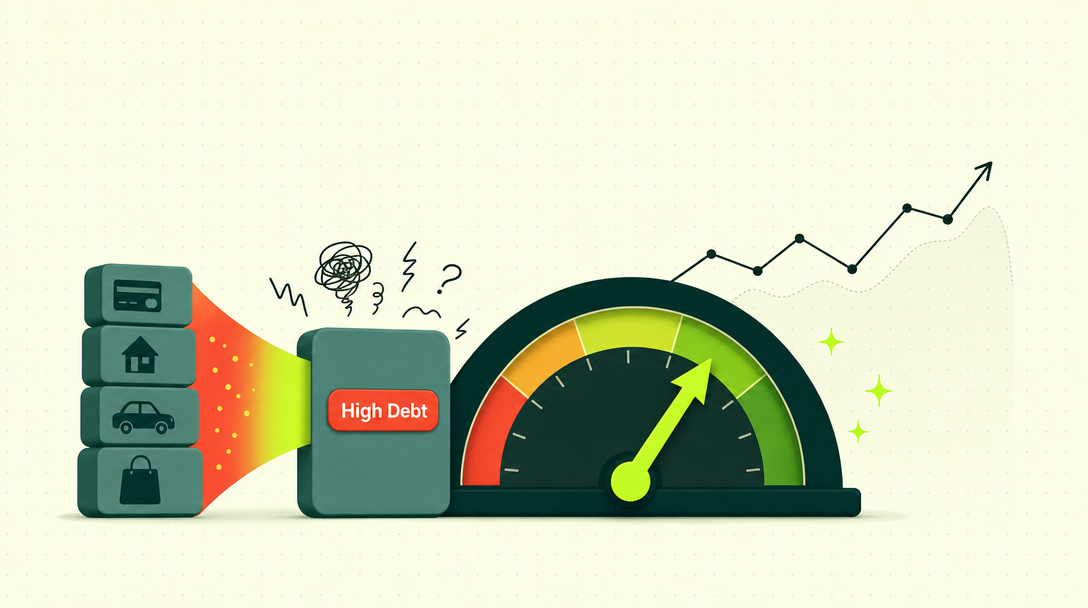
The debt consolidation CIBIL score effect has two phases. A small, temporary dip when you apply, from the credit inquiry. Then, typically, a gradual improvement over 6 to 12 months, as your utilization drops and your payments become more consistent.
Most borrowers end up better off, not worse, once the full picture plays out. Here’s exactly why.
The Short-Term CIBIL Score Dip Explained
Apply for a consolidation loan, and the lender runs a credit check. A hard inquiry causes a small, temporary drop in your score, typically a few points. This is normal for any new credit application, not specific to consolidation.
Many advisory platforms, including TapTap, first use a soft inquiry to check your eligibility. This doesn’t affect your score at all. The hard inquiry only happens once you proceed with a specific lender’s full application.
Why Debt Consolidation Can Improve Your CIBIL Score
Credit utilization drops. Consolidating credit card debt specifically? Your card balances go to zero once paid off. Utilization- how much of your available credit you’re using- is a major scoring factor. This often produces a meaningful score improvement.
Payment consistency improves. One EMI, on one date, is easier to get right every month than juggling several. A clean, consistent payment record is one of the strongest positive factors in your score.
Old debts show as closed, not defaulted. Existing loans and cards paid off through consolidation get marked as closed accounts, in good standing. A positive entry on your credit report.
Where It Can Go Wrong
Closing all your old cards immediately. This can shorten your average credit history length, and reduce your total available credit limit. Both can work against your score. Most advisors recommend keeping older cards open, but unused.
Running up new debt on the cards you just cleared. Consolidate, then start spending on the same cards again? You can end up with both a new EMI and fresh card debt. Worse for your score than where you started.
Missing payments on the new consolidated loan. Consolidation only helps if you actually pay the new EMI on time. A missed payment here does the same damage a missed payment on any other loan would.
A Realistic Timeline
First month: a small dip from the credit inquiry.
Months 2 to 6: gradual improvement, as utilization drops and the new payment history builds.
Months 6 to 12: most borrowers see a meaningful net improvement, compared to their pre-consolidation score, given consistent on-time payments throughout.
Does It Matter Which Type of Debt You Consolidate?
Consolidating high-utilization credit card debt tends to produce the biggest score improvement. Utilization is such a heavily weighted factor.
Consolidating multiple personal loans, where utilization isn’t really the issue, still helps through improved payment consistency, but the effect may be more modest.
How to Maximize the Positive Effect
- Keep old, paid-off credit cards open, but unused, rather than closing them immediately.
- Set up autopay on your new consolidated EMI, so you never miss a payment by accident.
- Avoid applying for new credit right after consolidating. Each new inquiry adds its own small, temporary dip.
- Monitor your score periodically. Confirm your old accounts are correctly marked as closed, not just inactive.
A Common Question: Does the Score Dip Show on My Report Forever?
No. A single hard inquiry stays on your report for a period, but its impact on your score fades within a few months. It’s not a lasting mark, and it’s genuinely small compared to the longer-term gains from lower utilization and consistent payments.
Frequently Asked Questions About Debt Consolidation and CIBIL Score
There’s a small, temporary dip from the credit inquiry. Over the following months, most borrowers see their score improve due to lower utilization and more consistent payments.
Most borrowers see meaningful improvement within 6-12 months of consistent, on-time payments on the new loan.
Generally no. Keeping them open, but unused, helps preserve your credit history length and available credit limit.
Consolidating high-utilization credit card debt tends to produce a bigger improvement, since it directly reduces your utilization ratio.
No. A soft inquiry, used to check your eligibility, does not impact your CIBIL score.
Curious how consolidation could affect your specific situation? Check your eligibility with TapTap a soft check, with zero impact on your credit score.